
Why Every Obstetrician Remembers Their First Shoulder Dystocia
Every obstetrician remembers their first shoulder dystocia because it is a defining moment of crisis where clinical skill, ethical duty, and professional identity collide.

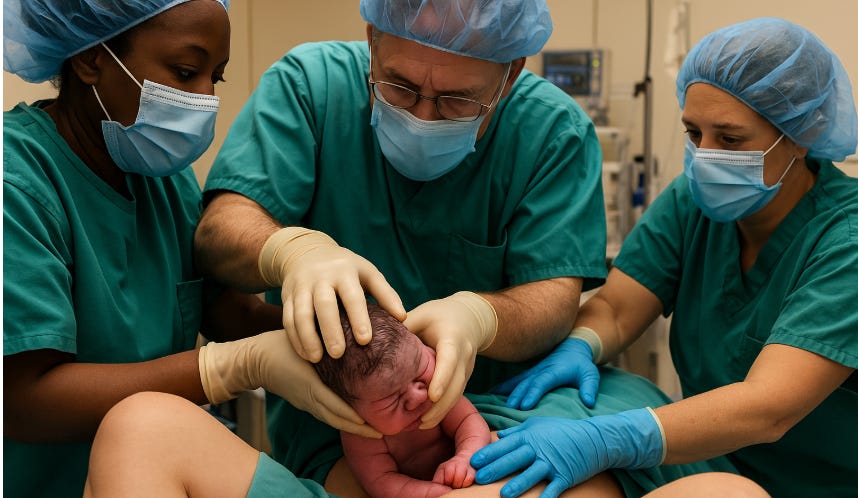
Every obstetrician remembers their first shoulder dystocia because it is a defining moment of crisis where clinical skill, ethical duty, and professional identity collide. Once experienced, it leaves an indelible mark. Importantly, guidelines now show that many cases can be anticipated and potentially prevented.
Overview
There are moments in medicine that stay with us forever. For obstetricians, the first shoulder dystocia is one of them. The baby’s head delivers smoothly, but then it happens: the shoulders will not follow. The room tightens, seconds feel like hours, and every person present is acutely aware that two lives are in the balance. In that instant, an obstetrician confronts not only the mechanics of delivery but also the deepest ethical demands of the profession — to act swiftly, wisely, and with unwavering commitment to both mother and child.
Why the First Shoulder Dystocia is Unforgettable
The drama of shoulder dystocia lies in its suddenness. Unlike other complications, there is rarely time to prepare. Even when risk factors such as diabetes or macrosomia are present, many cases occur without warning. The “turtle sign” — where the fetal head retracts tightly against the perineum — signals the crisis, and the delivery room transforms into a high-stakes arena. What follows is a cascade of maneuvers: McRoberts positioning, suprapubic pressure, and, if needed, more invasive interventions such as rotation or delivery of the posterior arm.
What etches this experience so deeply is not just the technical challenge but the emotional and ethical weight. Shoulder dystocia reminds the physician that obstetrics is practiced at the edge of predictability, where rapid action can mean the difference between a healthy newborn and lifelong injury. The memory lingers because it is often the first time a young obstetrician feels fully responsible for both mother and baby under the crushing pressure of time.
The Ethical Dimension
Every maneuver carries consequences. The physician must weigh risks in real time — preventing hypoxia in the newborn while protecting the mother from unnecessary trauma. This is not a moment for neutrality. It requires directive action, a clear recommendation, and decisive leadership. Equally important is the duty afterward: honest disclosure to families, thoughtful debriefing with the team, and reflection on how to grow from the experience.
Shoulder dystocia also exposes the broader reality of obstetrics: that unpredictability is inevitable, but preparedness is a moral obligation. Simulation training, anticipation of risk, and calm teamwork are not luxuries; they are ethical imperatives.
Prevention and My Contribution
For decades, shoulder dystocia was regarded as an unavoidable catastrophe. While it is true that not every case can be foreseen, my colleagues and I demonstrated that prevention is possible through clear, evidence-based guidelines. By identifying risk thresholds — such as estimated fetal weight, maternal diabetes, and the limits of safe vaginal delivery — we showed that selective use of cesarean delivery can avert many of the most dangerous cases.
This shift from fatalism to prevention reframes shoulder dystocia not only as a crisis to be managed but as a complication that, in many instances, can be anticipated and avoided. These guidelines have helped clinicians worldwide better counsel their patients, prepare their teams, and, most importantly, prevent avoidable harm. The ethical stakes are transformed: rather than waiting for disaster, we act proactively in the service of maternal and fetal patients.
Why We Always Remember
Even with guidelines, training, and prevention strategies, shoulder dystocia remains a defining rite of passage. The memory persists not because of failure, but because it crystallizes what it means to be an obstetrician: to hold responsibility for two patients at once, to make decisions under extreme pressure, and to live with the knowledge that every delivery carries both wonder and risk.
The first shoulder dystocia teaches humility. It teaches vigilance. And for those of us who have worked to create clearer guidelines, it also teaches hope — the knowledge that through science, training, and ethical responsibility, we can transform fear into preparedness, and crisis into prevention.
Summary and Key Takeaways
Shoulder dystocia is unforgettable because it is both a clinical emergency and an ethical trial. It challenges the obstetrician’s skills, judgment, and resolve. But it also represents an area where medicine has advanced: we now know that prevention is possible, and that clear guidelines can protect mothers and babies alike. Remembering the first case is important, but equally important is recognizing how far we have come — and ensuring future generations of obstetricians face fewer of these crises because of the lessons we have learned.
#Obstetrics #MaternalFetalMedicine #PatientSafety #MedicalEthics #PerinatalCare #ClinicalLeadership #ObstetricIntelligence