
When Your Partner Blames an STI on Abortion Pills: What You Need to Know
No. STDs do not come from abortion pills


The STI: Trichomonas Vaginalis
The infection in this story is trichomonas vaginalis, often called “trich.” It is the most common curable sexually transmitted infection in the world. Trich is caused by a tiny parasite, not a bacteria or virus, and is spread almost exclusively through unprotected genital-to-genital sexual contact. It cannot be caught from toilet seats, swimming pools, sharing towels, or taking medication. The incubation period is typically 5 to 28 days. What makes trich especially tricky is that up to 70% of infected men have no symptoms at all, so they can carry and spread it without ever knowing. Women are more likely to notice symptoms like unusual discharge, itching, or burning, but many women are also asymptomatic. Trich is not included in most routine STI panels, which means it often goes undetected unless a doctor specifically tests for it. When diagnosed, both partners must be treated at the same time with antibiotics to prevent passing it back and forth.
Summary
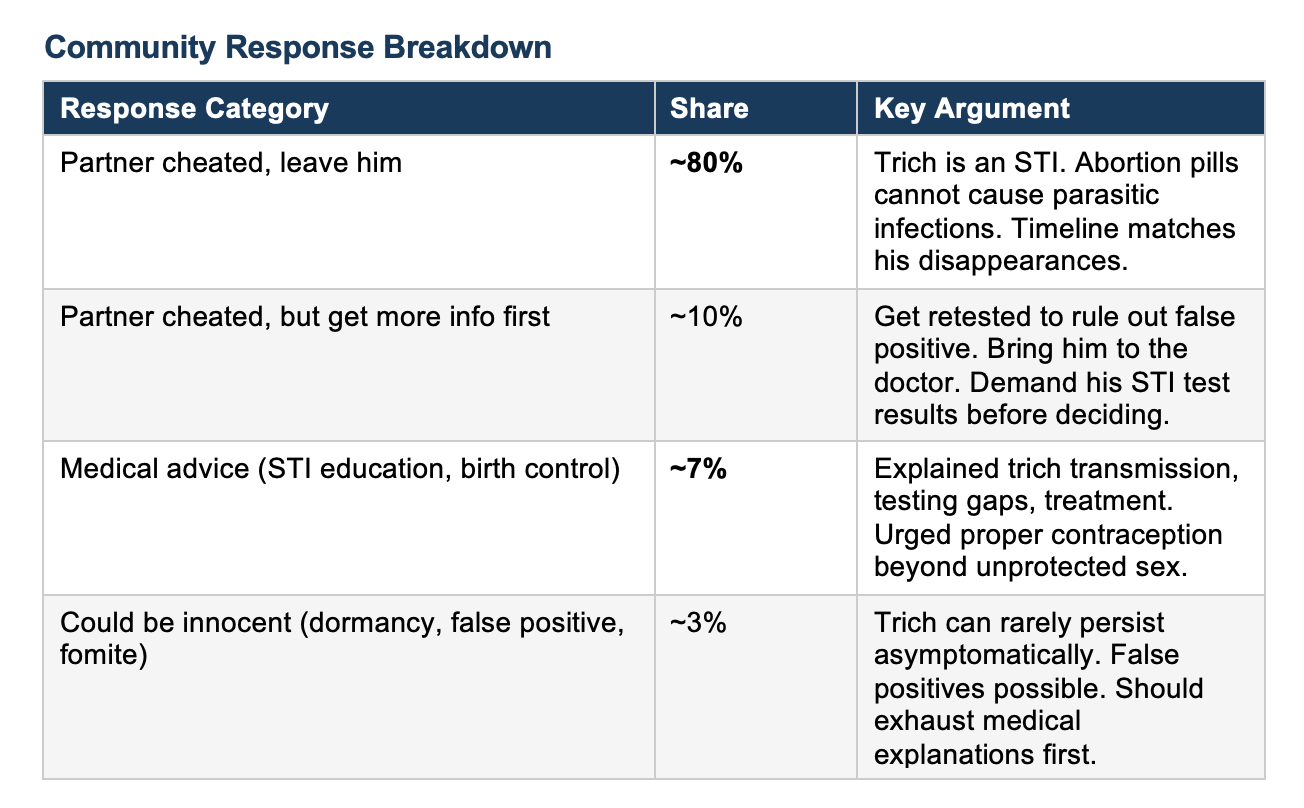
A 30-year-old woman posted on Reddit after testing positive for trichomonas vaginalis at her one-month follow-up appointment after a medication abortion. She had tested negative in both December and January. Her only sexual partner was her fiance, who had two suspicious overnight disappearances in the weeks before her diagnosis. When she told him about a cervical infection, his immediate response was that it was “probably a side effect of the abortion pills.” The post received over 1,300 upvotes and nearly 600 comments, with the overwhelming majority concluding that her partner had been unfaithful. Multiple healthcare workers in the comments confirmed that trichomonas cannot be caused by abortion medication
What It Means
This case is a useful teaching moment. Abortion pills, specifically mifepristone and misoprostol, work by blocking progesterone and causing uterine contractions. They do not introduce organisms into the body. They cannot cause a parasitic infection. When someone who has only one sexual partner tests negative for trich repeatedly and then suddenly tests positive, the medical explanation is straightforward: their partner had sexual contact with someone else. Several healthcare professionals commented on the thread, including a Planned Parenthood worker and a physician assistant in family medicine, all confirming the same conclusion. The timeline in this case also fits: the fiance’s two unexplained disappearances in late December and mid-January align perfectly with the typical trich incubation period before her positive test on February 9.
My Take
What struck me most was the fiance’s confident deflection: blaming the STI on abortion medication.
This kind of medical gaslighting works because many patients lack the clinical knowledge to push back. The fact that he offered this explanation without hesitation, and without asking whether she might have been with someone else, suggests either profound ignorance or a rehearsed deflection. This thread also highlights a broader problem: many women in the comments shared similar experiences of partners blaming STIs on medications, toilets, or old infections. Clinicians should proactively educate patients about STI transmission during post-procedure visits, especially when new infections are diagnosed. A woman who has just been through an abortion and is now facing an STI diagnosis deserves clear, direct medical information, not the runaround from her partner or her own self-doubt.