
When “Everything Was Normal” Is No Longer True
Preeclampsia, sudden loss, and why daily blood pressure checks matter

Opening
The Reddit post “Lost our baby boy to preeclampsia” is one of the most painful kinds of narratives obstetrics confronts. A long-awaited pregnancy. Care that appeared appropriate. Reassuring visits. Then, within minutes, catastrophic loss. The thread is filled with parents describing the same pattern: everything was normal until it was not, and when it changed, it changed fast. These are not sensational stories. They are honest accounts of how preeclampsia actually behaves in real life.
Synthesis of the stories
Across the post and its many replies, several truths emerge.
Preeclampsia can escalate without warning. Symptoms may be absent or subtle. Blood pressure can appear acceptable one moment and reach life-threatening levels the next. Placental abruption, fetal demise, stroke, and maternal collapse can follow in minutes.
Many of these women were doing “everything right,” including taking low-dose aspirin, attending visits, and monitoring fetal movement. The shared shock is not ignorance or neglect. It is how little margin for error this disease allows.
Compassion before critique
It is essential to say this clearly. None of these parents failed their babies. Preeclampsia is not caused by stress, diet, missed warning signs, or a delayed drive to the hospital. Self-blame is a natural response to grief, but it is medically unfounded. Even in hospitals, even with continuous monitoring, preeclampsia can overwhelm physiology with frightening speed. Compassion is not optional here. It is a professional obligation.
What preeclampsia really is
Preeclampsia is not just high blood pressure. It is a multisystem placental disease that affects the brain, liver, kidneys, and coagulation system. Blood pressure is the most visible signal, but not the only one. Severe disease can appear suddenly, progress rapidly, and remain clinically silent until it is already dangerous. Low-dose aspirin reduces risk at a population level, but it does not eliminate it. No screening test reliably predicts who will deteriorate tomorrow.
Why home blood pressure monitoring matters
If there is one practical lesson that can be acted on immediately, it is this.
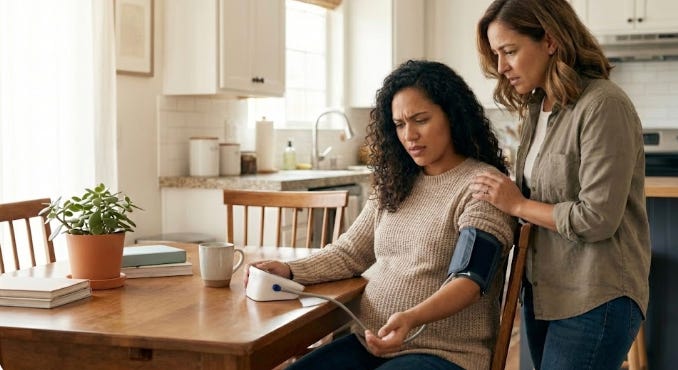
Every pregnant woman should know her blood pressure, and should check it at home regularly, ideally daily in the third trimester. Home monitoring does not replace prenatal care. It supplements it.
A sudden rise from baseline, even if the absolute number does not look dramatic, can be the earliest warning sign. It creates an objective data point that cuts through uncertainty, reassurance, and delay.
What to tell patients plainly
If your blood pressure is 140 or higher on the top number (“systolic”), or 90 or higher on the bottom number (“diastolic”), recheck it a couple minutes later. If it stays elevated, call immediately and go to labor and delivery or the emergency department without delay. Do not wait for symptoms. Headache, visual changes, or pain may never appear. Silence does not mean safety.
Closing reflection
These stories are devastating because they are honest. They show us what preeclampsia looks like outside textbooks and guidelines. The ethical response is not fear, blame, or false reassurance. It is respect for how dangerous this disease can be, and humility about how fast it can unfold. Daily blood pressure checks will not prevent every loss. But they give women one more chance to be heard before “everything was normal” becomes too late.