
When a “Health Article” About Prenatal Vitamins Sells You Creatine
The most important fact about folic acid was buried. The creatine ads were not.

You searched “prenatal vitamins.” You wanted real information. What you got was a piece of content engineered to hold your attention long enough to sell you creatine powder and a “reinvented multivitamin” from a direct-to-consumer supplement brand.
This is the modern health information pipeline. And it is failing patients.
What the Article Gets Wrong
A widely circulated piece titled “Are there benefits to taking prenatal vitamins while not pregnant?” reads like health journalism. It has “Trusted Source” hyperlinks. It mentions milligrams and micrograms. It covers folic acid, iron, and calcium with the calm authority of a textbook.
The site is called “Medical News Today” and is owned by the health publishing company Healthline Media, which itself is a subsidiary of Red Ventures. In practical terms, Medical News Today is part of the same corporate network as the consumer health site Healthline. The content is produced as commercial health journalism, not a medical society publication and not a peer-reviewed journal.
But it gets the single most important point wrong.
The article frames folic acid as a preconception supplement: something for “people planning to conceive.” It tells readers to “begin at least one month before the anticipated conception.”
That framing sounds reasonable. It is also dangerously incomplete. And it’s completely wrong.
Here is what the article should have said: Nearly 45% of pregnancies in the United States are unintended. The neural tube closes by 28 days after conception, often before a woman knows she is pregnant. That is why the USPSTF does not limit its folic acid recommendation to women “planning pregnancy.”
The USPSTF issues a Grade A recommendation (its highest level) that all persons who could become pregnant take 400 to 800 mcg of folic acid daily. Not just those planning. Not just those trying. All women of reproductive age who could become pregnant.
This is not a subtle distinction. It is the entire point. When you tell women to start folic acid “when planning pregnancy,” you miss roughly half of all pregnancies. The neural tube does not wait for a positive pregnancy test. It forms in the first weeks, from folic acid that was already in the mother’s system before conception occurred.
The article treats folic acid as one item in a buffet of potential prenatal vitamin benefits alongside “cell health,” “energy and blood health,” and “bone health.” It never makes clear that folic acid supplementation for all women of reproductive age is one of the strongest, most well-established preventive recommendations in medicine, backed by ACOG, the CDC, the USPSTF, and the WHO.
Instead, the article presents a prenatal vitamin as a general wellness upgrade. That framing helps sell supplements. It does not help prevent neural tube defects.
The Creatine Problem
Embedded between paragraphs about folic acid and iron absorption, the article features a full display ad for Thorne Creatine. The ad banner reads “Find the Right Multivitamin for You” directly above a creatine supplement that is not a multivitamin and has nothing to do with prenatal health. Another ad promotes a supplement brand’s proprietary product with the tagline “The Multivitamin, Reinvented for You + Your Microbiome.”
Here is part of that ad:
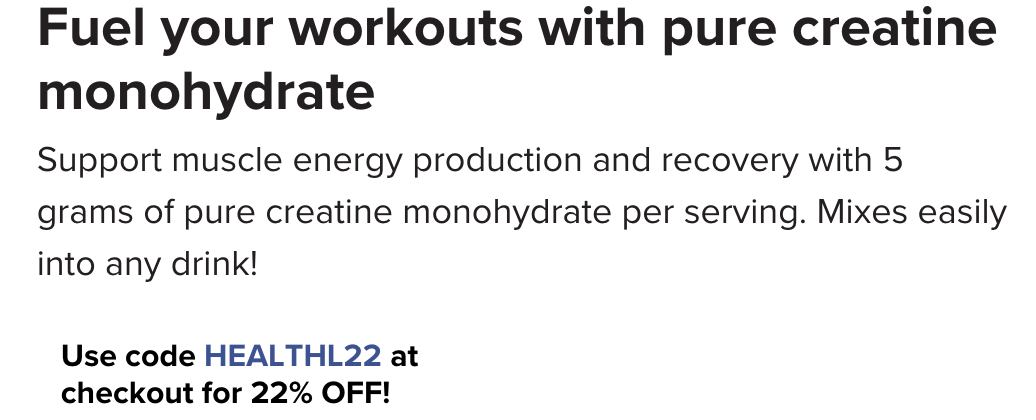
No major obstetric organization recommends creatine during pregnancy, and the supplement is not regulated by the FDA for purity or dosage accuracy.
This is not incidental. This is the business model. The article exists to generate traffic. The traffic generates ad impressions. The ad impressions sell supplements. The health information is the vehicle, not the product.
A reader looking for prenatal vitamin guidance encounters creatine ads mid-article. That tells you everything about the editorial priorities of the platform. The content is not designed to inform your decision. It is designed to hold your attention long enough to monetize it.
What You Actually Need to Know
If you are a woman of reproductive age who could become pregnant, even if you are not planning pregnancy: Take 400 to 800 mcg of folic acid daily. This is a USPSTF Grade A recommendation. You do not need a prenatal vitamin to do this. A standard multivitamin with folic acid or a standalone folic acid supplement will work. The cost is pennies per day. The evidence is as strong as it gets in preventive medicine.
If you are actively planning pregnancy: Start folic acid at least one month before conception. Your doctor can also check iron, vitamin D, and B12 levels and recommend targeted supplementation based on your bloodwork.
If you are not pregnant, not planning pregnancy, and cannot become pregnant: You do not need a prenatal vitamin. The 27 mg of iron in most prenatal formulas is 50% more than the 18 mg recommended for non-pregnant adults. That excess iron is not harmless. It causes constipation, nausea, and over time can contribute to iron accumulation.
If you are taking prenatal vitamins “for the hair and nail benefits”: There is no good evidence that prenatal vitamins improve hair or nails in non-pregnant people. You are paying more for excess iron you do not need.
The Deeper Issue
Health content farms produce thousands of articles like this one. They are SEO-optimized to rank on Google. They carry “medically reviewed” badges. They are funded by supplement advertising.
This creates a perverse incentive: the more supplements sound beneficial, the more readers click, the more ads convert, the more revenue flows. An article that said “take folic acid if you could become pregnant, skip the prenatal vitamin unless you’re pregnant or your doctor recommends it” would be accurate. It would also be short, generate fewer pageviews, and sell fewer supplements.
The real harm here is not that someone takes a prenatal vitamin they do not need. The real harm is that a woman who is not “planning” pregnancy reads this article, concludes prenatal vitamins are not for her, and misses the folic acid she should be taking right now. Because nearly half of pregnancies are unintended. Because the neural tube does not wait.
Patients deserve health information designed to inform, not to sell. When you read a health article online, ask yourself: who paid for this page to exist? The answer will tell you more than the article itself.
Your health decisions should not be funded by creatine ads.