
“We’re Not Denmark” Is the Wrong Answer
Instead of “We’re not Denmark,” why not say “Let’s be Denmark”?

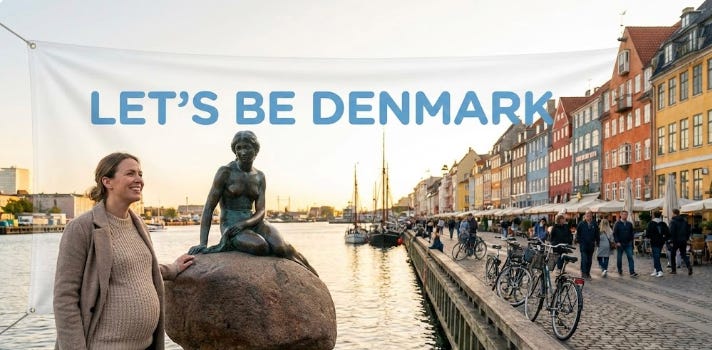
Vaccine supporters have a new talking point. When the White House says we should match other countries’ vaccine schedules, defenders respond: “We’re not Denmark. We’re not Japan. Our healthcare system is different, so we need more vaccines to compensate.”
They’re not wrong about the facts. But they’re asking the wrong question.
Yes, America’s fragmented healthcare means we can’t reliably screen every pregnant woman for hepatitis B. Yes, our lack of paid sick leave means sick parents go to work and spread flu. Yes, our prenatal care gaps mean we miss high-risk mothers who need extra protection for their babies.
But here’s what bothers me about this argument: it treats American failure as a permanent condition. It says we must work around our broken system instead of fixing it.
Instead of “We’re not Denmark,” why not say “Let’s be Denmark”?
What Denmark Has That We Don’t
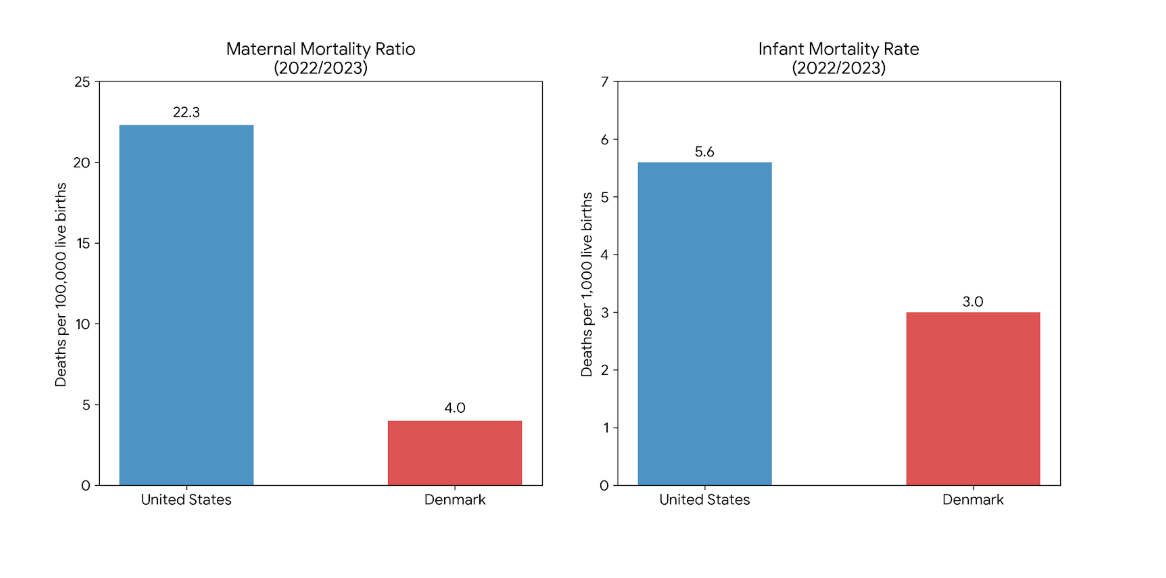
Denmark’s maternal mortality rate is about 4 deaths per 100,000 live births. Ours is over 22 per 100,000. More than five times higher than Denmark’s. For Black women in America, it’s closer to 50 or over 12-times the rate in Denmark..
Denmark’s infant mortality rate is 3.0 per 1,000 live births. Ours is 5.6—more than double.
These aren’t small differences. They represent thousands of American mothers and babies who die each year from preventable causes.
How does Denmark do it? They have universal prenatal care. Every pregnant woman sees a midwife. Every woman gets screened for infections, high blood pressure, diabetes, and other risks. No one falls through the cracks because they can’t afford care or don’t have insurance.
Denmark integrates midwives into their healthcare system as primary maternity providers. Midwives attend most births, with obstetricians available for complications. This model—used across Scandinavia, the Netherlands, and the UK—consistently produces better outcomes than our physician-dominated, intervention-heavy approach.
Danish women get paid maternity leave. They can rest and recover after birth. They can breastfeed without rushing back to work. Their partners get leave too, so new mothers have support at home.
The American Workaround
Instead of building these systems, America creates workarounds. We vaccinate every newborn for hepatitis B because we can’t guarantee we’ll catch every infected mother. We recommend flu shots for all children because we can’t keep sick people home from work. We cast a wider net because our safety net has holes.
I’m not against these workarounds. They save lives. Universal hepatitis B vaccination at birth reduced childhood infections by 99%. We shouldn’t abandon it.
But we should be honest about what we’re doing. We’re compensating for system failures, not celebrating system strengths.
When vaccine advocates say “we’re not Denmark,” they’re essentially saying: “Our healthcare is worse, so we need more medical interventions to make up for it.” That’s probably true. But it shouldn’t be the end of the conversation.
What “Let’s Be Denmark” Would Mean
Imagine if America decided to actually be like Denmark. What would that look like for obstetric care?
Universal prenatal care, so every pregnant woman gets screened and monitored regardless of income or insurance status. Right now, one in four American women don’t get adequate prenatal care.
Midwifery integration, so low-risk women have access to midwife-led care that’s associated with fewer interventions and equal or better outcomes. Currently, midwives attend only about 12% of U.S. births.
Paid family leave, so mothers can recover from birth and bond with their babies without financial catastrophe. The United States remains the only wealthy country without guaranteed paid maternity leave.
Postpartum support, so new mothers get home visits and mental health screening during the dangerous weeks after delivery. Most American women see no healthcare provider until six weeks postpartum—if they show up at all.
Universal health coverage, so no woman delays prenatal care because she’s uninsured or underinsured.
The Real Question
The vaccine debate has exposed something uncomfortable. Defenders of American vaccine policy are inadvertently making the case against American healthcare. Every time they explain why we need more vaccines than Denmark, they’re listing our failures.
We should keep our vaccines. The evidence supports them. But we should stop treating our healthcare deficiencies as fixed features of American life.
The question isn’t whether we’re Denmark. The question is whether we want to be.
I think most American mothers would say yes.