
The Words You Use in Labor Matter More Than You Think
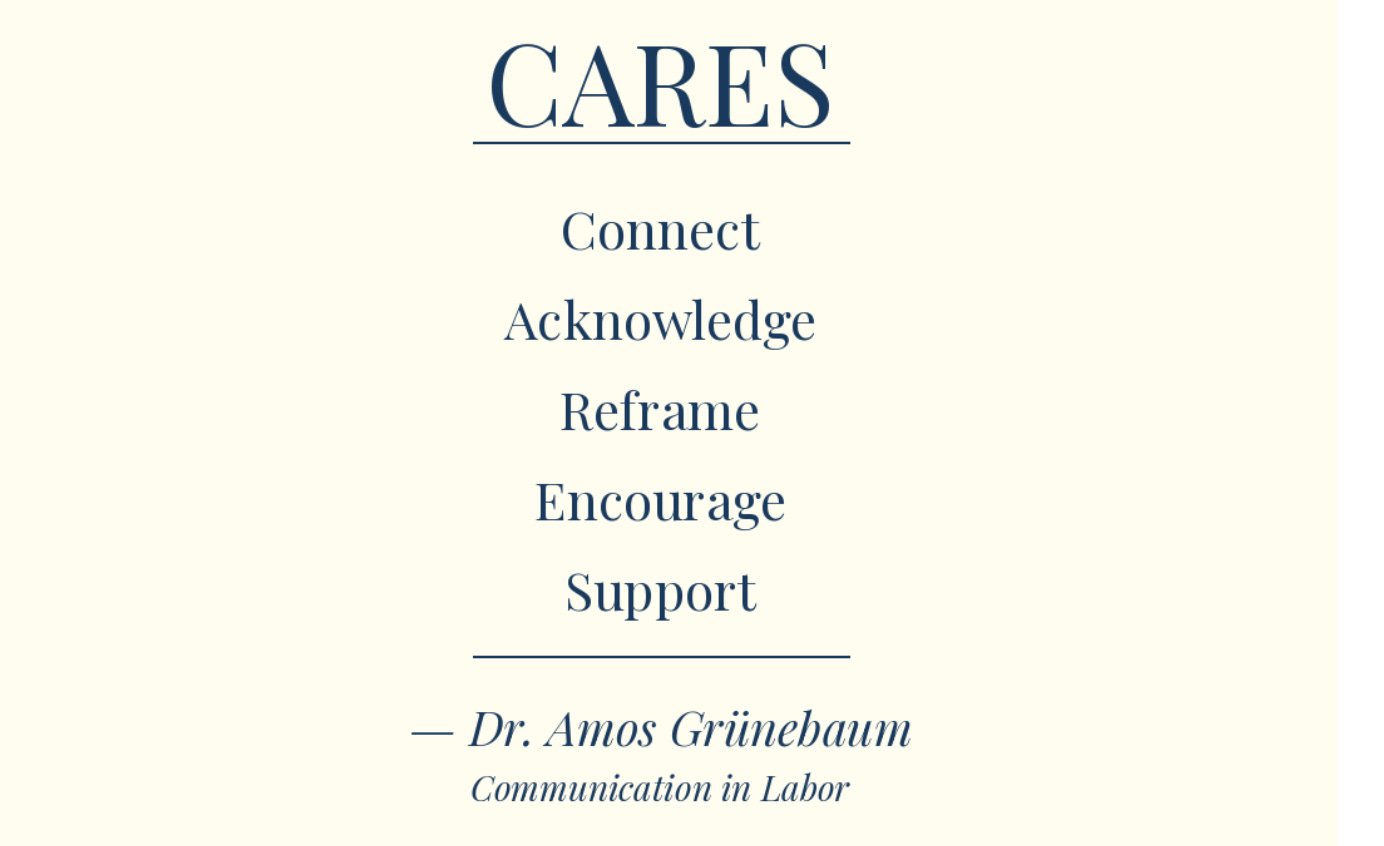
CARES: Connect-Acknowledge-Reframe-Encourage-Support

A first-time mother at 6 centimeters, shaking, gripping the bedrail, looks up at you and says: “Something is wrong. I know something is wrong.” Nothing is wrong. The tracing is reassuring, her vitals are stable, labor is progressing normally. But in that moment, what you say next will shape how she remembers this birth for the rest of her life.
You could say “Everything looks fine” and walk out to check on another patient. Medically, you’d be correct. But you would have just told a terrified woman that what she is feeling doesn’t matter.
Obstetricians get years of training in managing shoulder dystocia, postpartum hemorrhage, and fetal distress. We get almost no training in how to talk to a frightened person in labor. That’s a mistake. I developed a simple framework called CARES — five steps any clinician can use at the bedside without adding a single minute to their workflow.
Connect. Before you do anything clinical, make eye contact. Use her name. Acknowledge that you see her, not just her cervix. For patients with a history of trauma — and one in three American women have experienced sexual violence — feeling seen by their clinician can mean the difference between coping and spiraling. Connection starts before the first contraction and continues through every interaction.
Acknowledge. She said something is wrong. Don’t correct her — acknowledge her. “I can see you’re scared right now, and I hear you.” Acknowledgment means meeting the patient in her reality without judgment, not papering over it with false reassurance. This isn’t wasting time. This is care.
Reframe. “What you’re feeling is your body doing exactly what it’s supposed to do. That shaking, that pressure — it means you’re getting close to meeting your baby.” This isn’t cheerleading — it’s redirecting a terrifying sensation into something she can make sense of. Reframing transforms something happening to her into something she is doing.
Encourage. “You are handling this. You are stronger than you realize right now.” Positive encouragement builds a patient’s sense of capability and control. Just as important: avoid planting negative ideas. Saying “let me know if the pain gets too bad” introduces the expectation that it will. If she hasn’t mentioned pain, don’t seed it. Language matters — choose words that build strength, not words that anticipate failure.
Support. Communication doesn’t end with words. Support means ensuring she has continuous labor support, clear information about what’s happening and why, and the sense that her team is working with her. It means circling back after a difficult moment. It means asking “What do you need right now?” and meaning it.
Why does this matter beyond bedside manner? Because poor communication is one of the strongest predictors of birth trauma, and birth trauma drives postpartum depression, PTSD, and fear of future pregnancies — which in turn drives requests for cesarean delivery without medical indication. If we’re serious about reducing unnecessary interventions, we need to start with how we communicate during labor.
None of this takes extra time. It takes extra intention. Your patient will remember what you said in that room long after she’s forgotten her Bishop score. Make it count.