
The six words that have caused more potential harm in medicine than any clinical error
The six words that have caused more unnecessary harm in medicine than any clinical error

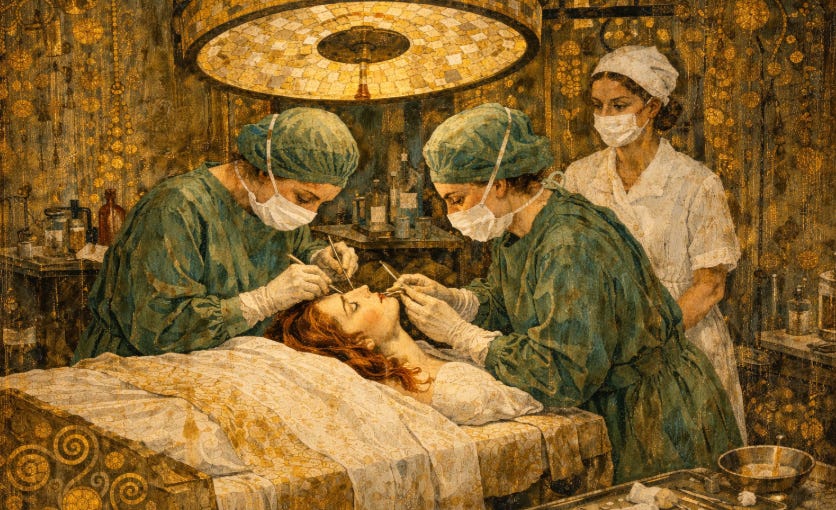
My patient takes Mounjaro for weight management. She needed minor surgery on her cheek, a procedure done entirely under local anesthesia. The chance of needing general anesthesia was less than 1 in 1,000.
She was told not to eat for 24 hours before the procedure.
Here is what the guidelines actually say.
The American Society of Anesthesiologists’ 2023 guidance on GLP-1 medications like Mounjaro recommends that patients on weekly dosing hold the medication for one week before a procedure (1). If the medication has been held and the patient has no gastrointestinal symptoms, the guidance says to follow standard ASA fasting: solid food up to 6 to 8 hours before, clear liquids up to 2 hours before (2).
The 2024 multi-society update, endorsed by the ASA and four other professional organizations, went further: most patients can continue their GLP-1 medications before elective procedures (3).
But here is the part that matters most. Every one of these GLP-1 fasting guidelines addresses a specific concern: aspiration of stomach contents during general anesthesia or deep sedation.
That is the risk.
General anesthesia suppresses the protective reflexes that keep food out of the lungs. That is why preoperative fasting exists.
My patient’s procedure was under local anesthesia.
She was awake.
Her airway reflexes were intact.
The probability that she would need general anesthesia was less than 0.1%. The entire rationale for extended fasting did not apply to her clinical situation.
When she asked the anesthesiologist why she had to fast for 24 hours, the answer was:
“We’re conservative here. We’re safer.”
I have heard this sentence, in various forms, for 50 years. And every time I hear it, the same question comes to mind: safer for whom?
The rest of this post is for paid subscribers.
