
The Responsibility Clause: Why Reporting Domestic Violence Saves Lives
A moment that taught me a lesson I will never forget: silence is dangerous.

A Street in New York
One day, years ago, I was walking along a side street in New York when I saw something that stopped me in my tracks. Across the street, a couple was fighting. Not just bickering. Not just an argument. They were shouting violently at each other. Then he shoved her. She shoved back. It was fast, loud, and ugly.
I did what I was trained to do as a doctor and as a citizen: I called 911.
By the time the police arrived, the couple had disappeared. I gave the officers a description and assumed that was the end of it. But the next day, I got a call that still echoes in my memory.
The Assistant District Attorney told me that the woman had been found dead. Her boyfriend had been arrested and accused of killing her. I was asked to give a report, and a year later I testified at his trial. He was convicted.
That moment taught me a lesson I will never forget: silence is dangerous.
Domestic Violence (DV): An Epidemic We Don’t Want to See
Domestic violence is far more common than most people realize. One in three women in the United States experiences physical violence from an intimate partner during her lifetime. For men, the number is about one in four. And those are only the cases that make it into surveys.
Every year, more than 1,500 women in the U.S. are killed by an intimate partner. That’s nearly four every single day. These numbers are not abstract. They represent mothers, daughters, sisters, neighbors, colleagues. They represent the woman I saw on that street.
Domestic violence thrives in secrecy. It hides behind closed doors, in the hope that no one will notice. Abusers often count on the silence of neighbors, friends, even family.
The Bystander’s Dilemma
We’ve all had moments when we see something troubling and ask ourselves: “Should I get involved?”
What if I misunderstood the situation? What if it makes things worse? What if they turn on me?
These are real fears. But here’s the reality: doing nothing carries its own risk. Studies show that when bystanders intervene—whether by calling 911, distracting the aggressor, or later offering support—the victim’s chance of survival increases.
Calling the police, as I did, does not always lead to immediate rescue. In my case, they didn’t find the couple that night. But that report became part of the record. It allowed prosecutors to piece together a timeline. It contributed to justice.
And maybe, just maybe, if more of us speak up, some women might live who would otherwise die.
Why Victims Don’t “Just Leave”
One of the most damaging myths about domestic violence is the idea that victims can simply walk away.
The truth is more complicated. Abusers isolate their partners, control their money, threaten their children, and manipulate their sense of self-worth. Many women fear they will be killed if they leave—and sadly, research shows this fear is justified. The most dangerous time in an abusive relationship is when the victim tries to separate.
This is why outside help matters. When we call the police, when we document what we see, when we connect someone to resources, we become part of the fragile safety net that might hold long enough for a survivor to escape.
A Medical and Ethical Perspective
As a physician, I see domestic violence not only as a social issue but as a public health emergency. Victims of abuse have higher rates of chronic illness, depression, substance use, pregnancy complications, and even premature death. Children who witness abuse suffer trauma that echoes for decades.
As an ethicist, I see it as a question of responsibility. If we believe that every human life has dignity, then looking away is not neutral. It is complicity.
There’s an old saying: “What you permit, you promote.” When we ignore domestic violence, we allow it to grow.
The Physician’s Duty to Screen
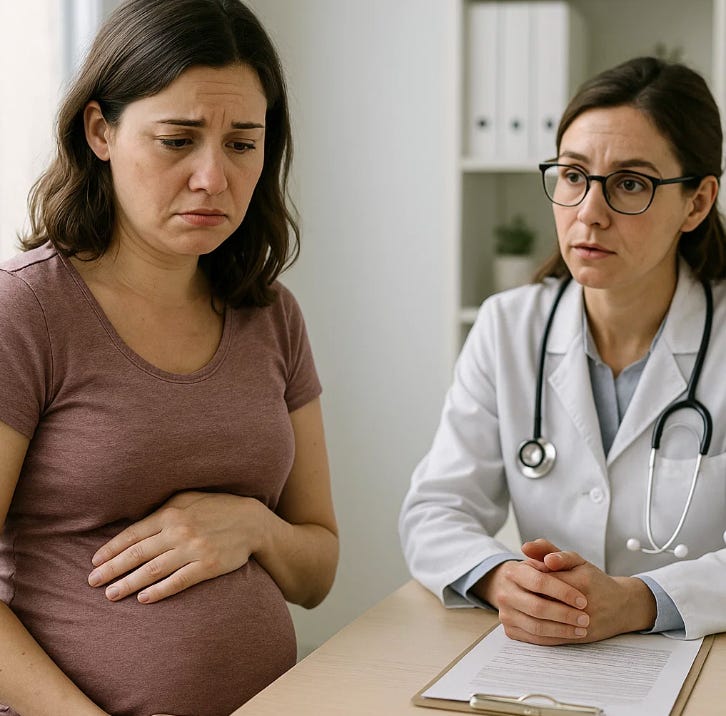
For us as doctors—and especially as obstetricians—there is an added responsibility. Pregnancy is often one of the few times women have regular contact with the health system, making it a critical window to identify abuse. Guidelines recommend routine, confidential screening for domestic violence at prenatal visits. But screening alone is not enough. We must also be prepared to respond: to know what resources exist locally, to offer referrals discreetly, and to understand how to document injuries safely. Asking the right questions and acting on the answers can be the first step in breaking the cycle of violence.
Practical Steps You Can Take
Call 911 if you see violence in progress. Even if you’re unsure, let professionals assess the situation.
Offer support if safe. A quiet word—“I’m concerned about you, you don’t deserve this”—can plant a seed.
Document what you witness. Write down dates, times, descriptions. This may later help in court.
Share resources. The National Domestic Violence Hotline (1-800-799-SAFE) is available 24/7 in the U.S.
Advocate in your community. Support shelters, speak openly, break the taboo of silence.
Additional Steps for Physicians
Screen routinely and privately. Ask open but direct questions at every prenatal visit, away from partners or family. Examples: “Do you feel safe at home?” or “Has anyone ever hurt, threatened, or controlled you in ways that make you feel afraid?”
Document carefully. Record injuries, statements, and observations in the medical chart using the patient’s own words. Avoid judgmental language.
Ensure safety in the office. Never hand written information to a patient if their abuser may find it. Offer discreet resource cards that can be hidden, or provide hotline numbers verbally.
Know local resources. Be ready with referrals to shelters, hotlines, and legal aid. Or social work in your institution. If possible, establish a relationship with local domestic violence programs.
Respect autonomy. Offer support and options, but remember: forcing action can increase danger. The goal is to empower, not dictate.
Learn your legal obligations. Laws vary by state regarding mandatory reporting. Know when you must report and when you can offer confidential support.
What I Learned from Testifying
When I testified at the trial, I looked at the empty chair where that woman should have been. I thought of her family. I thought of the moment I saw her still alive.
Did my call save her? No. But did my call matter? Yes.
It mattered for justice. It mattered for accountability. It mattered because the system cannot work without witnesses willing to speak.
And perhaps it matters for the next woman whose neighbor, passerby, or stranger chooses to pick up the phone instead of walking away.
Reflection
Domestic violence is not a private matter. It is not “just a fight.” It is not something to ignore out of politeness or fear. It is a life-and-death issue hiding in plain sight on our streets, in our apartment buildings, in our hospitals, in our families.
The day I testified, I asked myself a question I now pose to you:
When you see violence, will you be a silent witness—or a voice that might save a life?
Will you as a doctor routinely screen your patients for domestic violence as you should and ask the right questions?