The Problem with “Preventable Maternal Deaths”: Why That 80% Statistic Misleads More Than It Helps
When a word means everything, it means nothing—and that’s not just imprecise, it’s ethically wrong

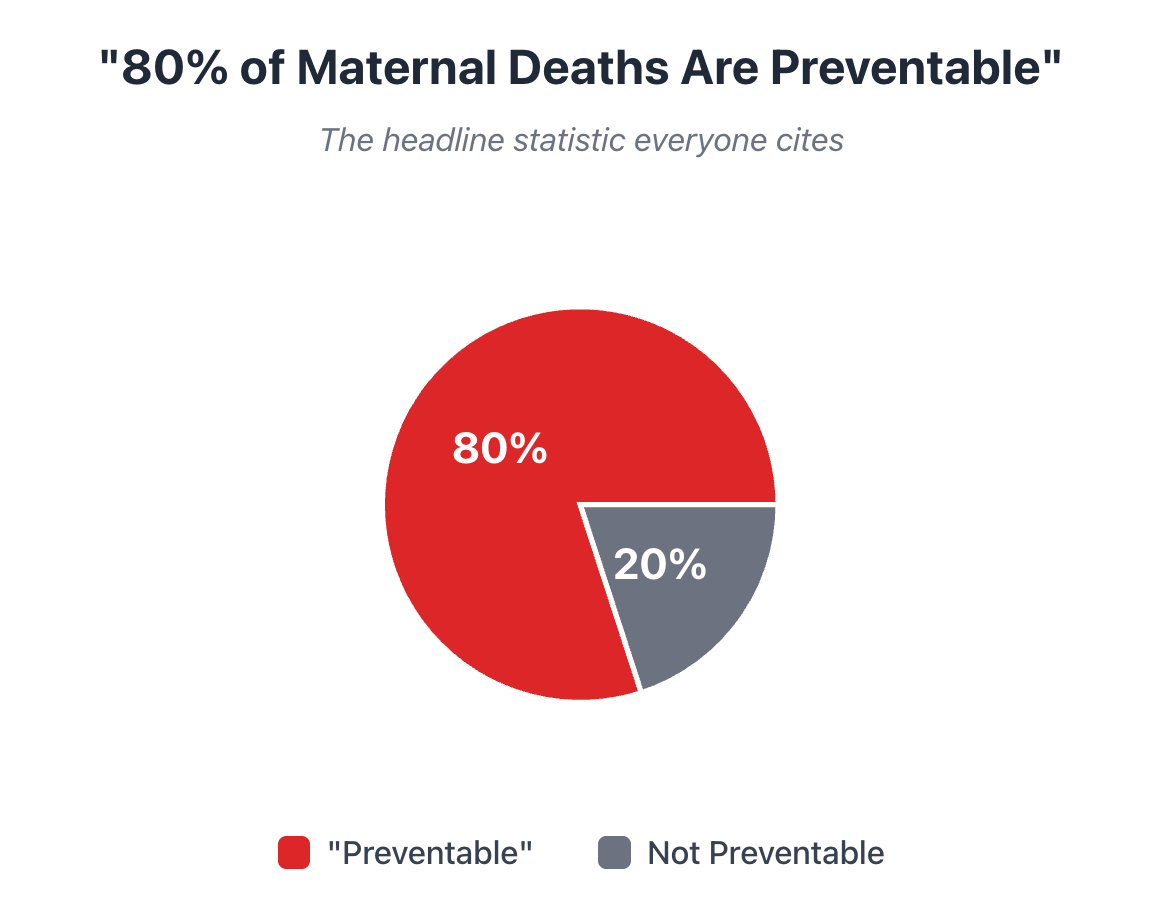
You’ve probably seen the headline: “More than 80% of pregnancy-related deaths in the United States are preventable.”
It sounds damning. It sounds like hospitals are failing. It sounds like if we just tried harder, fixed our healthcare system, or held doctors accountable, we could save these women.
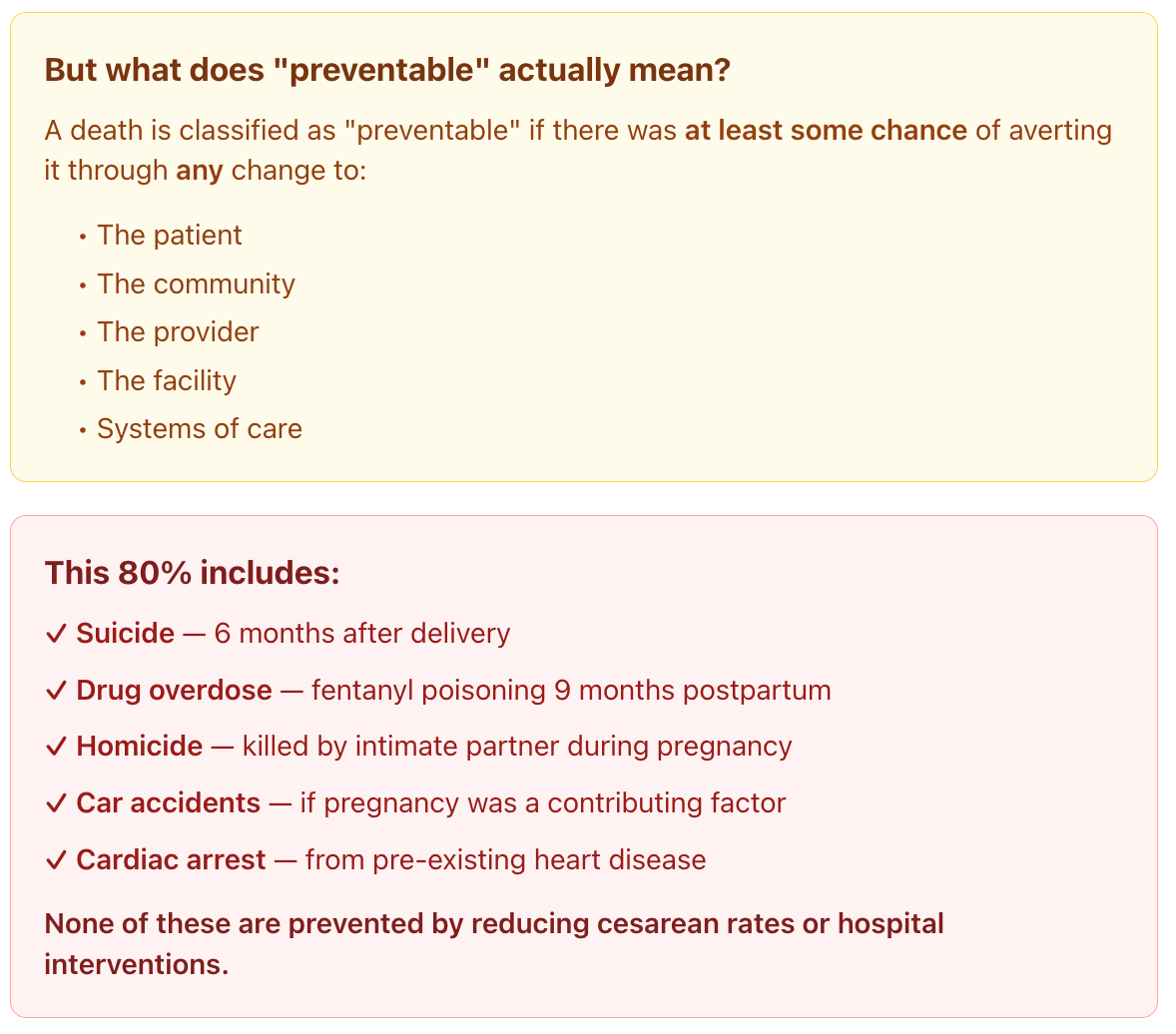
But here’s what that statistic doesn’t tell you: a death is classified as “preventable” if there was at least some chance of averting it through any reasonable change—to the patient, the community, the provider, the facility, or systems of care. That’s not a high bar. That’s barely a bar at all.
When a woman dies from a fentanyl overdose six months after delivery, that death is “preventable.” When a woman is murdered by an intimate partner during pregnancy, that death is “preventable.” When a woman dies by suicide three months postpartum, that death is “preventable.”
All of these are tragedies. None of them happened because a doctor made a mistake in the delivery room.