
The Overlooked Crisis: Saving Mothers by Checking Blood Pressure After Birth
Maternal deaths don’t end when the baby is born—and most could be prevented with a simple cuff and five minutes of care. The Safety Ledger — Notes on accountability, error, and what it really takes...

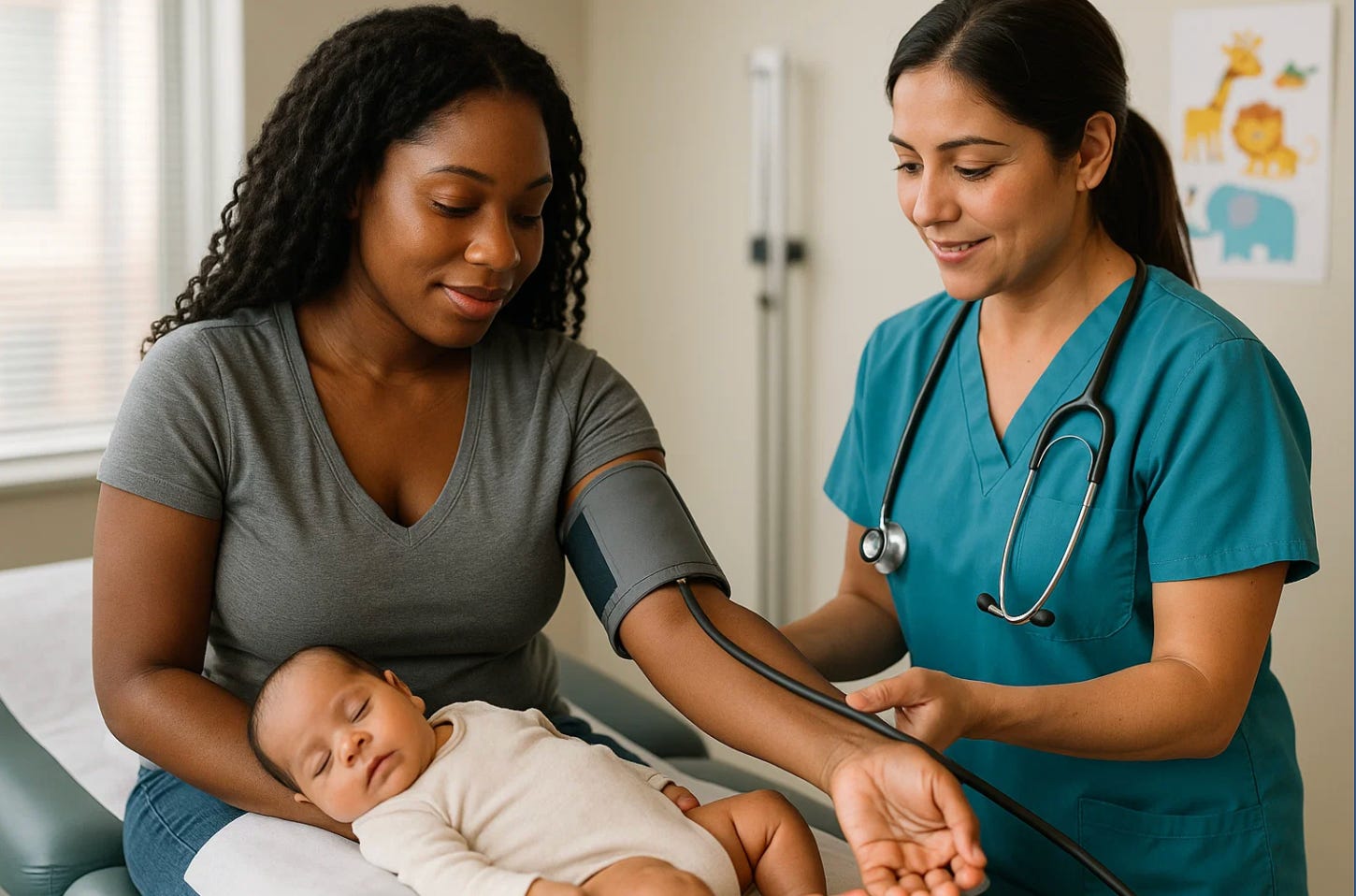
The first six weeks after birth—what obstetricians call the “fourth trimester”—are the deadliest for American mothers. Nearly half of all maternal deaths now occur after delivery, often silently, in bedrooms and living rooms rather than hospitals.
Many new mothers are so focused on their newborns that they forget their own bodies are still recovering, sometimes in dangerous ways. High blood pressure, or postpartum preeclampsia, is one of the leading causes of these deaths, yet it often goes unnoticed until a seizure, stroke, or heart failure occurs.
A recent study published in JAMA Network Open by Amro and colleagues from the University of Texas found an elegant, low-cost solution: check the mother’s blood pressure during her baby’s well-child visits.
Pediatric clinics see more than 90% of infants within two weeks of birth, but less than half of mothers attend their own postpartum appointments. When pediatricians began routinely measuring maternal blood pressure during newborn checkups, they detected significantly more cases of postpartum preeclampsia—many in women who felt perfectly fine.
This small act changed outcomes. In the study, 6% of women screened at pediatric visits were diagnosed early and readmitted for treatment, often days sooner than they otherwise would have been. Half of these cases were “de novo”—meaning the women had no signs of hypertension before or during pregnancy. Without that extra check, they likely would have stayed home until symptoms became life-threatening.
The numbers tell a larger story. In the United States, hypertensive disorders of pregnancy kill roughly one woman every ten days. Forty percent of those deaths happen after discharge. Between 1998 and 2009, cases of eclampsia rose by 64%, and pregnancy-related strokes more than doubled. These are not rare complications—they are predictable failures of follow-up.
Why does this happen? Because the postpartum system is designed around the baby, not the mother. After birth, she may not see her obstetrician for four to six weeks—if at all. She’s often exhausted, in pain, and juggling feeding schedules. Meanwhile, the pediatrician, who sees her baby multiple times in the first two months, rarely checks on her health. It’s a fragmented system that splits the mother–infant dyad into two disconnected worlds.
Amro’s study proposes something radical in its simplicity: reunite them. Every time a newborn is examined, the mother’s health should be part of that encounter. Checking her blood pressure, asking about headaches, vision changes, or shortness of breath—these steps take less than five minutes but can save her life. Pediatric offices are ideal for this integration because mothers trust these visits and already show up for them.
This approach doesn’t replace obstetric care; it reinforces it. It also addresses inequity. In the study, over 70% of participants were from racial and ethnic minority groups, and nearly 80% had public insurance. These are the same populations with the highest rates of maternal death. A system that meets women where they already go—the pediatric clinic—can close some of that gap.
Technology offers other options, like remote blood-pressure monitoring, but those depend on patient engagement and reliable equipment. In contrast, a clinic-based reading is immediate, objective, and hard to ignore.
It also avoids what ethicists call “structural neglect”: assuming that a mother who doesn’t return for follow-up simply “failed” to comply, rather than recognizing that the system failed to accommodate her reality.
The ethical message is clear. Every postpartum death from preeclampsia represents a preventable loss—one that results from system design, not individual weakness. Incorporating maternal screening into well-child visits is a rare example of a win-win: it costs almost nothing, requires no new technology, and transforms routine pediatric care into a maternal-safety net.
In obstetrics, we often say that the baby is the best fetal monitor. But in the postpartum period, the baby is also the best opportunity to monitor the mother. A simple blood pressure cuff at a pediatric visit may be one of the most powerful tools we have to prevent maternal death.
Reflection / Closing: How many mothers have sat silently in a pediatric waiting room, dizzy, swollen, or short of breath, while everyone’s attention focused on the baby? What if, next time, someone also asked, “Mom, how are you feeling today?”
🔗 LinkedIn Tagline: Most postpartum mothers see a pediatrician before they ever return to their own doctor. Checking their blood pressure during those visits could save lives—and change the definition of pediatric care.