
The Numbers Don’t Lie: Abortion Bans Are Killing Women and Babies
The Evidence Room — New national data show that states with abortion bans have more births, more infections, and more deaths—and silence is no longer an ethical option.

It’s no longer just a political debate. It’s a data set.
Since the Supreme Court overturned Roe v. Wade, states that banned abortion have experienced at least 22,000 additional births, 478 excess infant deaths, and 59 excess deaths during or shortly after pregnancy. These are not abstractions. They are preventable tragedies now backed by numbers.
The findings, presented at a June symposium co-hosted by Johns Hopkins, PRB, and the State Innovation Exchange, confirm what doctors have warned since 2022: when the law interferes with care, patients die.
The Human Cost Behind the Data
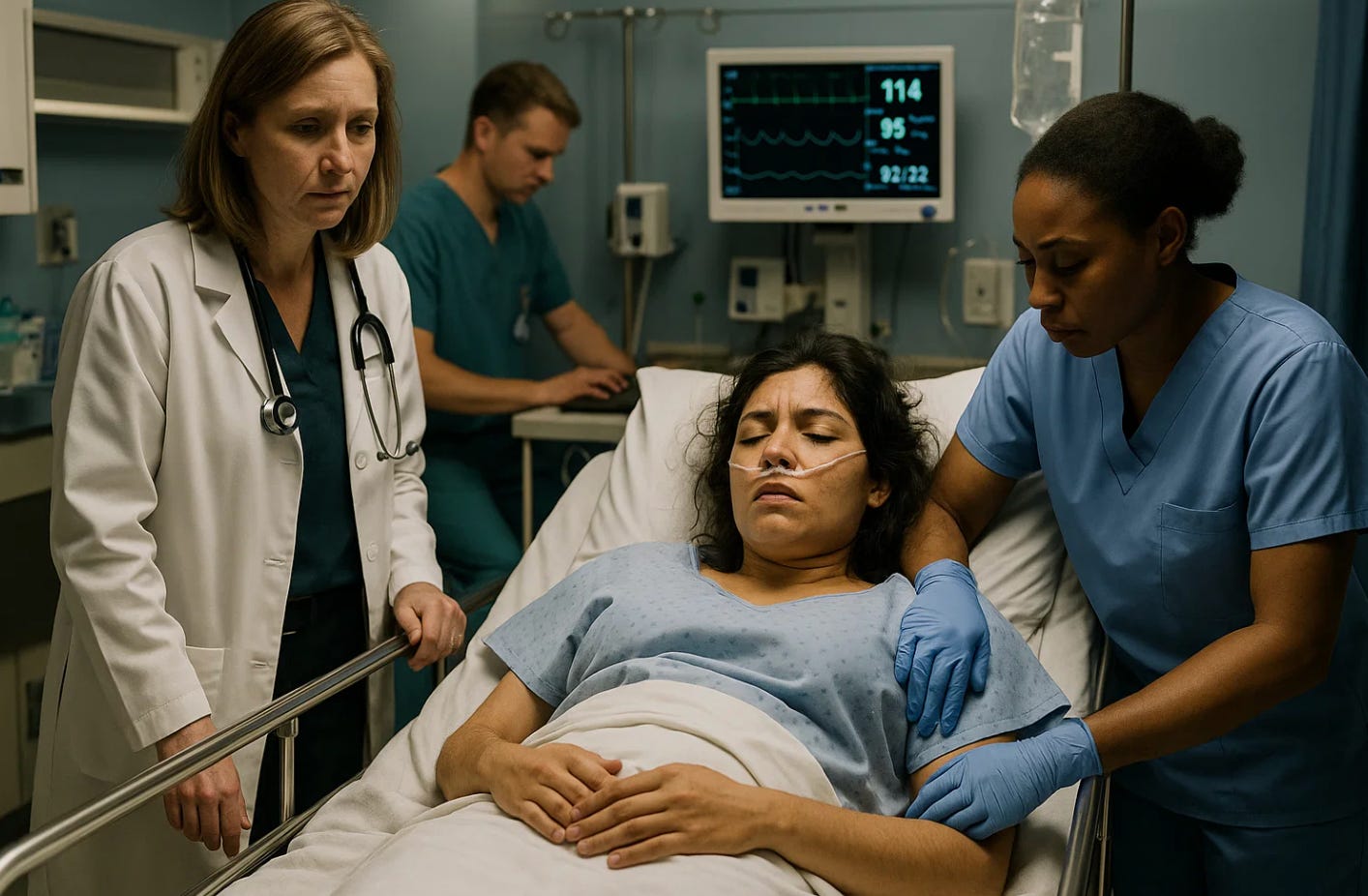
In Texas, hospital data show a 50% increase in sepsis among women who lost pregnancies in the second trimester. Sepsis—an infection that can kill within hours—should be preventable with timely care. But “timely” no longer means what it once did. Doctors now wait until the fetal heartbeat stops before treating miscarriages, even when they know the pregnancy is not viable.
The result was predictable. Women like Josseli Barnica, a 28-year-old mother from Honduras, waited forty hours for miscarriage care that never came. She developed sepsis and died. Her death was not a rare exception; it was the logical outcome of laws that criminalize standard medicine.
These deaths are not limited to abortion seekers. They include women with broken water bags at 17 weeks, mothers carrying fetuses with lethal anomalies, and patients with pre-existing conditions worsened by pregnancy. The line between “abortion” and “medical emergency” has blurred to the point of absurdity—because the law drew it that way.
Data That Should Shame Us
The research is devastating.
478 more infants died in states with abortion bans. Many of these deaths were from congenital anomalies that would previously have led to pregnancy termination.
Infant mortality rose 11% for Black babies and 5% for white babies.
Pregnancy-associated deaths rose 8%, with Black women again bearing the heaviest toll.
Sepsis rates in Texas jumped 61% among women forced to wait for fetal cardiac arrest before receiving care.
These are the measurable outcomes of moral pretense.
When Doctors Become Law Enforcers
Clinicians interviewed for the studies described their new roles as “law interpreters.” They must now decide not what is medically right, but what is legally survivable. “High-risk” pregnancy has been redefined by lawmakers who have never practiced medicine. ACOG’s Dr. Nisha Verma put it bluntly: “The exception is so narrow that so many people get left behind in that definition.”
Every hour of hesitation increases risk. Every lawyer’s phone call means another infection, another seizure, another dead baby. Doctors are told to wait until patients are sick enough to qualify for care under laws written by people who have never seen sepsis.
A Public Health Emergency by Design
The post-Dobbs crisis is not an unintended consequence—it’s the system working as written. The bans were drafted vaguely so hospitals would err on the side of delay. The result is a nationwide “experiment” in moral harm: 19 states now ban abortion completely or nearly so, and the data show rising death wherever they do.
What makes this especially grotesque is that many of these same states have the highest maternal mortality rates in the country even before Dobbs. The bans are not solving a moral problem. They are compounding a medical one.
What This Means for Policy and Ethics
The response cannot be another cautious statement. The evidence is now overwhelming that abortion bans create measurable, preventable mortality. “Clarifying” medical exceptions is not enough. As long as doctors face prison for acting, they will hesitate, and patients will die.
Medical societies must go beyond advocacy to accountability. They should:
Publish annual mortality reports documenting deaths linked to abortion bans.
Keep a public list of women who died from delayed or denied care.
Hold conferences only in states where physicians can legally practice full-scope medicine.
Demand federal protection for doctors providing emergency pregnancy care.
Ethically, the duty is clear: beneficence requires treatment even when law punishes it. Nonmaleficence forbids letting harm occur by omission. Justice demands equal access to care, not survival by geography.
The Deeper Truth
The rise in deaths is not a mystery. It is what happens when ideology dictates medicine. A system that denies care in the name of “life” is a system that doesn’t understand what life means.
These laws were sold as moral victories. The numbers now tell us what they really are: a slow, state-sponsored public health disaster.
Reflection / Closing
When historians look back on this era, they will not count the court cases. They will count the funerals.
The data are in, the harm is clear, and the ethical question has changed. It is no longer whether abortion should be legal. It is whether a nation that knowingly lets women and babies die still deserves to call itself civilized.