
The Myth of the “Informed, Loving Mother”: How Moralism Harms Women and Distorts the Science of Infant Feeding
When breastfeeding advocacy crosses into judgment, it stops being advocacy and becomes coercion.

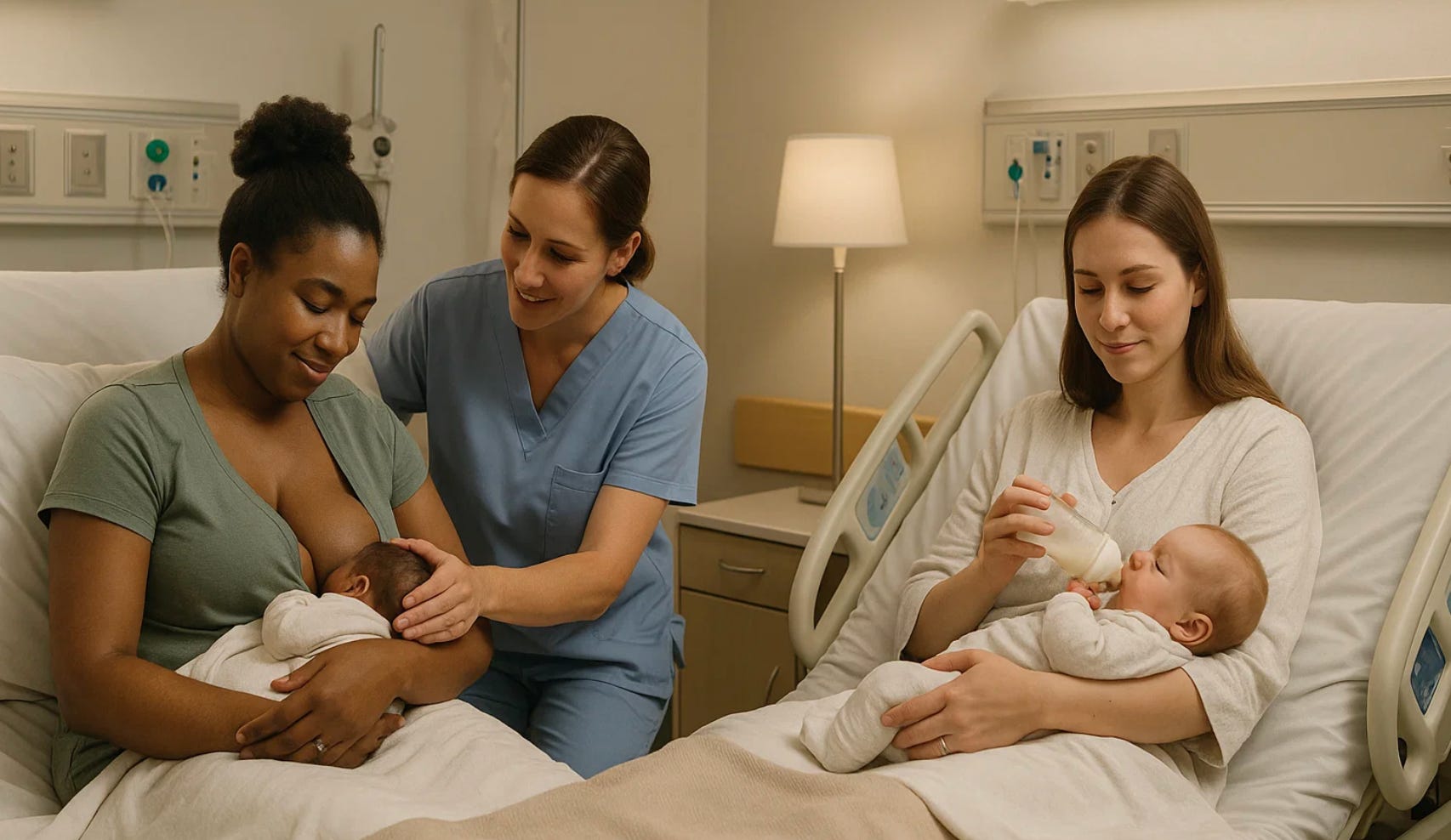
A statement circulated recently that read: “No informed, loving mother would voluntarily expose her child to the excess risks of formula.” At first glance, it may look like strong breastfeeding advocacy. It is not. It is maternal shaming dressed in moral certainty. It is the kind of absolutist language that pushes women into silence, erodes trust in clinicians, and leaves many mothers believing they have failed before they even begin.
This sentence is built on an old and harmful assumption. It claims there is only one acceptable way to be a good mother. It implies that the choice to use formula is an act of ignorance or emotional deficiency. And it frames breastfeeding not as a biologic process with real-world constraints but as a moral referendum on maternal worth. Anyone who has practiced obstetrics or pediatrics for more than a week knows how divorced from clinical reality this is.
What the Statement Gets Wrong
The core problem is that it commits the moralistic fallacy: the belief that if something is good, then any deviation from it is bad and must reflect a failing of character.
Breastfeeding has measurable benefits. That is true. But benefits do not logically become moral obligations, particularly when real-world circumstances limit what is possible. Feeding an infant is shaped by biology, health conditions, medications, trauma histories, workplaces, family demands, and mental health. Reducing all of that to a single variable is inaccurate and cruel.
The phrase also misuses the word informed. Knowledge does not erase physiologic constraints. It does not guarantee milk supply. It does not resolve postpartum depression or heal after sexual trauma. It does not make contraindicated medications suddenly safe. And it does not give a woman 24 paid weeks at home if her employer offers none. When people insist that “informed mothers breastfeed,” what they really mean is that mothers must conform to their worldview, regardless of context.
Finally, the sentence weaponizes love. It implies that formula-feeding mothers love their infants less. That is the most corrosive message of all. It turns a nutritional decision into a referendum on maternal identity. It is not science. It is stigma.
What Evidence Actually Shows
Yes, breastfeeding provides immunologic and metabolic benefits. Yes, it should be supported and enabled whenever possible. But risk differences between breastfeeding and modern formula in high-income settings are modest. Infant health is influenced far more by factors such as parental mental health, housing stability, safe sleep, access to care, and social support.
And there is a parallel truth: mentally healthy mothers with adequate sleep, preserved autonomy, and reduced shame raise healthier infants. Studies consistently show that postpartum depression, intrusive guilt, and maternal stress have measurable effects on bonding, infant development, and long-term outcomes. A feeding method that breaks a mother’s psychological stability does not serve the infant.
The Many Legitimate Reasons Women Cannot or Do Not Breastfeed
Clinical practice is filled with circumstances the absolutists ignore.
• Insufficient lactation, often due to hormonal conditions or difficult deliveries
• Medical contraindications, including certain infections and treatments
• Necessary medications for epilepsy, autoimmune disease, mental health, or oncology
• Prior trauma, where breastfeeding triggers PTSD symptoms
• Return to work, especially without protected pumping time
• Maternal mental health, where sleep deprivation worsens depression or anxiety
• Personal boundaries and autonomy, which are ethically valid on their own
None of these reflect a lack of love. They reflect the complexity of real life and the reality that maternal wellbeing is an infant health issue.
What Good Counseling Should Look Like
Evidence-based infant feeding counseling does not dictate. It informs. It respects. It partners. It explains relative risks honestly without exaggeration, and it acknowledges the constraints and preferences of the mother. The clinician’s job is to protect safety, not police purity.
A good counseling conversation sounds like this:
“Breastfeeding has benefits. I will support you if you want to try. But your health, your comfort, and your mental stability matter. You are not a better or worse parent based on how your baby gets fed. Together we will choose what keeps both of you well.”
This is what shared decision-making looks like. Anything else is ideology.
The Real Harm of Maternal Shaming
When statements like the one above spread, they do not increase breastfeeding rates. They increase secrecy, guilt, and disengagement from care. Women stop asking questions because they fear judgment. They internalize failure when biology, economics, or trauma—not laziness—shape their feeding journey. And they learn that the system values lactation over their wellbeing.
We cannot build healthier families on a foundation of shame.
Reflection / Closing
Feeding an infant is not a moral test. It is a medical, social, and emotional reality that unfolds differently for every family. When someone claims that only “informed, loving mothers” breastfeed, they reveal more about their own rigidity than about maternal behavior. The real work is to create a world where women are given support, not ultimatums, and where the measure of a mother is not the content of a bottle but the care, stability, and love she provides every day.