
The MedMal Room: The Lump That Couldn’t Wait - A Case of Missed Breast Cancer in Pregnancy
The Obstetric Intelligence - When reassurance replaces vigilance, both doctor and patient pay the price.

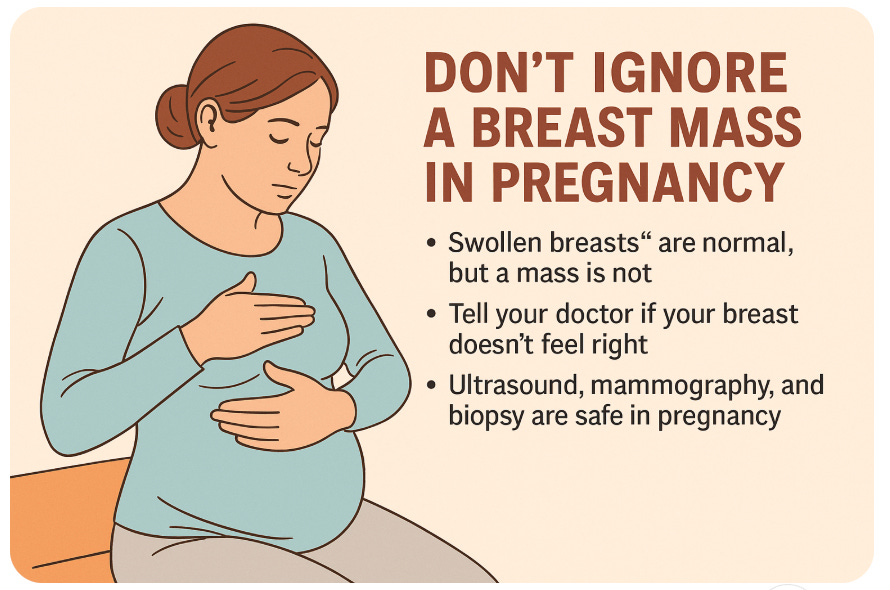
When a “wait and see” approach becomes an ethical failure.
She was 32, pregnant with her first child, and glowing. During her second trimester, she noticed a firm lump in her left breast, harder than the rest, not tender, not changing. Her obstetrician smiled gently and said, “It’s just hormonal swelling. Totally normal.” She left reassured. Six months later, while nursing her newborn, the lump had doubled in size. By the time she saw an oncologist, it was stage III breast cancer with lymph node involvement and, soon after, bone metastases.
This is not a rare story. It is a preventable one.
The Medical Facts Behind the Case
Pregnancy-associated breast cancer (PABC) - breast cancer diagnosed during pregnancy or within one year postpartum occurs in about 1 in 3,000 pregnancies. Because normal pregnancy causes breast enlargement, tenderness, and nodularity, suspicious findings are often dismissed as “just physiologic.” But the stakes are high: PABC is frequently diagnosed late, and delayed diagnosis leads to higher rates of metastasis and worse survival compared to age-matched non-pregnant women.
In this case, the obstetrician made a common but consequential mistake: assuming normalcy. The patient reported the lump at 22 weeks. No imaging was ordered, no follow-up was documented, and the note read simply: “Breast engorgement, likely hormonal.”
What Should Have Happened
Professional guidelines are clear.
A new breast mass in pregnancy always requires imaging.
Ultrasound is the first-line test, completely safe for mother and fetus.
If suspicious, mammography with abdominal shielding should follow; fetal radiation exposure is negligible (<0.03 mGy).
Core-needle biopsy is safe in pregnancy, with minimal risk of hematoma or milk fistula.
Delay is the real danger. Every week counts.
If these steps had been followed, her cancer could have been diagnosed months earlier, very possibly before nodal spread.
The Doctor’s Responsibility
Medicine’s first ethical pillar is nonmaleficence: do no harm. In practice, it also means do not ignore. When a patient reports a lump, a physician’s duty is to evaluate, not reassure without evidence. In obstetrics, where breast discomfort is routine, vigilance can fade, but that’s when responsibility must sharpen.
The obstetrician in this case failed both professionally and ethically:
Failure to investigate a specific symptom that warranted imaging.
Failure to document follow-up, leaving no safety net if the mass changed.
Failure to communicate uncertainty, telling the patient “it’s normal” rather than “it’s probably benign, but let’s confirm.”
A malpractice review later concluded that had standard diagnostic steps been taken, the cancer likely would have been diagnosed at an earlier, potentially curable stage.
The Patient’s Role
Ethically, patients also have agency, and responsibility. Autonomy means not only the right to make informed choices but also the duty to seek clarification when something feels wrong.
This patient trusted her physician, as most of us do, but when the lump persisted for months, she assumed “doctors know best.”
There are lessons here:
If your body feels off, especially during pregnancy, report it again.
If a doctor dismisses your concern, get a second opinion.
Pregnancy changes everything, but it doesn’t turn red flags into normal findings.
The Aftermath
When her oncologist confirmed metastatic disease, the patient’s first question was not about survival. It was: “Why didn’t anyone listen when I said something was wrong?”
The obstetrician later testified that she feared exposing the patient to “unnecessary radiation.” Yet the literature is unequivocal: diagnostic mammography in pregnancy is safe. The harm came not from radiation, but from delay.
Ethical Reflections
This case underscores a recurring theme in obstetric ethics: false reassurance is not compassion. It is neglect disguised as kindness.
Doctors must resist the temptation to normalize every symptom simply because pregnancy is full of them. To say “it’s probably nothing” is easy; to say “let’s make sure” is responsible.
Ethically, the clinician’s duty extends beyond diagnosis to protecting the patient’s trust. When trust leads to harm, the failure is moral as well as medical.
For patients, empowerment is not defiance—it’s self-protection. Pregnancy does not suspend your right to demand attention to your own body.
What This Case Teaches
Clinical vigilance saves lives. Any new breast mass in pregnancy must be evaluated.
Imaging and biopsies are safe for mother and fetus when performed correctly.
Documentation matters. If an obstetrician reassures, the note must include rationale and a plan for re-evaluation.
Communication must be clear: “Probably benign” is not “ignore it.”
Patient advocacy is essential. A second opinion is not disloyal; it’s prudent.
Closing Reflection
A lump ignored became a life shortened. The lesson is simple but sobering: pregnancy doesn’t protect against cancer, and reassurance doesn’t replace responsibility.
Every obstetrician should ask themselves: Do I normalize too quickly?
Every patient should ask: If my doctor dismisses my concern, do I have the courage to ask again?
Both answers can change a life.