
The MAHA-Fueled Myth of “Natural Family Planning”
Fertility awareness is being repackaged as empowerment. The evidence says it is not protection.

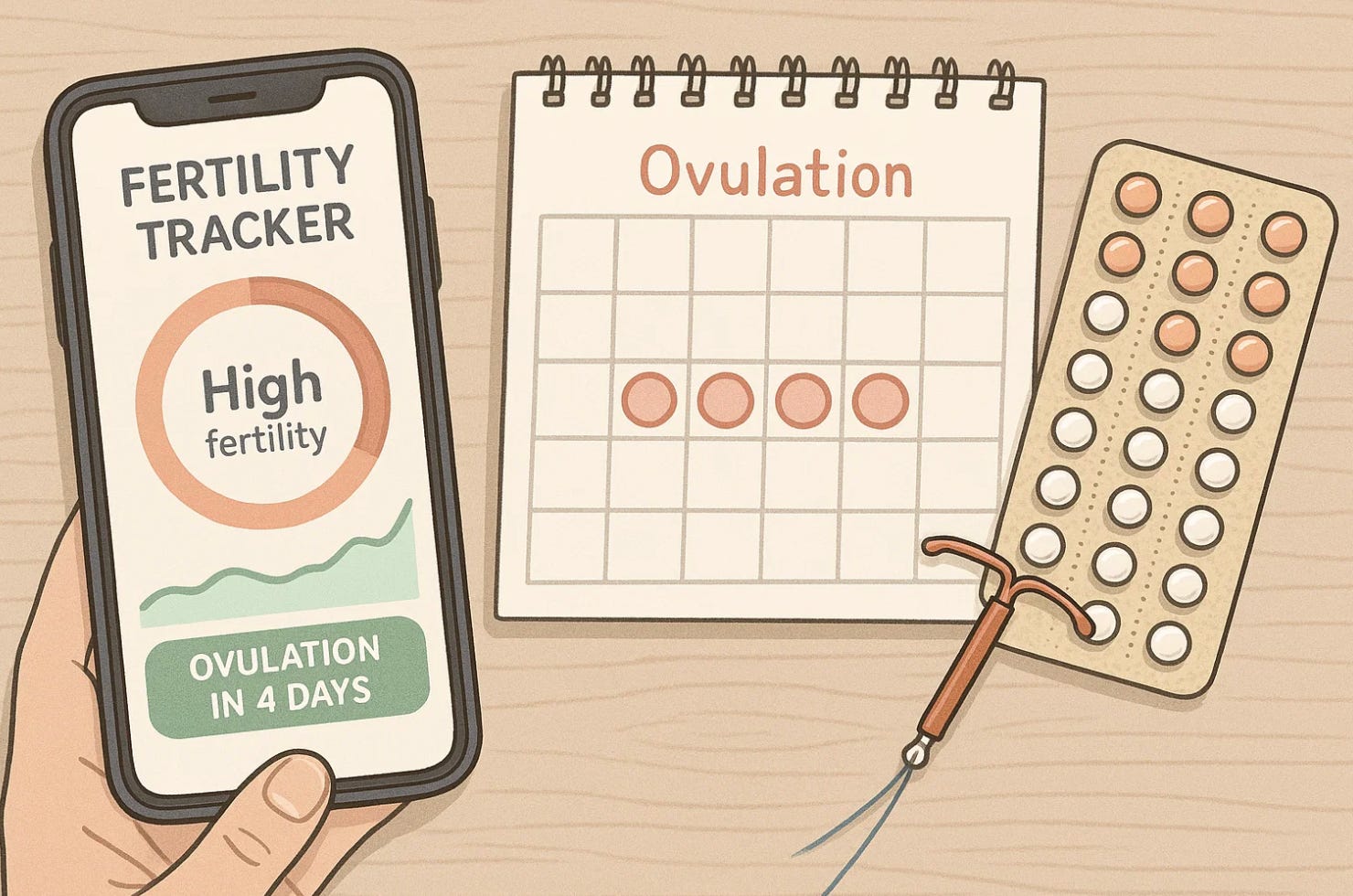
Fertility awareness is being sold as empowerment. In practice, it’s ineffective, inequitable, and ideologically driven. Evidence, not ideology, must guide family planning.
The “natural” family planning revival now sweeping through social media and conservative circles is not new. It is the old rhythm method reborn, dressed in the language of wellness, faith, and “female empowerment.” What is new is the coalition behind it. The Make America Healthy Again (MAHA) movement has joined traditional religious opponents of contraception in urging women to abandon hormonal birth control. The message is seductive: trust your body, avoid chemicals, and take back control of your fertility. The reality is more dangerous than empowering.
The American College of Obstetricians and Gynecologists (ACOG) has reviewed the data across multiple fertility-awareness-based methods (FABMs) , the so-called symptothermal, cervical mucus, and urinary hormone models.
Even under ideal study conditions, the best success rates hover around 77% for typical use. That translates to nearly one in four women becoming pregnant within a year of relying solely on these methods. In contrast, hormonal contraception and IUDs prevent pregnancy with 93–99% effectiveness. The difference is not academic. It is measured in unintended pregnancies, maternal morbidity, and the loss of autonomy that comes when ideology replaces evidence.
The MAHA movement’s rhetoric about “natural cycles” and “body literacy” cleverly merges the aesthetics of wellness culture with the theology of pro-natalism. It appeals to women’s frustration with side effects of hormonal contraception while distorting the risk–benefit reality. Claims that oral contraceptives cause infertility, personality change, or attraction shifts are not supported by high-quality data. Large cohort studies, including those from Denmark and the United States, show no long-term reduction in fertility after discontinuation of hormonal birth control, and no consistent evidence of major psychiatric harm. Adverse effects exist, but they are manageable and reversible. What is not reversible is an unintended pregnancy.
Natural family planning demands vigilance, abstinence during fertile days, and precise interpretation of physiologic signs—tasks even experienced users can misread. Small fluctuations in temperature, stress, illness, or sleep can distort cycle data. Moreover, many of these methods assume a regular ovulatory pattern that simply does not exist in adolescents, postpartum women, or those with polycystic ovary syndrome or thyroid dysfunction. The very populations most vulnerable to unplanned pregnancy are also those for whom these “natural” methods fail most often.
Advocates frame this as freedom from synthetic hormones. Yet the evidence shows it functions more as freedom from reliability. It is neither modern nor feminist to promote methods that require women to bear the full cognitive and biological burden of preventing pregnancy while their partners abstain or disengage during fertile days. The abstinence component makes these methods uniquely impractical for most couples and counterproductive for those in unequal relationships where “joint decision-making” can mask coercion.
The political dimension compounds the harm. Efforts within the Department of Health and Human Services to redirect Title X family planning funds toward fertility awareness programs represent not inclusion but substitution.
When policymakers defund clinics that provide effective contraception and replace them with abstinence-based teaching, they are not expanding choice, they are erasing it. These strategies echo the rhetoric of “informed freedom” while ensuring that low-income women have fewer evidence-based options.
Cycle-tracking apps and “AI birth control” devices add a veneer of innovation to the same unreliable logic. The promise that algorithms can replace contraceptive efficacy is marketing, not medicine. Even the most sophisticated wearable sensors cannot overcome the biologic variability of ovulation or the social unpredictability of human behavior. A 2023 review in Contraception found that no fertility-tracking app on the market met the accuracy threshold required for regulatory approval as a contraceptive device.
Hormonal contraception is not perfect, but it is among the most studied and regulated medications in medicine. Its safety profile is well established. Its social impact, reducing maternal mortality, spacing pregnancies, enabling education and employment, is one of the greatest public health successes of the twentieth century. To dismiss it as “poison” or as an assault on femininity is to deny the evidence that contraception saves lives.
Reflection:
The phrase “natural family planning” conceals an old truth: nature is not inherently safe, and what is “natural” is not always ethical. When politics masquerades as health, women pay the price. The gold standard in family planning is not moral purity or hormone avoidance—it is effectiveness backed by data and autonomy grounded in truth. Anything less turns choice into ideology.