
The Invisible Invaders: Microplastics and the Pregnant Body
What happens when the most ordinary material on Earth enters the womb. The Prognosis — Forecasting where medicine, and morality, are heading next.

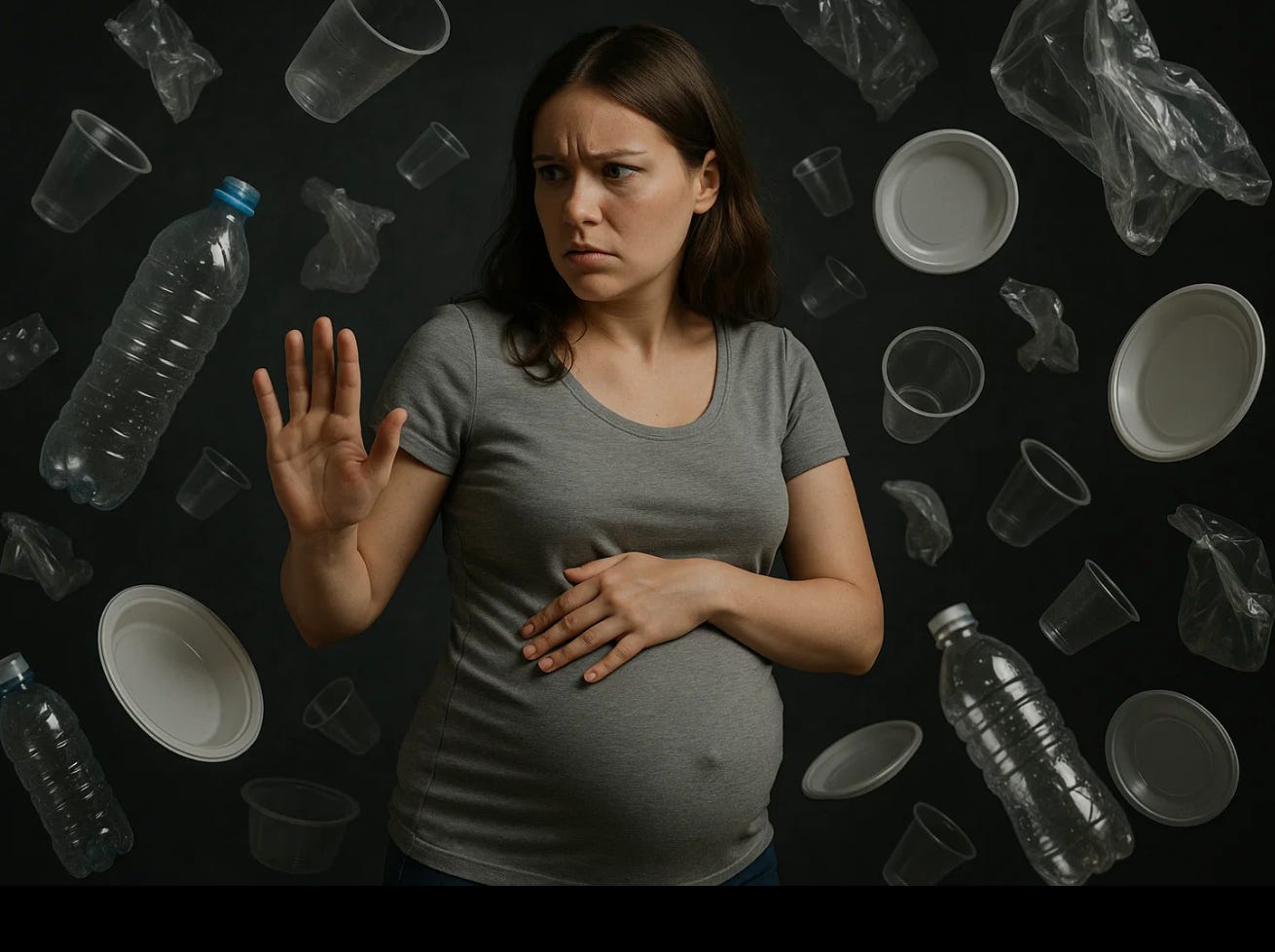
Plastic was once the miracle of modernity. Lightweight, cheap, and unbreakable, it transformed how we eat, drink, and live. But what began as a symbol of progress has quietly infiltrated the most intimate spaces of life—our lungs, our blood, and, as recent research shows, the placenta itself.
What Are Microplastics?
Microplastics are plastic fragments smaller than 5 millimeters, often invisible to the naked eye. They come from the breakdown of larger plastics, synthetic fabrics, cosmetics, and industrial waste. Nanoplastics are even smaller—less than one micrometer—and can move freely through biological barriers, including the placenta.
Microplastics are everywhere: in bottled water, fish, table salt, household dust, and even in the air we breathe. One study estimated that the average person may ingest the equivalent of a credit card’s worth of plastic every week.
Microplastics in Pregnancy: The New Frontier of Exposure
Until recently, the placenta was believed to protect the fetus from most environmental pollutants. But new evidence is shattering that belief. A landmark 2021 Environment International study found microplastics in four out of six human placentas examined. Most particles were less than 10 micrometers—small enough to travel through the bloodstream and potentially reach fetal tissue.
Subsequent studies in 2023–2024 identified plastic polymers in placental tissue, amniotic fluid, and umbilical cord blood. Animal research shows these particles can accumulate in the liver, brain, and developing organs of offspring, where they provoke inflammation and oxidative stress.
We still do not know the full consequences for human pregnancy, but we have seen enough to be concerned. The presence of these particles in the maternal–fetal interface means that every cell of the developing baby may be indirectly exposed to an industrial byproduct.
The Chemical Trojan Horse
Microplastics act as carriers of harmful chemicals—phthalates, bisphenol A (BPA), polybrominated flame retardants, and heavy metals. These chemicals can leach into the bloodstream, mimicking hormones or interfering with their receptors.
Endocrine disruption: BPA and phthalates can alter estrogen and thyroid hormone activity, which are essential for fetal brain and reproductive development.
Inflammation and oxidative stress: Plastic particles can provoke local inflammation, which in pregnancy is linked to preterm birth, preeclampsia, and growth restriction.
Epigenetic effects: Animal models suggest that exposure to micro- and nanoplastics during gestation can modify gene expression in offspring, potentially influencing metabolism and immune function long after birth.
Think of microplastics as a slow-release capsule: they enter quietly, carry toxins, and deliver them to places never intended to receive them.
Lessons for Patients and Clinicians
Microplastic exposure is not a problem a single individual can solve. But pregnant women and clinicians can still take practical, evidence-based steps to reduce risk.
For Expectant Parents
Reduce plastic contact with food and drink:
Use glass, stainless steel, or ceramic containers.
Avoid microwaving food or formula in plastic containers.
Limit use of single-use water bottles.
Filter drinking water:
Reverse osmosis or activated carbon filters can reduce microplastic content.
Standard refrigerator filters are not enough.
Be mindful of food packaging:
Choose fresh produce instead of pre-wrapped or processed foods.
Store leftovers in reusable glass containers.
Control indoor exposure:
Vacuum with HEPA filters and dust regularly—indoor air contains microplastic fibers from carpets and synthetic clothing.
Wash new textiles before use and avoid synthetic fabrics when possible.
Check baby products:
Choose glass baby bottles or BPA-free plastic with verified safety labels.
Avoid vinyl toys or teethers containing phthalates.
Avoid unnecessary cosmetics and exfoliants:
Some still contain microbeads, although banned in many countries.
Choose “microplastic-free” labeled products.
There are no “Microwave safe” Plastics
Even with “microwave-safe” labels, caution is warranted—especially in pregnancy. Heating plastic changes its structure, allowing microscopic fragments and chemical additives to migrate into food. Tests by Consumer Reports and several universities have found that even certified microwave-safe plastics can release measurable amounts of BPA substitutes such as BPS and BPF, along with phthalates, when exposed to heat. These chemicals act as endocrine disruptors, interfering with estrogen, thyroid, and insulin pathways critical to fetal development. For that reason, obstetricians increasingly advise patients to reheat in glass or ceramic, not in plastic, regardless of labeling. The safest habit is simple: use plastic only for storage at room temperature or refrigeration, and switch to nonplastic containers for any heating.
For Clinicians
Incorporate environmental history in prenatal visits.
Ask about food storage habits, bottled water use, and household air quality.Educate without alarming.
Present microplastic exposure as a preventable environmental factor similar to secondhand smoke—serious, but modifiable.Support evidence-based guidance.
Rely on research from the WHO, EPA, and ACOG’s environmental health recommendations, which emphasize reduction rather than elimination.Advocate for system-level change.
Support hospital policies to phase out single-use plastics in labor and delivery units.
Encourage research funding for microplastic surveillance in maternal–fetal health.
Collaborate with public health.
Partner with local environmental organizations to raise awareness.
Promote population-level data collection to identify exposure hotspots.
Document emerging cases.
When placental pathology reveals plastic fragments, record and report findings to help build the evidence base.
What’s Overlooked
Public debate often frames microplastic exposure as a pollution issue, but for obstetricians, it is a prenatal health issue. The placenta, the organ that sustains life, has become a biological archive of environmental neglect.
We have long recognized that maternal nutrition, infection, and stress shape the developing fetus. Now we must recognize that environmental contamination does too. A truly modern prenatal visit should not only check blood pressure and hemoglobin but also acknowledge the invisible exposures our patients live with daily.
Ethical Reflection
What are we willing to accept as “normal exposure”? When plastic enters the womb, the line between environment and biology disappears. The ethical challenge is not just scientific—it is moral. Every plastic bottle and wrapper discarded today may echo in the biology of tomorrow’s children.
Pregnancy has always symbolized hope and renewal. Yet the modern placenta tells a quieter truth: that the next generation is already carrying traces of ours.
🔗 LinkedIn Tagline:
Microplastics have entered the human placenta. The womb is no longer untouched by modern life—and obstetricians must treat environmental exposure as part of prenatal care.
Hashtags:
#PregnancyHealth #EnvironmentalMedicine #MaternalFetalMedicine #Microplastics #PublicHealth #ObstetricEthics #ThePrognosis
🖼️ Image Prompt (16:9 horizontal):
A realistic digital visualization of a human placenta glowing in translucent pink and blue, with microscopic plastic particles floating through amniotic fluid like stardust; labeled arrows indicating “microplastics,” “umbilical cord,” and “maternal blood flow”; soft clinical lighting conveying both beauty and danger.