
The Gut-Brain Axis and Pregnancy
How a mother’s gut health may shape her baby’s brain

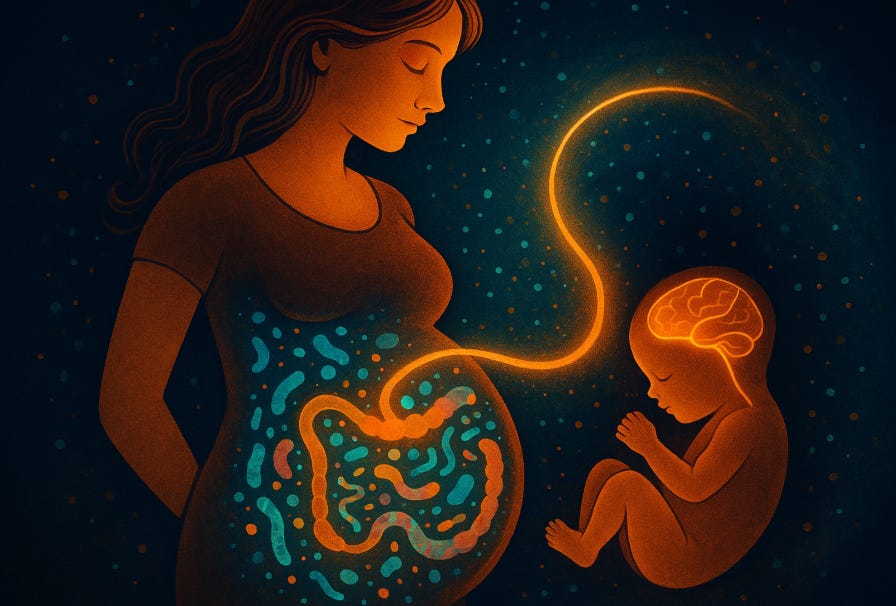
A few years ago, I met an expectant mother who proudly told me she had given up nearly all vegetables during her pregnancy because they made her feel bloated. “I’m just eating plain pasta and crackers—it feels safer for the baby,” she said. What she didn’t know was that by cutting out fiber-rich foods, she wasn’t only limiting her own nutrition, she was starving the trillions of bacteria in her intestines known as the microbiome. These microbes do more than help with digestion. They produce vitamins, control inflammation, and may even influence how a baby’s brain develops. Far from being a minor detail, her gut health was quietly shaping her child’s future.
The Gut-Brain Highway
For decades, doctors treated the gut and the brain as separate worlds. Today, research reveals that they are intimately connected through what is called the gut-brain axis. This is a two-way communication network involving the nervous system, the immune system, and chemical messengers produced by gut bacteria.
In pregnancy, this connection takes on new importance. Maternal gut bacteria produce molecules that can cross into the bloodstream, affect the placenta, and even influence fetal brain development. They regulate inflammation, produce neurotransmitter-like compounds, and help shape the baby’s early immune and nervous systems.
Diet and Brain Development
What a pregnant woman eats does not just nourish her body, it feeds her microbiome.
Fiber-rich foods (fruits, vegetables, beans, whole grains) fuel gut bacteria that produce short-chain fatty acids. These molecules have been shown to promote brain development, reduce inflammation, and support healthy metabolism.
Omega-3 fatty acids from fish, flaxseed, and walnuts play a critical role in building brain cell membranes.
Fermented foods like yogurt, kefir, and kimchi provide beneficial bacteria that may enhance the gut-brain connection.
On the flip side, diets high in processed foods, sugars, and unhealthy fats tend to favor bacteria linked with inflammation. That inflammation can, in turn, impair fetal brain development and increase risks for conditions such as anxiety, ADHD, or learning difficulties later in life.
Probiotics: A Possible Boost?
Probiotics—live bacteria available in foods or supplements—are being studied for their role in pregnancy. Some small trials suggest that certain strains of Lactobacillus and Bifidobacterium can reduce risks of gestational diabetes, preeclampsia, and even postpartum depression.
What’s more intriguing is that probiotics may help establish a healthier microbial inheritance for the baby, indirectly supporting brain development. While we still need larger, well-controlled studies, it is a promising area where simple interventions could have lifelong effects.
Stress and the Microbiome
Stress is another powerful disruptor. High stress during pregnancy is linked to changes in maternal gut bacteria, which can increase inflammation and alter the signals reaching the baby’s brain.
Animal studies show that stressed mothers pass on different microbial profiles to their offspring, with measurable effects on behavior and stress responses. In humans, maternal anxiety has been associated with differences in the infant microbiome and higher risks of emotional and developmental challenges.
This does not mean stress alone determines a child’s future. But it highlights the importance of mental health support in pregnancy. Mindfulness, therapy, community, and social support are not luxuries—they are interventions that may help protect both the microbiome and the developing brain.
What’s New and Overlooked
One emerging insight is that the maternal microbiome may influence not just brain development but also neurodevelopmental disorders. Research has linked disturbances in early microbial exposure to higher risks of autism spectrum disorder and ADHD. While the science is still early, it underscores the idea that the first thousand days—from conception through age two—are a critical window for both gut and brain.
Another overlooked factor is medication. For example, unnecessary antibiotic use during pregnancy can wipe out beneficial bacteria that produce brain-supporting compounds. While antibiotics can be lifesaving, every prescription should be carefully considered in light of this growing evidence.
Maternal Mood, the Microbiome, and the Postpartum Period
The gut-brain axis is not just about the fetus. It also plays a crucial role in the mother’s own mental health.
During pregnancy and postpartum, fluctuations in hormones, sleep, and stress create a vulnerable time for mood disorders. Up to one in five women experiences postpartum depression or anxiety. Increasingly, researchers are finding that the maternal microbiome may be a key player.
Gut bacteria produce neurotransmitter-like compounds such as serotonin, dopamine, and gamma-aminobutyric acid (GABA). These chemical messengers influence mood, resilience, and stress response. When the microbiome is diverse and balanced, these signals tend to be stabilizing. When it is disrupted—for example, by poor diet, chronic stress, or unnecessary antibiotics—the risk of mood disturbances increases.
Several small clinical trials suggest that probiotics may reduce postpartum depressive symptoms and improve overall well-being. While no supplement can replace comprehensive care, these findings highlight the microbiome as a potential therapeutic target. Supporting gut health before, during, and after pregnancy may therefore benefit not only the baby’s brain development but also the mother’s emotional recovery.
The message is clear: caring for the microbiome is not simply about passing something on to the child. It is also about protecting the mother’s own mental health, which in turn shapes the child’s earliest environment.
Practical Lessons
For pregnant women and their families, the gut-brain axis offers a hopeful message: small, daily choices can have a meaningful impact.
The Eating ecosystems. Prioritize fiber, omega-3s, and fermented foods while minimizing highly processed products.
Support the microbiome. A healthy gut community depends on diversity and balance, which can be supported through diet and, in some cases, probiotics. Probiotics are live bacteria found in foods like yogurt, kefir, sauerkraut, and kimchi, or in supplement form. They may help restore beneficial bacteria after disruptions such as antibiotics, reduce inflammation, and improve digestion. Some studies suggest that certain probiotic strains in pregnancy may lower the risk of gestational diabetes, preeclampsia, and even postpartum depression. Because not all probiotics are the same, and some may not be appropriate for everyone, it is best to consider them under medical guidance rather than self-prescribing.
Manage stress. Counseling, mindfulness, and social connection are as important as vitamins and ultrasounds.
Use medications wisely. Avoid unnecessary antibiotics or antacids unless prescribed.
Think long-term. The way a mother nurtures her gut today may shape her child’s brain for decades.
Reflection / Closing
We often focus on genetics, ultrasounds, and blood tests when we talk about a baby’s brain development. But pregnancy is also about ecology: a mother’s internal ecosystem of bacteria quietly influencing her child’s neurological future.
The ethical question for us as clinicians and as a society is this: are we ready to take the microbiome seriously as part of prenatal care? Or will we continue to treat it as an afterthought, even as evidence mounts that it may be one of the most powerful levers we have for shaping lifelong health?