
The Ethical Obligation of the Obstetrician to Screen for and Help Patients Experiencing Domestic Violence
Obstetricians have the ethical obligation to screen all patients for domestic violence.

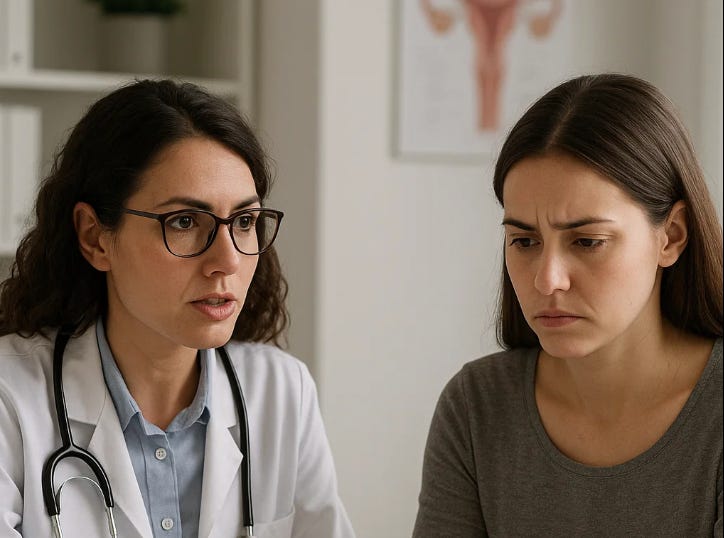
Domestic violence affects one in four women during their lifetime and remains a silent epidemic during pregnancy. It is defined as a pattern of abusive behaviors — physical, emotional, sexual, or financial, used by one partner to exert power and control over another. During pregnancy, this can take the form of physical assaults, threats, coercion, or controlling behaviors that endanger both maternal and fetal health. The consequences are profound: increased risk of miscarriage, preterm birth, low birth weight, and even maternal mortality. Beyond physical harm, psychological trauma can impair bonding, postpartum recovery, and long-term mental health. Obstetricians are ethically obligated not only to screen for it but also to be trained in how to respond effectively, yet too often, training and structured pathways are lacking.
A Story That Still Stays With Me
I will never forget a patient early in my career who came in for a routine prenatal visit. She was quiet, hesitant, and avoided eye contact. On physical exam, I noticed a fading bruise along her upper arm. When I gently asked if she felt safe at home, tears filled her eyes. She whispered “no,” and in that moment the entire visit changed. What had begun as a check of blood pressure and fundal height became an urgent ethical responsibility: to listen, to validate her, and to help her take steps toward safety.
That encounter has never left me. It taught me that behind the statistics are human beings whose lives can be saved or shattered by whether or not we ask the question.
The (not so)Hidden Epidemic
Domestic violence is far more common than most people realize. In the United States, about one in four women and one in nine men report intimate partner violence during their lifetime. Among pregnant patients, the rates are estimated at 3–9%, though underreporting likely makes the true prevalence higher. In fact, homicide by an intimate partner is one of the leading causes of maternal death in the U.S.
Research shows that domestic violence often intensifies during pregnancy, as abusers may feel threatened by the attention and independence a pregnancy brings. The consequences are profound: increased risks of miscarriage, preterm birth, low birth weight, placental abruption, and even perinatal death. Beyond physical harm, the psychological toll of fear, stress, and isolation during pregnancy can impair maternal mental health, disrupt bonding, and have lasting effects on child development. Far from being a protective period, pregnancy is often a time when violence escalates — making screening and intervention even more critical.
Despite this, many obstetricians never receive formal training in how to screen for domestic violence, or what to do if a patient discloses it. We are trained to manage eclampsia, hemorrhage, and shoulder dystocia, but not to confront a danger that claims as many lives as some of these emergencies.
There is literature exploring a possible link between domestic violence in pregnancy and later autism spectrum disorder (ASD) in children, but the evidence is still evolving and not definitive.
Key Points from the Research
Stress and inflammation pathways: Several studies suggest that maternal stress, including from intimate partner violence, may influence fetal neurodevelopment via inflammatory and hormonal mechanisms.
Epidemiological findings: A large Canadian cohort (Brown et al., 2017, JAMA Psychiatry) found that exposure to maternal abuse was associated with a modestly increased risk of ASD, though confounding factors such as genetics and socioeconomic status play a role.
Caution in interpretation: Associations do not mean causation. Not every child exposed to maternal violence develops autism, and not every child with autism has such a history. The relationship is likely multifactorial.
Clinical Relevance
Even if the link is not fully understood, recognizing and addressing domestic violence during pregnancy is critical for both maternal safety and long-term child health. Asking that “one simple question” could not only save lives but also reduce downstream risks to neurodevelopment.
Why Obstetricians Must Act
Pregnancy is often the only time in a woman’s life when she sees a physician regularly. Prenatal care creates repeated touchpoints and a trusting relationship. That makes the obstetrician uniquely positioned to identify domestic violence — sometimes as the only clinician a patient encounters in years.
The ethical responsibility is clear:
Beneficence demands that we act to protect patients.
Nonmaleficence requires that we do not allow silence to perpetuate harm.
Respect for autonomy means we must provide safe opportunities for disclosure and support.
Not asking is not neutral. It is abandonment.
The Training Gap
Sadly, most residency programs provide minimal structured education on domestic violence. At best, trainees may receive a single lecture. Few learn through simulation or practice how to ask the question in a nonjudgmental way. Even fewer are taught what to do when a patient says “yes.”
This lack of preparation leads to hesitation. Physicians fear offending patients, intruding into private matters, or opening a door without knowing how to help. But hesitation has consequences. Each missed opportunity is a moment where intervention could have altered the course of a life.
We would never accept unpreparedness in managing obstetric hemorrhage. Why do we accept it here?
How Screening Should Be Done
Screening should be universal, private, and compassionate. It must be conducted when the patient is alone, not in the presence of partners or family members. Normalizing the question is key: “Because violence is so common and affects health, I ask all my patients if they feel safe at home.”
When asked in this way, patients rarely take offense. Even if they are not ready to disclose, the simple act of asking creates an opening. They know their doctor is someone they can turn to in the future.
Beyond Screening: What Next?
Screening without a plan is unethical. The physician must be ready to respond. That response includes:
Validation and support: “You do not deserve this, and I believe you.”
Ensuring immediate safety: In cases of imminent danger, activating security or law enforcement may be necessary.
Providing resources: Having contact information for local shelters, hotlines, and social workers immediately available.
Respecting autonomy: Not every patient is ready to leave. Our job is to support, not to dictate.
Preparedness is an ethical imperative. To ask the question without knowing the next step is to risk deepening a patient’s sense of isolation.
The Barriers We Must Confront
Some obstetricians worry that there isn’t enough time to add another screening question to already short visits. But a question takes less than a minute — and could save a life. Others worry about cultural barriers or offending patients. But in truth, most patients welcome the inquiry. Even a negative response leaves the patient with the knowledge that their physician cares and will listen if they are ready later.
The larger barrier is institutional. Screening only works when supported by systems — social work, referral pathways, community partnerships. Leadership must prioritize this issue, integrating domestic violence response into the same category as other quality measures.
An Ethical and Professional Obligation
As an obstetrician and ethicist, I see domestic violence screening as inseparable from our professional duty. Our calling is to safeguard the health of both the pregnant and fetal patients. Violence threatens both.
The Professional Responsibility Model in obstetrics makes this clear: physicians must use their knowledge and authority to protect vulnerable patients. In the context of domestic violence, this means not waiting passively but proactively screening, responding, and advocating for institutional support.
Summary and Key Takeaways
The patient I met years ago still stays with me. Her disclosure taught me that the simple act of asking can begin a path to safety. We owe every patient that opportunity. And as obstetricians, we owe it to ourselves to be prepared — not just clinically, but ethically — to respond when they say “yes.”
Preparation means moving beyond a single question and building a system of response. It begins with training physicians to feel confident in asking, listening, and documenting disclosures. But it does not end there. We must ensure that every obstetric practice and hospital has clear, written protocols: a direct line to social work, referral networks with community shelters, and established relationships with hotlines and advocacy groups. Just as we drill for shoulder dystocia or postpartum hemorrhage, we should rehearse what to do when a patient discloses domestic violence.
Solutions also require institutional commitment. Screening and support should be integrated into electronic medical records, with private prompts that remind clinicians and create pathways for referrals. Medical schools and residency programs must embed domestic violence training as core curriculum, not optional lectures. Continuing education should reinforce that competence in this area is as essential as managing hypertension or diabetes in pregnancy.
Ultimately, the solution is cultural as well as clinical. We must create an environment where patients know they can trust us, where disclosure is met not with discomfort or silence but with calm, informed action. Every obstetrician should be able to say, with certainty: If my patient tells me she is unsafe, I know exactly what to do next. That is what ethical responsibility looks like in practice.
A Blueprint for Action
Universal Training: Incorporate mandatory, hands-on training in domestic violence screening and response for all medical students, residents, and practicing obstetricians. Simulation and role-play should be as routine as obstetric emergency drills.
Standardized Protocols: Develop clear institutional guidelines that outline exactly what to do when a patient discloses violence — who to call, how to document safely, and how to connect patients to resources.
Integrated Systems: Embed screening questions and referral prompts into electronic medical records, ensuring that clinicians are supported in real time and patients’ disclosures are handled consistently and confidentially.
Community Partnerships: Establish ongoing collaborations with local shelters, advocacy organizations, and law enforcement, so referrals are not abstract but actionable and immediate.
By following this blueprint, we can transform the encounter with domestic violence from a moment of hesitation into a pathway of hope. The first patient who ever told me she was unsafe showed me the power of asking. Our collective task now is to ensure that when we ask, we are always ready to act.
Domestic violence is common, deadly, and too often hidden. For many patients, the obstetrician is the only clinician in a position to intervene — and that makes silence unacceptable. Screening must be universal, private, and compassionate. Training must be strengthened so that every obstetrician feels prepared not just to ask, but to act. Institutions must back this commitment with clear protocols, integrated systems, and community partnerships that turn disclosure into immediate support. Ultimately, silence is not neutrality — it is abandonment. Our ethical obligation is clear: when patients entrust us with their safety, we must be ready to respond with knowledge, compassion, and action.
#Obstetrics #MaternalHealth #MedicalEthics #DomesticViolenceAwareness #PatientSafety #PerinatalCare #ObstetricLeadership