
The Bread We Break: What Loaves Can Teach Us About Pregnancy Nutrition
The Obstetric Intellect - Bread is more than food—it’s culture, comfort, and, during pregnancy, a mirror of how simple choices shape complex outcomes.

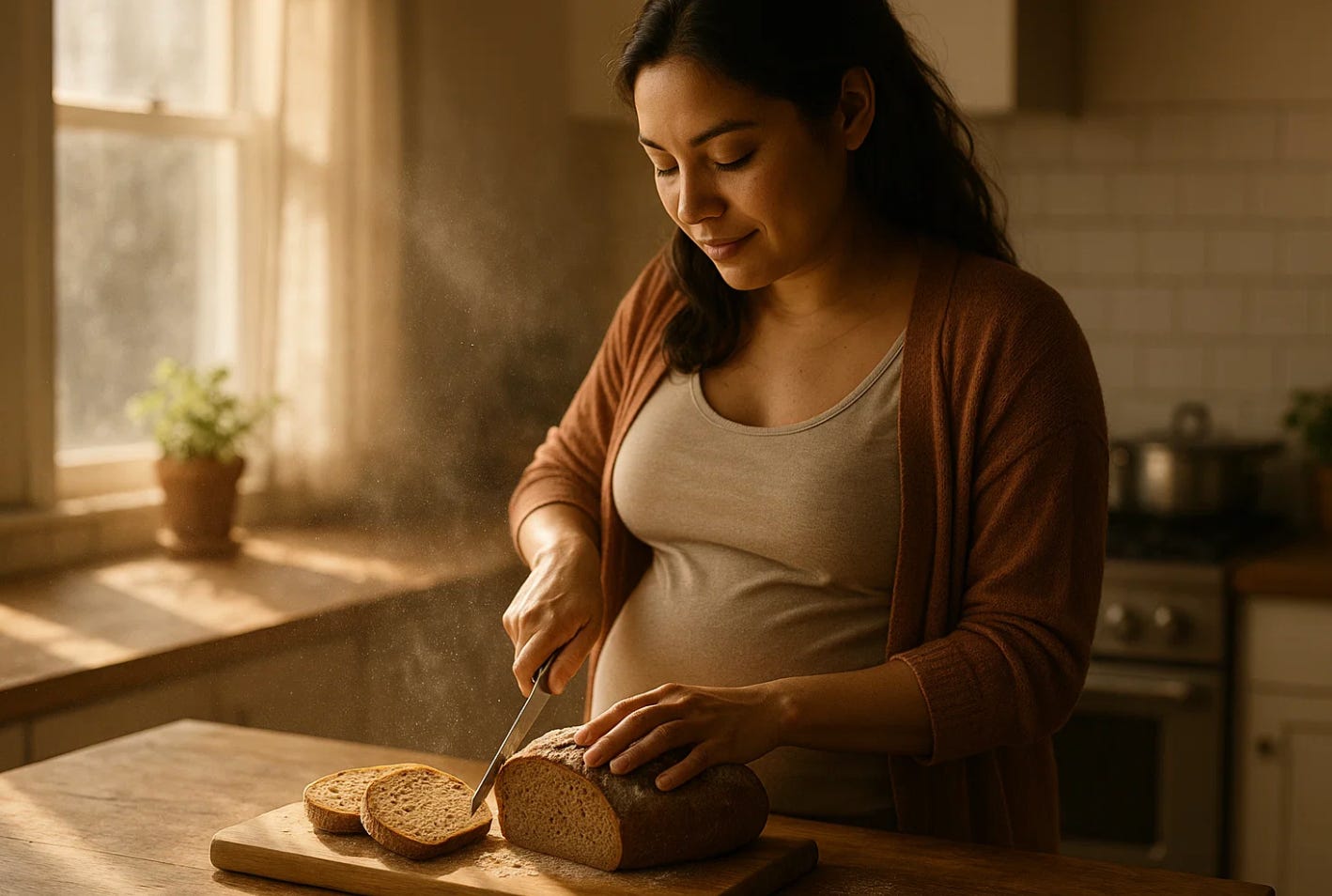
Bread, like pregnancy, is about patience, timing, and transformation. Whole grains may feed the body—but mindful nourishment feeds new life.
When actor Tony Shalhoub spoke about baking bread, he wasn’t really talking about bread. He was talking about patience, process, and the quiet satisfaction of transforming something raw into something alive. Pregnancy, in many ways, is the same story. It’s the art of timing, balance, and transformation. But unlike bread, which can survive a few errors, pregnancy is a system where every ingredient—literally—matters.
Let’s start with a simple question: is bread healthy in pregnancy? The answer depends entirely on what kind of bread we mean, and how we think about “healthy.”
The Problem with “White” Bread
Modern white bread is often stripped of what made bread a cornerstone of human diets for thousands of years: the bran and germ of the grain, which contain fiber, vitamins, minerals, and healthy fats. What’s left after industrial milling is mostly starch—quickly absorbed, easily digested, and nutritionally hollow.
In pregnancy, this matters. Rapidly absorbed carbohydrates can cause spikes in blood sugar and insulin, especially important for women with—or at risk for—gestational diabetes. The body’s need for complex carbohydrates and steady energy makes whole-grain or mixed-grain bread a far better choice.
Whole-grain breads contain magnesium (important for muscle and nerve function), folate (essential for fetal neural tube development), iron (to prevent anemia), and fiber (to help prevent constipation, one of the most common pregnancy complaints). In contrast, white bread offers calories without these benefits.
What’s in the Dough
Bread is often a quiet carrier of ingredients we forget to check: added sugars, preservatives, or high sodium. Even “whole wheat” on a label can be misleading—some loaves are mostly white flour with just a touch of whole grain. The first ingredient listed should ideally be “whole wheat flour” or “whole grain flour.”
For pregnant women monitoring blood pressure, salt matters too. Some commercial breads contain more sodium per slice than a small bag of chips. For those with swelling or preeclampsia risk, reducing salt intake—without eliminating it—is key.
The Gluten Question
Many expectant mothers ask about gluten. For most women without celiac disease or confirmed gluten intolerance, there’s no evidence that avoiding gluten improves pregnancy outcomes. In fact, unnecessarily avoiding gluten can lead to nutritional gaps, particularly in B vitamins and fiber.
However, some women experience more bloating or sensitivity to certain grains during pregnancy. The gut slows down, and the digestive system changes. For those cases, choosing easier-to-digest options like sprouted-grain bread or sourdough can help. Traditional sourdough fermentation partially breaks down gluten and starches, lowering their glycemic impact and making nutrients more bioavailable.
Bread as Culture and Comfort
Pregnancy is as much an emotional state as a physiological one. Bread connects to both. From challah at Shabbat to pita in the Middle East, from baguettes to tortillas, bread is a symbol of sustenance, family, and continuity.
When a pregnant woman craves bread, she often craves familiarity—the warmth of a smell, the rhythm of a meal. Restrictive messages about food can backfire, turning eating into anxiety. The goal is not to eliminate bread but to choose wisely and eat consciously.
A slice of toasted whole-grain bread with avocado, olive oil, or a bit of cheese can be part of a balanced pregnancy diet. Bread paired with protein and healthy fat keeps glucose stable and hunger steady.
Bread and the Beginning of Civilization
There’s a poetic irony here. Bread allowed civilization to form—and with it, the first agricultural societies, fertility rituals, and the beginnings of prenatal care. Grains sustained early pregnancies long before prenatal vitamins existed. The story of bread and the story of reproduction are biologically intertwined: both rely on fermentation, growth, and time.
In a sense, when we bake bread, we rehearse the patience required for gestation. You cannot rush yeast; you cannot rush a fetus. Both reward attentiveness and punish neglect.
A Modern Take
Today’s nutrition advice often swings between extremes: “avoid carbs” or “eat ancient grains only.” The truth, as usual, lies in the middle. Bread can be part of a healthy pregnancy if it’s made from whole ingredients, eaten in moderation, and paired with foods that balance its effects.
The real challenge isn’t the bread itself—it’s the modern tendency to eat mindlessly, to consume convenience instead of nourishment. Pregnancy can be an opportunity to pause and recalibrate, to choose foods that reflect care, not impulse.
Reflection
In pregnancy, bread is more than carbohydrate. It’s a metaphor for process, patience, and proportion. Just as yeast transforms flour into something living, the body transforms nutrients into new life. The question isn’t whether bread is good or bad, but whether the way we eat honors that transformation.
Maybe that’s why watching Tony Shalhoub talk about bread feels unexpectedly profound. Bread, like pregnancy, is a reminder: slow down. Let time do its work. Feed what’s growing—not just in your body, but in your understanding of care itself.