
The AI That Listens to Your Doctor May Not Be Listening Very Well: Your Silence Will Not Be Documented
I watched a TV doctor use ambient AI to transcribe her patient visit. She said it was 98% accurate. That’s the problem.

I was watching The Pitt last week. If you haven’t seen it, it’s the best medical drama since ER. Which makes sense because Noah Wyle stars in it.
In Season 2, a new attending physician, Dr. Al-Hashimi, pulls out her phone and asks a patient for permission to record their conversation. Later, she shows the other doctors how the AI-generated transcript can be automatically uploaded for charting. She explains that doctors spend most of their time documenting. This technology could cut that time dramatically.
Then another doctor points out something troubling. The AI transcribed the wrong medication name.
Dr. Al-Hashimi shrugs it off. “AI is about 98% accurate right now,” she says. “You still need to carefully review and correct the charting before logging it.”
I paused the show. Because that 98% number is exactly the problem.
What Is Ambient AI?
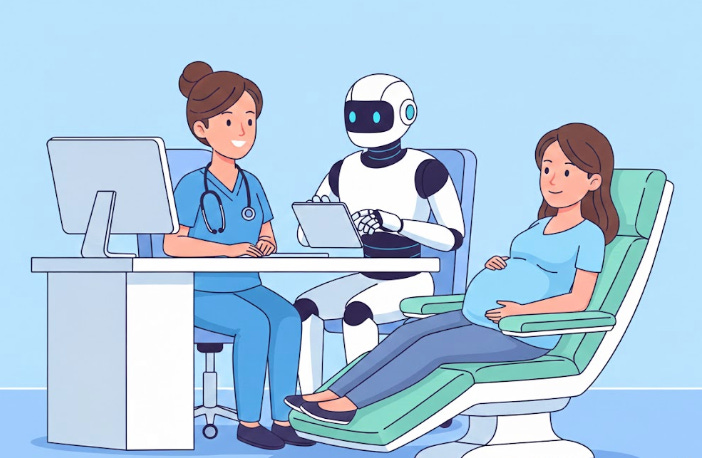
Ambient AI scribes are software tools that listen to conversations between doctors and patients. They use artificial intelligence to generate clinical notes automatically. Think of it as a robot stenographer hiding in your phone or in a microphone on the exam room wall.
These tools are everywhere now. A 2024 survey found that 42% of medical group leaders reported using some form of ambient listening AI. According to the American Medical Association, 66% of physicians reported using AI tools at work in 2024, representing a 78% increase from 2023.
The promise is compelling. Doctors spend more time on clinical documentation than on direct patient care. This contributes to burnout. If AI can handle the paperwork, doctors can focus on patients.
But here’s where I start to worry.
98% Accurate Sounds Good Until You Do the Math
Let’s be generous and accept that 98% accuracy claim. That means 2% of the information in your medical record could be wrong.
The data are actually worse than The Pitt suggests. Modern ambient AI scribes leveraging large language models report error rates of approximately 1-3%. Older speech-recognition dictation systems had error rates of 7-11%.
A 2% error rate sounds small. It isn’t.
If a busy primary care doctor sees 25 patients per day, 250 days per year, that’s 6,250 patient encounters annually. At 2% errors, that’s 125 notes with mistakes every year. For every doctor using this technology.
Multiply that across millions of clinical encounters daily, and you have a staggering number of errors entering the permanent medical record.
The Problem Nobody’s Talking About
Here’s what concerns me most as someone who has spent 50 years listening to patients.
When patients are asked what they value most in their physician, over 52% say they want compassion, comfort, patience, personality, and bedside manner. Studies consistently show that empathy improves patient satisfaction, treatment compliance, and clinical outcomes.
When I sit with a patient who has just received devastating news, I might say very little. I might hold her hand. I might let silence fill the room.
What does the AI write? “Patient educated about diagnosis. Patient verbalizes understanding.”
That’s technically accurate. It’s also completely empty.
And then there’s the question that should terrify every hospital administrator and physician: What happens when these AI-generated notes end up in court?
The Free Subscriber Bottom Line:
Ambient AI documentation is spreading faster than we’re studying it. Error rates of 1-3% sound small until you multiply by millions of encounters. The technology cannot capture compassion. And there are serious legal implications that most physicians haven’t considered.
Below, paid subscribers get the complete breakdown: the four specific types of AI errors and their clinical implications, the malpractice landmines hiding in these systems, what questions to ask your vendor, and specific action steps for clinicians, patients, and administrators.
PAID SUBSCRIBER CONTENT
