
Syphilis in Pregnancy: A Preventable Tragedy We Keep Allowing to Happen
The JAMA findings on AI translation accuracy remind us that diagnosis is important, but communication is everything.

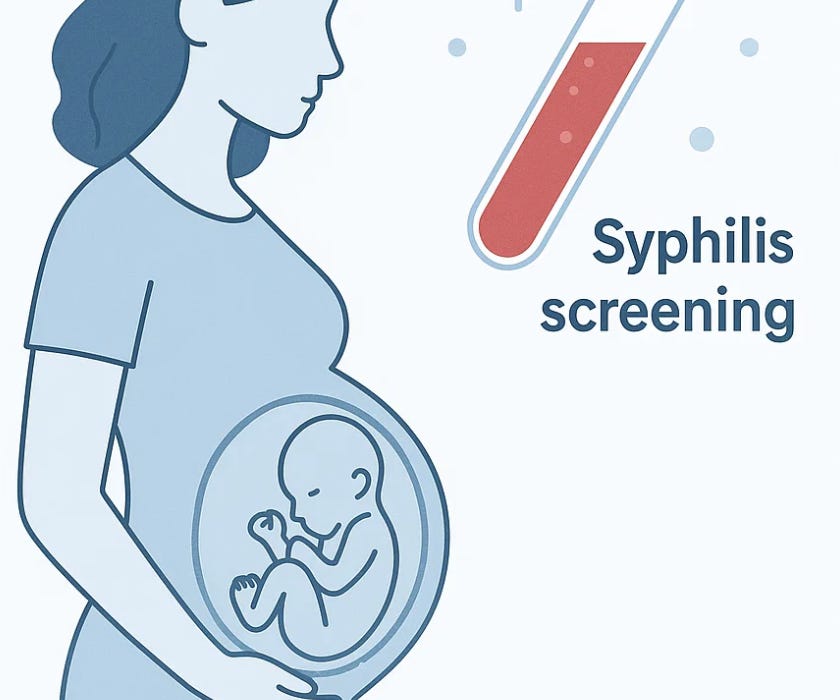
Syphilis is a curable bacterial infection. Yet congenital syphilis is rising at a rate that would have been unthinkable a generation ago. Pregnant women continue to present late, untreated, or misinformed. Fetuses continue to be harmed by a disease we have had the tools to prevent since the 1940s. The recent JAMA Network Open analysis on the accuracy of AI translated discharge instructions highlights a deeper systemic issue: if information does not reach women in a clear and timely way, testing and treatment break down, and preventable fetal harm occurs.
The Medical Reality: Syphilis Endangers Both Pregnant Woman and Fetus
Syphilis in pregnancy progresses through predictable stages, but the fetus does not wait for a staging algorithm. Any maternal infection puts the fetus at risk. Untreated maternal syphilis is associated with miscarriage, stillbirth, hydrops, growth restriction, severe neonatal infection, and long-term neurodevelopmental injury. The Treponema pallidum bacterium crosses the placenta with disturbing ease, often before women recognize they are infected.
Penicillin remains the only effective therapy during pregnancy for preventing vertical transmission. There is no substitute. Treatment timing is everything. If a pregnant woman is treated early enough, fetal outcomes improve dramatically; if treatment is delayed, even a completed regimen may not fully protect the fetus.
Routine Testing Is Not Optional: It Is a Protective Barrier for the Fetus
Every major guideline worldwide recommends syphilis testing at the first prenatal visit and again in the third trimester for women at risk. Many obstetricians recheck at delivery. The reason is simple. Syphilis does not care whether a woman believes she is at risk. Reinfection can occur after treatment. A negative early pregnancy test is not a ticket to complacency.
In practice, missed testing is a major driver of congenital infections. Some women do not access prenatal care. Some decline testing because no one explained why it matters. Some receive test results in a language they do not understand. A test not understood is a test not acted upon.
How Communication Failures Translate Into Fetal Harm: Lessons From the JAMA Article
The JAMA analysis of AI translation accuracy showed that while Spanish-language translations were reasonably accurate, translations into Chinese, Vietnamese, and Somali contained a high rate of clinically meaningful errors. Thirty to ninety percent of AI-translated instructions in these languages included mistakes that could impair care or cause harm.
Now apply this to prenatal infectious disease counseling. Imagine a woman reading a mistranslated explanation of a positive syphilis test. Imagine her being given unclear instructions about returning for benzathine penicillin injections. Imagine an error in describing symptoms of an allergic reaction or in specifying follow-up testing timing.
One misinterpreted sentence can separate timely fetal protection from irreversible fetal injury. Communication quality is not an administrative detail. It is part of the treatment.
How Syphilis Affects the Fetus
Untreated maternal infection exposes the fetus to profound and often silent harm. The fetal manifestations vary by timing:
• First trimester: early loss or unrecognized embryonic infection.
• Second trimester: stillbirth, hydrops, hepatosplenomegaly, anemia, placental enlargement.
• Third trimester: multisystem infection, prematurity, bone and cartilage abnormalities, neurologic damage.
The fetus is not simply exposed. The fetus is infected. Penicillin can halt progression, but it cannot always reverse what has already begun.
Treatment: Clear, Urgent, and Standardized
Treatment during pregnancy is protocol driven. For early syphilis, a single intramuscular dose of benzathine penicillin G is curative for the mother and protective for the fetus. For late latent disease or unknown duration, three weekly doses are required. Timing cannot slip. A missed week resets the entire regimen.
Clinicians must explain that Jarisch-Herxheimer reactions can trigger contractions. They must counsel women not to delay treatment because of fear. They must schedule close fetal surveillance. And they must assess for reinfection if sexual partners remain untreated.
The Ethics: Do We Tell the Partner?
Partner notification is not an optional courtesy. Syphilis spreads silently, and untreated partners create a cycle of reinfection for pregnant women. But notifying a partner touches several ethical obligations.
Autonomy: The pregnant woman retains full control over her medical information.
Beneficence: Protecting the fetus requires stopping maternal reinfection.
Nonmaleficence: Disclosure could cause interpersonal harm in some relationships.
Justice: Public health departments already have legal structures for partner notification that preserve confidentiality while interrupting transmission.
The ethical equilibrium is this: clinicians should strongly encourage and support partner testing and treatment, and they can enlist public health systems for confidential notification. They should not unilaterally disclose a woman’s diagnosis to her partner without her permission unless legally mandated by local public health law. The fetus depends on stopping reinfection, but the pregnant woman depends on a system that respects both her safety and her rights.
Where We Fail Most Often
• When we assume a woman understands the diagnosis.
• When translation errors distort the meaning of results or instructions.
• When systems fail to notify or treat partners.
• When treatment timing slips due to avoidable barriers.
The JAMA article makes the point clearly: technology can help, but only when accuracy matches the stakes. Pregnancy magnifies those stakes.
Reflection
Congenital syphilis is not a mystery. It is a system failure. We know how to diagnose it. We know how to treat it. We know how to prevent it. What we still struggle with is delivering the right information to the right woman at the right time in a way she can understand. That is the real frontier. As we consider where AI fits into obstetric care, the question is not whether the technology is impressive. The question is whether it reduces preventable fetal harm. If it does not, then the work is not finished.