

Stillbirth: The Tragedy We Pretend Is Unpreventable
New national data show that stillbirth risk sharply rises after 38 weeks of pregnancy, yet prevention tools like fetal movement tracking and timely induction remain underused—turning a silent tragedy.

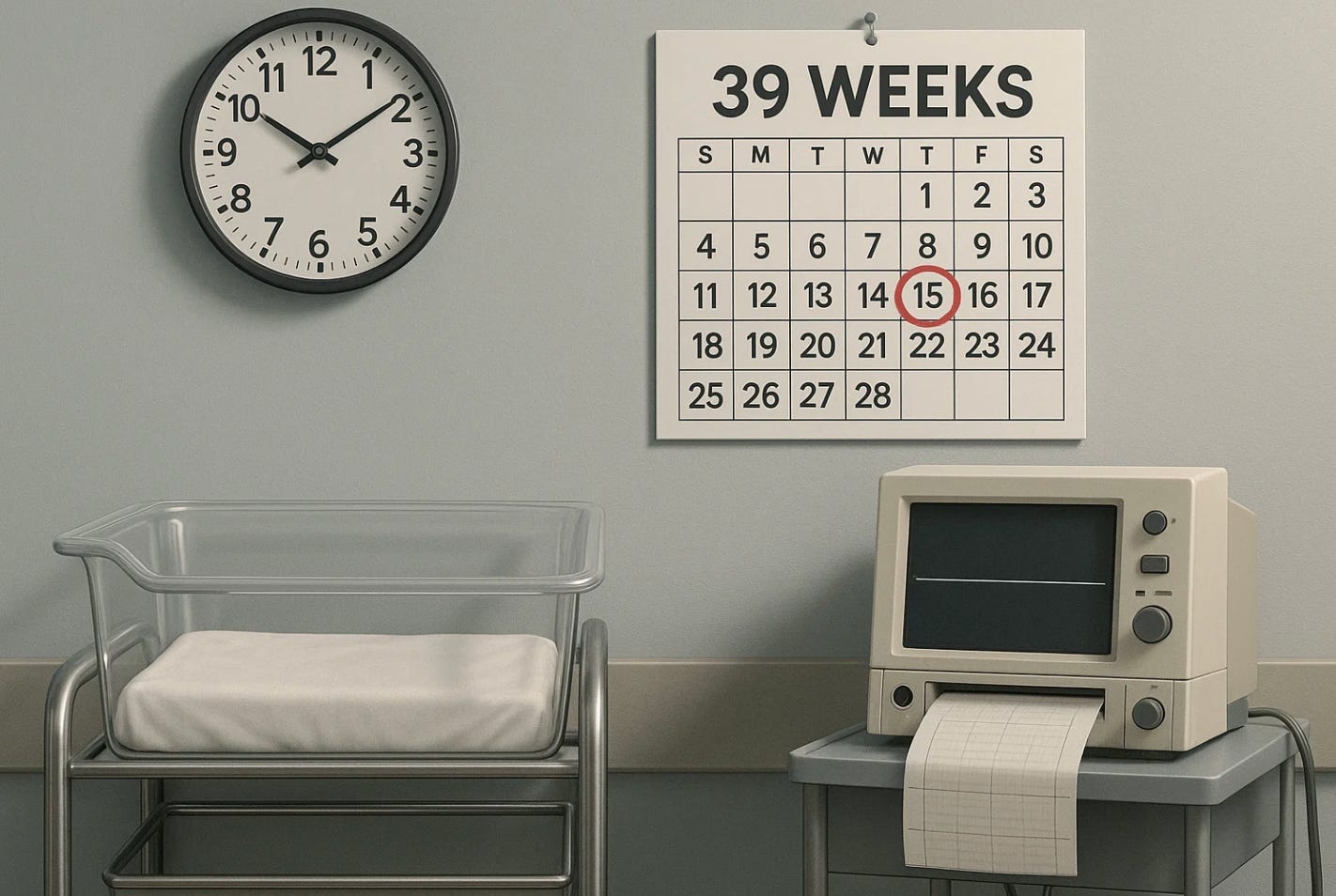
Definition:
Stillbirth means the death of a baby before birth at or after 20 weeks of pregnancy. It is not a miscarriage and not a sudden newborn death—it is the loss of a baby who was expected to be born alive. In the United States, nearly 21,000 families experience this loss each year.
Each year, nearly 21,000 U.S. families go home without the baby they expected to hold.
Stillbirth remains one of medicine’s most quietly devastating failures—common, persistent, and often mischaracterized as inevitable. A new JAMA analysis of nearly 2.8 million births found that 1 in every 147 pregnancies ends in stillbirth, and almost half of term stillbirths may be preventable. The rate hasn’t improved meaningfully in decades.
What the Data Show
The Harvard-led study examined over 18,000 stillbirths among commercially insured women from 2016 to 2022. The stillbirth rate was 6.8 per 1,000 births—higher than federal estimates—and nearly doubled from 38 to 39 weeks. The majority (72%) of cases involved at least one known clinical risk factor: obesity, hypertension, diabetes, growth restriction, or oligohydramnios. Yet 28% had none. At or beyond 40 weeks, that figure rose to 40%. This means even “low-risk” pregnancies aren’t risk-free.
Equally troubling were disparities. Stillbirth rates were twice as high in predominantly Black communities and lowest in wealthier, mostly White neighborhoods. Geography—rural versus urban—didn’t matter. Access to obstetric care did. These findings confirm that risk is stratified not only by biology but by the social map of America.
The Hidden Threshold: When Waiting Becomes Dangerous
Stillbirth risk does not rise evenly—it accelerates. The JAMA study and CDC data show that prospective fetal mortality is lowest around 29 weeks (0.13 per 1,000 ongoing pregnancies) but begins to climb steadily after 37 weeks:
Gestational AgeStillbirth Risk (per 1,000 ongoing pregnancies)
37 weeks: 0.66 per 1,000 ongoing pregnancies
38 weeks: 0.66 per 1,000 ongoing pregnancies
39 weeks:1.30 per 1,000 ongoing pregnancies
40 weeks: 1.60 per 1,000 ongoing pregnancies
≥41 weeks: 2.29 per 1,000 ongoing pregnancies
Between 38 and 39 weeks, the likelihood of stillbirth nearly doubles. By 41 weeks, it triples. Yet many pregnant women are told to “wait for nature” even as risk outpaces benefit. Induction at 39 weeks, when individualized and well-managed, does not increase cesarean risk but can meaningfully reduce stillbirths and neonatal complications, as confirmed by the ARRIVE trial and subsequent meta-analyses.
For decades, obstetrics has treated post-term pregnancy as a matter of scheduling convenience rather than safety. The data make clear: prolonging pregnancy beyond 40 weeks is not a neutral choice—it carries measurable risk. For some women, especially those with comorbidities or reduced fetal movement, waiting may be the riskiest option of all.
Listening to the Baby: Fetal Movement Counts
One of the simplest, most powerful tools for preventing stillbirth is also one of the oldest—paying attention to fetal movement. Every woman knows her baby’s rhythm: the kicks after breakfast, the evening flutters, the quiet overnight. A change in that pattern can be an early warning of distress or placental insufficiency.
Evidence shows that decreased fetal movement is present in up to 40% of stillbirths. Randomized trials and meta-analyses confirm that structured fetal movement awareness programs can reduce late stillbirth rates when coupled with timely evaluation. The key is not just telling women to “count kicks,” but ensuring that when they do notice a decrease, the health system responds promptly with nonstress testing or ultrasound.
A simple, evidence-based approach—such as the “count to ten” method (expecting ten movements within two hours when the baby is active)—has been validated across populations. The method is low-cost, low-tech, and lifesaving. Yet in many clinics, it has been replaced by vague reassurance. Teaching structured fetal movement tracking and taking maternal concern seriously should be as routine as measuring blood pressure.
Prevention Is Possible
Every stillbirth deserves the same moral and analytic urgency as any other preventable death. Prevention does not mean panic; it means precision. It means listening to mothers who say something feels wrong, scheduling growth scans for high-risk patients, and reconsidering post-term policies that rely on “watchful waiting” when the data show the watch runs out. It also means addressing social determinants—income, racism, and access—that magnify biological risks.
Beyond Blame
Clinicians often fear that talking about stillbirth prevention implies blame. It doesn’t. It implies responsibility. As the late maternal-fetal medicine pioneer John C. Hobbins said, “If you can measure it, you can change it.” But you must first be willing to look. Hospitals should track stillbirths with the same rigor as maternal deaths, reviewing every case for timing, surveillance, and system factors. The U.K. and Australia already do this through confidential enquiry systems. The United States does not.
A Moral Imperative
When nearly half of term stillbirths are preventable, inaction becomes unethical. We need national standards for stillbirth review, universal access to antenatal testing for high-risk women, and honest counseling about delivery timing. Above all, we need to replace resignation with resolve.
Reflection:
If a healthy woman at 39 weeks loses her baby in utero, is that “nature”—or neglect by a system that accepts avoidable loss as fate? The answer defines not only our practice but our humanity.
Really interesting, we tragically lost our son at 34 weeks, a little bit before the time before the gestational period you discuss. I have written about my experience. https://fordarwin.substack.com/p/waiting-for-darwin