
Pregnancy Taboos, Part 1: The Body Under Watch
Around the world, pregnancy is wrapped in rules about what women should or should not do with their bodies. Some are rooted in genuine risk, others in superstition, and many in the desire to control.

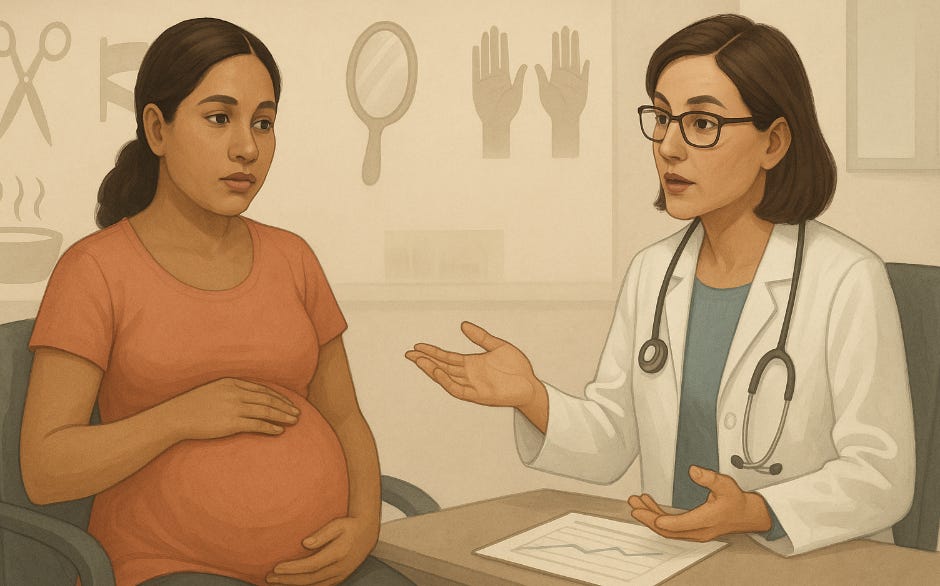
“Doctor, is it true I shouldn’t raise my arms above my head? My aunt says the cord could strangle the baby.”
I’ve been asked this many times. Around the world, pregnancy is wrapped in rules about what women should or should not do with their bodies. Some are rooted in genuine risk, others in superstition, and many in the desire to control. Here’s what the evidence actually says.
15 Body-Related Taboos — and the Science
1. Raising Arms Above the Head
Belief: Stretching overhead tangles the umbilical cord.
Science: Umbilical cords loop around the neck in about 20–30% of pregnancies, but this happens due to fetal activity and cord length, not because a woman reaches for laundry or a high shelf. Obstetric studies show no connection between maternal posture and cord accidents. This taboo likely emerged as a way to explain stillbirths in a pre-scientific era, but has no basis in anatomy or physiology.
2. Sleeping on the Back
Belief: The baby will suffocate.
Science: Several case–control studies (e.g., Stacey et al., BMJ 2011; Heazell et al., BJOG 2018) found women who regularly fell asleep supine after 28 weeks had about twice the odds of stillbirth compared with side-sleepers, probably because vena cava compression reduces placental blood flow. Yet large prospective studies are inconsistent, so causation is not certain. Current advice is to settle on the side after 28 weeks, while reassuring women not to panic if they wake on their backs.
3. Cutting Hair
Belief: Shortens the baby’s life or weakens the child.
Science: Hair thickens in pregnancy due to high estrogen, which prolongs the growth phase of the follicle. Cutting hair does not influence fetal growth or survival. No epidemiologic evidence supports this taboo. It appears to be symbolic, linking hair with vitality and life force, a theme found across cultures, rather than a medical concern.
4. Touching Sharp Objects
Belief: Handling scissors or needles “cuts” the fetus or causes miscarriage.
Science: There is no biologic pathway by which a knife in the hand could harm a fetus in the uterus. This taboo probably arose from practical safety: pregnant women often have balance shifts and could be more prone to injury. Modern studies confirm miscarriage is linked to chromosomal and placental factors, not handling household tools.
5. Emotional Expression
Belief: Crying, anger, or sexuality will scar the baby’s soul.
Science: Day-to-day emotions do not damage fetal development. However, chronic toxic stress—such as severe anxiety, depression, or intimate partner violence—has been associated with increased risks of preterm birth and low birthweight (Dunkel Schetter & Tanner, Annu Rev Clin Psychol 2012). The distinction is important: fleeting emotions are safe, but prolonged unaddressed stressors deserve medical attention for maternal and fetal health.
6. Exercise and Movement
Belief: Running, lifting, or bending harms the baby.
Science: Modern evidence strongly supports exercise in pregnancy. ACOG (2020) recommends 150 minutes of moderate activity weekly. Meta-analyses (Davenport et al., Br J Sports Med 2018) show exercise lowers risk of gestational diabetes, hypertension, and cesarean without raising miscarriage risk. Only high-contact sports or medically contraindicated activity pose real risks. Movement is not only safe, but protective.
7. Dancing or Rhythmic Movement
Belief: Dancing shakes the baby or brings miscarriage.
Science: Dance is simply another form of aerobic exercise. Studies show safe dance-based exercise improves maternal fitness and mood, without adverse pregnancy outcomes. The uterus cushions the fetus, protecting it from maternal movement. The real dangers are falls or high-impact moves, not rhythm itself. In fact, moderate dancing may even enhance maternal well-being and bonding.
8. Heavy Lifting
Belief: Carrying loads causes miscarriage.
Science: The data here are nuanced. Occupational studies suggest repetitive lifting of heavy weights (e.g., more than 10–20 kg repeatedly in a day) may slightly increase risks of miscarriage or preterm birth (Juhl et al., Occup Environ Med 2014). But ordinary lifting, like groceries or a toddler, has not been shown to cause harm. Risk depends on intensity, frequency, and maternal health, not lifting itself.
9. Raising Voice or Singing Loudly
Belief: Loud sounds damage the baby’s hearing.
Science: The uterus and maternal tissues dampen external sounds. Fetuses do hear, but they mostly hear their mother’s voice, heartbeat, and digestion. Studies even suggest prenatal exposure to maternal voice and music aids recognition after birth (Partanen et al., PNAS 2013). Singing and speaking are safe; only extreme industrial noise levels raise concerns, mainly for the mother’s hearing health.
10. Looking in Mirrors
Belief: Causes birth defects or vanity in the child.
Science: This is a pure superstition. No biological or epidemiologic evidence connects mirror use with pregnancy outcomes. Its roots are symbolic, reflecting cultural unease with female self-regard, not medical fact.
11. Standing in Doorways
Belief: Makes the baby “get stuck” in labor.
Science: Labor progress depends on uterine contractions, fetal position, and pelvic dimensions—not architectural features. This taboo is metaphorical, not physiologic. No study has ever linked standing in doorways with labor complications.
12. Crossing Legs
Belief: Prevents the baby from turning or causes breech.
Science: Breech presentation is linked to uterine shape, parity, placenta location, and random chance. Crossed legs do not affect fetal orientation. Women may sit however they are comfortable. No guideline or study suggests posture affects presentation outside specialized positions for turning breech near term.
13. Carrying Objects on the Head
Belief: Puts pressure on the womb, crushing the fetus.
Science: In cultures where women traditionally carry water or food on the head, pregnancy outcomes are not systematically worse. The uterus is well protected within the pelvis and abdominal wall. The real issue is maternal musculoskeletal strain, not harm to the fetus.
14. Laughing Too Much
Belief: Produces a foolish or “crazy” child.
Science: There is no biological link between maternal laughter and child development. On the contrary, laughter lowers cortisol and improves maternal well-being, which indirectly benefits the fetus. This taboo reflects stigma toward women’s emotional expression, not any medical reality.
15. Not Bathing Frequently
Belief: Bathing weakens the mother or washes away strength.
Science: Hygiene lowers infection risk and promotes comfort. The only scientific caution is sustained maternal hyperthermia early in pregnancy: hot tubs or saunas that raise body temperature above 39°C have been linked to neural tube defects (Dreier et al., Epidemiology 2012). Normal bathing or showers are entirely safe.
What These Taboos Reveal
These taboos shift blame onto women: if something goes wrong, it must have been her fault for lifting, laughing, or lying the wrong way. They reveal society’s long habit of policing women’s movements while ignoring biology, chance, and health system failures.
The Ethical Dilemma
Doctors must tread carefully. If we dismiss taboos outright, we alienate families. If we respect them uncritically, we risk allowing harm. The art lies in respectful listening, sharing evidence, and offering safe compromises. Respect doesn’t mean silence—it means honest, empathetic conversation.
Reflection
Pregnancy taboos about the body are not curiosities; they are windows into how culture shapes medicine, often unfairly at women’s expense. As physicians, the challenge is clear: how do we honor tradition without reinforcing fear, and how do we protect women without erasing culture?
🔗 LinkedIn tagline:
From “don’t raise your arms” to “don’t bathe,” pregnancy taboos have long policed women’s bodies. Here’s what the science really says—and why doctors must balance respect with evidence.
Hashtags:
#Obstetrics #PregnancyTaboos #MaternalHealth #MedicalEthics #CulturalMedicine #ObstetricIntelligence #WomensHealth