
Every Pregnant Woman Deserves Pregnancy Safety That Is Designed, Not Assumed
How standardization and vigilance prevent preventable tragedies in obstetrics

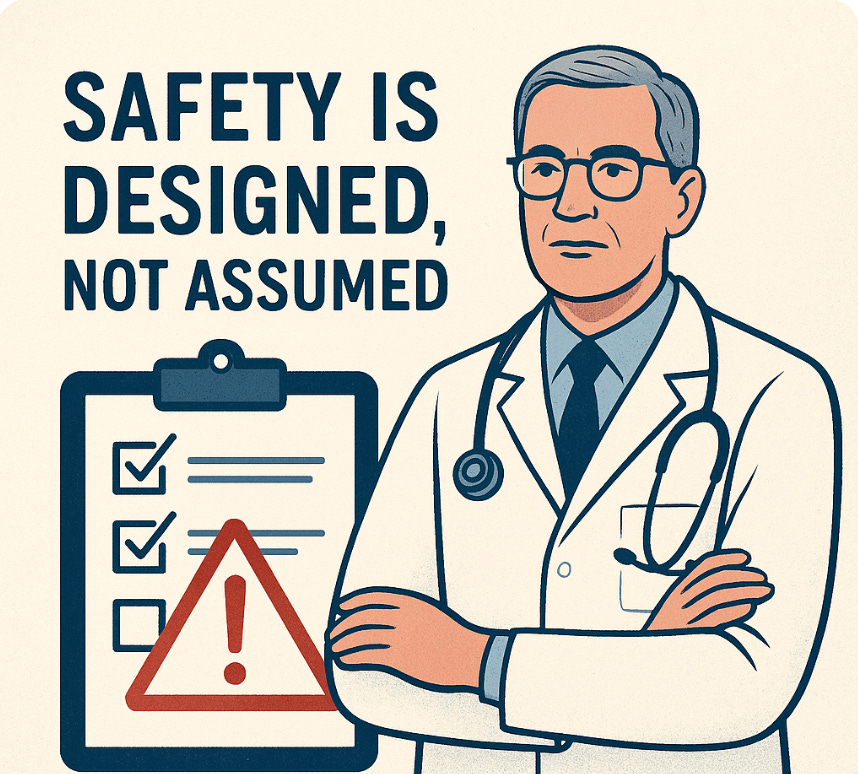
Obstetrics is often described as unpredictable. Babies arrive at their own time, labor can take surprising turns, and complications sometimes arise without warning. Yet the truth is that unpredictability does not absolve us of responsibility. Safety in obstetrics is not a matter of luck. It is designed, built into systems, standardized in protocols, and reinforced by vigilance. When that design is absent, preventable tragedies follow.
I have spent much of my professional life confronting this reality. In my research, I have examined how variation in practice leads to missed opportunities for prevention, and how system-level design can reduce unnecessary deaths and injuries. The stakes are extraordinarily high: for every maternal death, many more women suffer life-threatening complications, and families can be scarred for life.
Standardization saves lives
Medicine values individual judgment, but in obstetrics, relying only on improvisation is dangerous. Protocols and standardized pathways provide a framework that ensures essential steps are not missed, even under stress. A striking example comes from the management of postpartum hemorrhage, one of the leading causes of maternal mortality worldwide. Without a standardized approach—measuring blood loss accurately, activating a response team, escalating treatment in defined stages—too much is left to chance.
One of the most persistent threats to safety comes from physicians who privilege their own anecdotal experience over evidence. An “individualistic” mindset can lead to deviations from best practices, often justified by “I’ve done it this way for years.” But in obstetrics, where rare complications become devastating within minutes, that reliance on personal experience may worsen outcomes. Evidence-based protocols are not constraints on clinical freedom; they are guardrails that keep patients safe.
In my publications, I have emphasized that checklists and structured communication are not bureaucratic obstacles but life-saving tools. For example, work on Apgar score reporting and maternal mortality has demonstrated that inconsistent data collection itself obscures risks. If we cannot even agree on consistent measurement, how can we hope to identify patterns and intervene? Standardization, whether in documentation or in clinical care, is the foundation for safety.
Preventing the preventable
The tragedy of obstetric harm is not only its severity but also its preventability. Studies of U.S. home birth outcomes, which I and colleagues have analyzed in detail, show markedly higher risks of perinatal death when births occur outside of regulated systems without immediate access to emergency intervention. These deaths are not random. They reflect the consequences of systems that prioritize ideology or personal conviction over safety.
That lesson extends far beyond the home birth debate. In every domain—whether cesarean delivery, trial of labor after cesarean, or management of high-risk pregnancies—the gap between safe outcomes and tragic ones is often explained by adherence, or lack thereof, to standardized safety practices.
Vigilance: the human element
Of course, protocols alone are not enough. They must be enacted by vigilant professionals. Fatigue, distraction, and overconfidence can erode safety even in the best-designed systems. That is why simulation training has become central to obstetrics. At my institution, we required both residents and attending physicians to complete simulation exercises regularly in order to maintain privileges. This was not an academic exercise—it was a recognition that rare but catastrophic emergencies like shoulder dystocia or eclampsia must be rehearsed until they become second nature.
In publications on patient safety, I have argued that vigilance must be both individual and collective. A single attentive nurse may notice a deteriorating fetal heart rate pattern, but without a culture that empowers her to speak up, that vigilance may not translate into action. Designing safety means designing teams where every voice can be heard.
From data to action
Data is sometimes treated as an afterthought, but in obstetrics it is a lifeline. In our research on perinatal mortality, we found that missing or inconsistent reporting of five-minute Apgar scores at home births concealed the true risk profile. By highlighting these gaps, we argued for a culture where data collection is not optional but integral to patient safety.
Publishing these findings was not about shaming any group. It was about making visible what had been hidden, so that mothers and babies might be spared harm in the future. Evidence is only useful when it is acted upon, and standardization ensures that evidence becomes practice.
The ethical dimension
Designing for safety is not only a clinical responsibility; it is an ethical one. Autonomy matters deeply, but autonomy without safety is a hollow promise. Patients deserve choices, but those choices must be informed by clear communication of risks and by systems that minimize preventable harm. Here again, the problem of individualistic practice emerges: when a physician substitutes personal preference for evidence-based guidance, the patient is deprived of a truly informed choice. Professional responsibility requires more than expertise—it requires humility to recognize that collective evidence is more reliable than individual memory.
Looking ahead
The future of obstetrics will depend on our ability to integrate technology, data, and human judgment into coherent systems. Artificial intelligence may help identify early warning signs; digital records may standardize data collection; telemedicine may extend care to underserved regions. But none of these advances will substitute for the fundamental truth: safety must be designed, not assumed.
Every mother and every newborn deserve a system that anticipates risk, prevents error, and responds rapidly when emergencies occur. We cannot eliminate unpredictability from childbirth, but we can eliminate preventable harm.
Conclusion
When I reflect on decades of work in obstetrics, one message stands out: safety is not the product of chance or good intentions. It is the product of design—protocols, vigilance, data, training, and culture all aligned toward one purpose. We have the knowledge, the tools, and the ethical obligation to make childbirth as safe as possible. The question is not whether we can design safety, but whether we will choose to.