
Pregnancy and the Hidden Ecosystem Within: Bacteria, Birth, and Beyond
How a mother’s gut shapes her baby’s future health

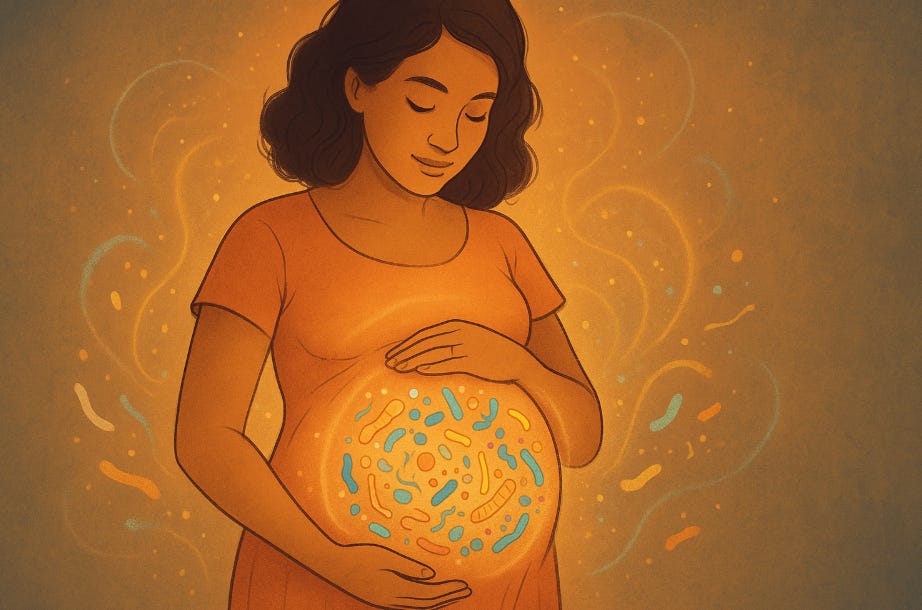
When I was a resident, I cared for a woman who proudly told me she had been taking antibiotics “just in case” during her pregnancy because she wanted to avoid any infection. She believed she was protecting her baby. What she didn’t realize was that antibiotics, especially when taken without medical need, wipe out not only harmful bacteria but also the beneficial bacteria that live in the gut. These “good” bacteria—species such as Lactobacillus and Bifidobacterium—help digest food, produce vitamins, and train the immune system to recognize friend from foe. They maintain a healthy balance in the intestines and keep disease-causing microbes in check. By stripping away this microbial community, she was not just disrupting her own health but also depriving her newborn of an essential microbial inheritance, one that helps set the stage for lifelong gut health, metabolism, and immune resilience.
We often think about genetics as the main legacy parents pass on to their children. But there’s another, less obvious gift: the microbiome, the trillions of bacteria, viruses, and fungi that live in and on us. And in pregnancy, this invisible ecosystem becomes one of the most powerful influences on a child’s development.
The Mother-Baby Microbial Connection
During pregnancy, a woman’s gut microbiome shifts dramatically. Hormones, immune changes, and diet all reshape which bacteria thrive. Far from being random, these changes prepare the body for childbirth and breastfeeding.
At birth, the transfer begins. A vaginal delivery coats the baby with bacteria from the mother’s birth canal and rectum. A cesarean delivery, in contrast, means the baby’s first major exposures come from the hospital environment and skin contact. Neither is inherently “good” or “bad,” but they lead to different starting points.
Breast milk continues the seeding process. It is not just food but a living fluid that contains its own microbiome plus special sugars designed to feed beneficial gut bacteria. Formula, while nutritionally complete, cannot fully replicate this microbial richness.
What emerges is a striking reality: a mother’s gut health before and during pregnancy strongly influences the bacteria her baby acquires at birth and in the first year of life.
Why the Microbiome Matters
Why does this matter? Because the microbiome acts like a second immune system. It teaches the body to recognize friend from foe, regulates inflammation, and even communicates with the brain through chemical messengers.
Studies have linked a disturbed early microbiome to higher risks of asthma, allergies, obesity, and autoimmune conditions later in life. On the other hand, babies with diverse, stable gut bacteria are more likely to develop resilient immune systems and healthier metabolisms.
In short, the microbiome is not just a passenger. It’s a co-pilot in health, starting from day one.
Diet: Feeding Two Ecosystems
The simplest way to shape the microbiome is through diet. Pregnant women are told to eat for two, but it’s more accurate to say they are feeding two ecosystems: their own and their baby’s future one.
Fiber-rich foods like vegetables, fruits, beans, and whole grains nourish beneficial gut bacteria that produce short-chain fatty acids. These compounds strengthen the gut barrier and reduce inflammation.
Fermented foods such as yogurt, kefir, sauerkraut, and kimchi provide live bacteria that can diversify the gut.
Omega-3 fats from fish and nuts support anti-inflammatory bacteria.
Processed foods, added sugars, and excessive red meat tend to feed less desirable bacteria that promote inflammation.
Alcohol and smoking can disrupt microbial balance, harming both mother and child.
Think of it as tending a garden. A fiber-rich diet provides fertilizer, fermented foods supply seeds, and processed foods are like weeds that crowd out the good plants.
Antibiotics and Other Disruptors
Sometimes antibiotics in pregnancy are essential and lifesaving. But unnecessary use can dramatically alter gut bacteria. Even one course can reduce microbial diversity for months. Babies then inherit a more limited microbial library.
Other disruptors include frequent use of antacids, overly sanitized environments, and diets low in variety. All may strip away the richness of the microbiome.
The good news is that the microbiome is flexible. With time, diet, and exposure to natural environments, many disruptions can be repaired. Still, pregnancy and early infancy are sensitive windows when the foundation is laid.
Real-World Example: The Farm Effect
One of the most fascinating insights comes from the so-called “farm effect.” Children who grow up on farms, exposed to animals, soil, and unprocessed foods, develop more diverse microbiomes and lower rates of allergies and asthma. In contrast, highly sanitized urban environments often correlate with more immune-related problems.
Pregnancy plays a role here too. A mother exposed to diverse microbes passes some of that richness on to her child, even before birth.
What’s New and Overlooked
For years, doctors assumed that babies were born sterile, acquiring microbes only after birth. Newer evidence suggests that some maternal bacteria, or at least their DNA and byproducts, may reach the fetus through the placenta and amniotic fluid. This challenges the idea of a purely sterile womb and highlights how maternal diet and health can influence the baby even earlier than delivery.
Another overlooked point: mental health. Stress during pregnancy has been shown to alter the maternal microbiome, which may then affect the baby’s gut and brain development. This adds yet another reason to treat maternal mental health as a core part of prenatal care.
Vaginal vs. Cesarean Birth: Microbial Gateways
One of the most studied influences on the infant microbiome is the mode of delivery.
Vaginal birth exposes the newborn to maternal vaginal and fecal bacteria, including species such as Lactobacillus, Bacteroides, and Bifidobacterium. These microbes rapidly colonize the infant gut, helping to digest milk sugars and training the immune system to distinguish between friend and foe.
Cesarean birth, in contrast, bypasses this exposure. Instead, babies first encounter skin-associated bacteria such as Staphylococcus and Corynebacterium, as well as microbes from the hospital environment. Numerous studies show that cesarean-delivered infants often have delayed colonization of beneficial gut bacteria, and their microbiomes remain distinct for months or even years compared to those born vaginally.
Does this difference matter? Evidence suggests yes, though the impact is complex. Cesarean delivery has been associated with higher risks of asthma, obesity, and certain autoimmune conditions. However, these associations are influenced by many confounding factors such as antibiotic exposure, genetics, and breastfeeding.
Vaginal seeding—the practice of swabbing cesarean-born babies with maternal vaginal fluids—has been proposed as a way to restore microbial exposure. While early pilot studies suggest partial transfer of microbes, major medical organizations caution against routine use. Concerns include the risk of transmitting infections such as herpes simplex virus, group B streptococcus, or chlamydia. At present, professional societies recommend vaginal seeding only within approved clinical trials.
The practical lesson is clear: while cesarean deliveries are sometimes medically necessary and lifesaving, they do alter the microbial inheritance. For families and clinicians, awareness of this difference emphasizes the importance of other supportive strategies—such as breastfeeding and careful use of antibiotics—to help optimize microbiome development in cesarean-born infants.
Practical Takeaways
For expectant mothers and families, the message is both empowering and sobering. You cannot control every factor, but you can take meaningful steps:
Prioritize whole, fiber-rich foods. Vegetables, fruits, and legumes are the best “microbiome medicine.”
Include fermented foods when tolerated. Even small amounts can help.
Limit unnecessary antibiotics and talk with your doctor about alternatives when safe.
Stay active and manage stress. Both exercise and relaxation support a healthier microbiome.
If possible, breastfeed. Even partial breastfeeding provides key microbes and nutrients.
Reflection / Closing
We live in an era where bacteria are often seen as enemies to be eliminated. Yet the science of pregnancy and the microbiome shows the opposite: that bacteria are allies, essential for life and health.
The mother’s body is not just a vessel but an ecological bridge, carrying forward millions of years of microbial wisdom. When we talk about “eating for two,” perhaps we should remember that it’s not just about calories or vitamins. It’s about cultivating the invisible inheritance that may shape a child’s health for decades to come.
So here’s the ethical question: Are we, as doctors and as a society, giving enough attention to this microbial legacy, or are we still stuck in the outdated mindset of killing germs at all costs?
The farm effect comparison really highlights how much we've underestimated environmental microbial exposure. Your point about vaginal seeding controversies is important too, particularly given the infection risks. The garden metaphor for fiber-rich diets feeding benefical bacteria is a useful fram for patients.