
Pregnancy and Environmental Toxins: a practical, science-based guide for families
The Evidence Room - You cannot control everything, but small, doable changes before, during, and after pregnancy can meaningfully reduce risk.

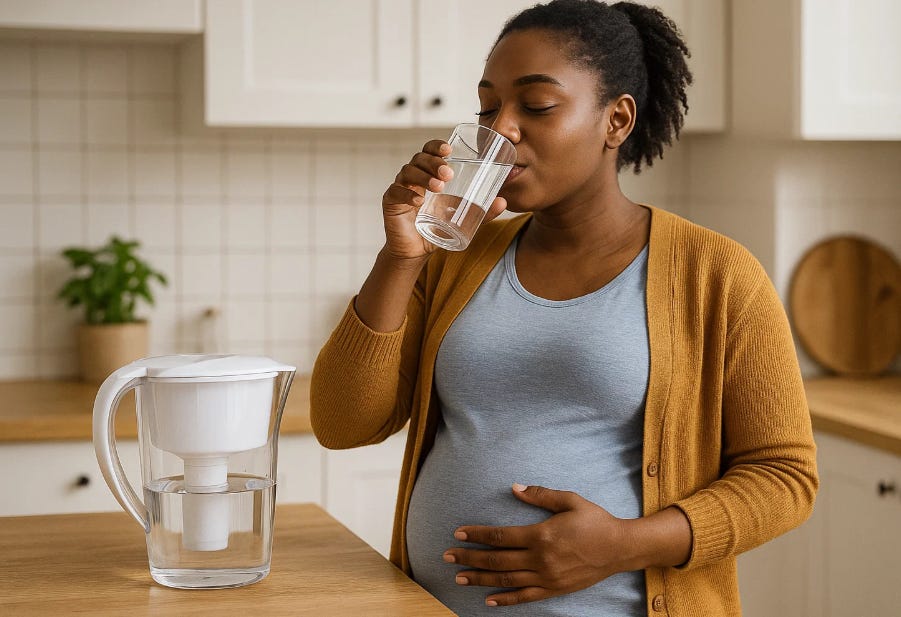
Pregnancy is not a chemistry experiment. Lower the big exposures with a few practical swaps, and you protect two generations at once.
What are “environmental toxins,” really?
They are chemicals or pollutants in air, water, food, dust, products, and workplaces that can harm health. In pregnancy, some exposures can affect the placenta or cross to the baby, whose organs and brain are still developing. Examples include lead and other heavy metals, mercury in certain fish, pesticide residues on produce, air pollution and wildfire smoke, plastic-related chemicals like phthalates and BPA, PFAS “forever chemicals,” and some solvents/cleaners. Medical groups encourage clinicians to help patients reduce these exposures because prevention is often simple and low-cost.
Bottom line: you do not need perfection. Focus on easy changes that lower the biggest exposures.
Why this matters in pregnancy
No amount of lead is considered “safe.” Lead stored in a parent’s bones can be released during pregnancy and passed to the baby. Even low levels are linked with adverse birth and child outcomes, which is why prevention and targeted testing are emphasized.
Newer evidence connects late-pregnancy lead exposure with a higher risk of depression symptoms in adulthood among those exposed in utero, underscoring lifelong effects.Fish are healthy, but choose low-mercury options. The FDA advises people who are or may become pregnant to eat 8–12 oz per week of a variety of low-mercury seafood.
Air quality matters. Pregnancy exposure to air pollution is associated with preterm birth and low birth weight, among other outcomes. Keep an eye on outdoor air reports and improve indoor air where possible.
Plastics and phthalates. Phthalates are common in food packaging and fragranced products and show associations with adverse pregnancy and child outcomes in pooled analyses and recent reviews. Practical reduction steps are reasonable while policy catches up.
Pesticides. Eating plenty of fruits and vegetables is still vital. Rinsing under running water reduces residues; soap or detergent is not recommended.
Where common exposures come from and what to do
Lead
Old house paint and renovation dust, older plumbing and water, contaminated soil, some imported ceramics/utensils, certain traditional remedies and traditional eye cosmetics such as kohl/kajal/surma which can contain very high lead levels. Avoid using these cosmetics and imported metal cookware or glazes that are not certified safe. If you live in a pre-1978 home, use certified contractors for repairs and use a water filter certified for lead if your plumbing is old.
Fish and Mercury: What to Eat and What to Limit
Fish is one of the healthiest foods in pregnancy. It provides omega-3 fats, high-quality protein, iodine, and vitamin D, all of which support the baby’s brain and eye development. But some fish contain mercury, which can harm the developing nervous system.
The FDA and EPA recommend:
Eat 8–12 ounces (about 2–3 servings) per week of fish that are low in mercury.
Vary the types of fish you eat to avoid overexposure from any single source.
Avoid high-mercury fish entirely during pregnancy and while breastfeeding.
Best low-mercury choices (eat often):
Salmon
Sardines
Trout (freshwater)
Herring
Pollock
Tilapia
Catfish
Shrimp
Anchovies
Light canned tuna (occasionally)
Moderate-mercury choices (limit to ≤ 4 oz/week):
White or albacore tuna
Halibut
Mahi-mahi
Snapper
Grouper
High-mercury fish to avoid:
King mackerel
Tilefish (from the Gulf of Mexico)
Shark
Swordfish
Marlin
Bigeye tuna (often used in sushi)
Tips:
Cook fish thoroughly to 145 °F (63 °C).
Do not eat raw fish or sushi made with high-mercury species.
Local fishers should check state advisories before eating locally caught fish.
Source: U.S. Food and Drug Administration and Environmental Protection Agency, Advice About Eating Fish: For Those Who Might Become or Are Pregnant or Breastfeeding, updated 2021.
Pesticides on produce
Rinse produce under running water. Scrub firm-skinned items. Do not use soap or commercial produce washes. If budget allows, prioritize organic for a few high-residue items you eat often, but remember that washed conventional produce is still a healthy choice.
Air pollution and wildfire smoke
Track your local AQI. On poor-air days, keep windows closed, use MERV-13 or better HVAC filters, and consider a HEPA portable air cleaner for sleeping areas. For wildfire smoke, follow EPA pregnancy-specific recommendations.
Plastics and phthalates
Use glass or stainless steel for hot foods and drinks. Do not microwave plastic, especially baby food containers or pouches. Choose “fragrance-free” personal and cleaning products. Prioritize fresh or minimally processed foods.
PFAS (“forever chemicals”)
PFAS turn up in some stain-repellent textiles, nonstick coatings, and contaminated water. If your community reports PFAS in water, consider a certified filter that reduces PFAS. Prefer cast iron or stainless cookware when practical. (Policy guidance is evolving; reducing obvious sources is reasonable.)
Cleaning and Solvents
Everyday cleaning products can contain chemicals that irritate the lungs, skin, or nervous system, especially during pregnancy. Choose products with the EPA’s Safer Choice label—these are tested to be safer for people, pets, and the environment.
Yes (safer options):
Products labeled “EPA Safer Choice” or “fragrance-free”
Simple cleaning solutions like diluted vinegar, baking soda, or unscented dish soap
Microfiber cloths and warm water for dusting instead of sprays
Plant-based cleaners with clear ingredient lists
No (avoid or limit):
Products with strong fragrances or “pine,” “lemon,” or “fresh” scents
Aerosol sprays or oven cleaners with harsh fumes
Bleach mixed with ammonia or vinegar (produces toxic gases)
Solvent-based degreasers, paint strippers, or heavy-duty disinfectants used without ventilation
Always open windows or use a fan, wear gloves, and avoid prolonged inhalation when using any cleaner.
Source: U.S. Environmental Protection Agency, Safer Choice Program (updated 2025).
Kohl, kajal, and surma — why they are included here
Kohl (also called kajal or surma) is a traditional eye cosmetic. Many imported versions have extremely high lead content and have caused poisonings in mothers and children. These products are not approved in the U.S. Avoid them in pregnancy and do not use them on infants or children.
Water testing kits:
You can easily test your tap water for lead, copper, nitrates, bacteria, and PFAS using home sampling kits. Prices range of basic home kits cost from about $20 to $40 for lead and bacteria tests, and $100 to $200 for more complete laboratory analyses that include PFAS or heavy metals. Reliable options include Tap Score (SimpleLab), Safe Home, and Purum Water Test Kits, all of which send your sample to a certified laboratory and return results online within a week. Local health departments sometimes provide free or low-cost lead and nitrate tests, especially for homes built before 1986 or using private wells.
Choose a kit that is certified by an EPA-approved laboratory (look for “EPA or State Certified” on the label).
How to Time Your Prevention: Before, During, and After Pregnancy
Environmental safety is not a single moment—it’s a timeline. Some exposures can be reduced before conception, others must be actively avoided during pregnancy, and a few continue to matter after birth. The best prevention plan begins early. Have your home, water, and air checked if you live in an older building, near industrial areas, or use well water. Many local health departments offer free or low-cost inspections for lead, radon, and water quality.
Technology can help too. You can take a photo of a product label, ingredient list, or household item and ask ChatGPT whether it’s safe in pregnancy. This can be especially useful for cleaning products, cosmetics, or herbal supplements, where safety information is often confusing or incomplete.
Example Obstetric Intelligence ChatGPT Prompt
“I’m pregnant and I want to know if this product is safe to use. Here’s a photo of the label. Please check for any ingredients that could be harmful during pregnancy or breastfeeding, such as lead, mercury, phthalates, retinoids, or strong solvents. Summarize in plain language whether this product is considered safe, use-with-caution, or avoid.”
Before pregnancy (preconception)
Home check: If housing was built before 1978, plan renovations safely or postpone sanding/scraping until hazards are addressed by certified professionals. Consider lead dust testing and a lead-rated water filter if plumbing is old.
Work and hobbies: If you or a partner work with batteries, metals, ammunition, stained glass, or frequent firing ranges, adopt “take-home lead” controls: on-site clothes and shoes, showering before return, and laundering work gear separately.
Diet setup: Build a pattern rich in calcium and iron to limit lead absorption. Map out low-mercury fish choices you enjoy.
Products swap: Choose fragrance-free personal care and Safer Choice cleaning products; assemble glass or stainless food storage.
Air plan: Get a MERV-13 HVAC filter and a HEPA bedroom unit if outdoor air quality is often poor.
During pregnancy
Lead vigilance: Tell your clinician about old housing, renovations, imported pottery, traditional cosmetics/remedies, or occupational exposures. They may recommend a blood lead test when risk is present.
Water and cookware: Use a certified lead-reducing or PFAS-reducing filter if indicated. Avoid chipped or lead-glazed ceramics for cooking or storage.
Food choices: Eat 8–12 oz per week of lower-mercury fish. Rinse all produce under running water.
Air quality: On high-AQI or smoke days, stay indoors with filtered air. Limit gas-stove emissions by using ventilation or electric appliances when possible.
Plastics: Do not microwave plastic. Store hot foods in glass or steel. Prefer fresh foods over ultra-processed to lower phthalate exposure.
Avoid kohl/surma and certain imported remedies.
After birth and during breastfeeding
Keep dust down: Wet-wipe and HEPA-vacuum if you live in older housing. Wash hands before feeding.
Lead and nursing: Breastfeeding is usually encouraged, but discuss very high maternal lead with your clinician and your local health department.
Baby food and bottles: Use glass or BPA-free bottles; avoid microwaving in plastic; prepare and store hot foods in glass or steel.
Air quality for infants: Continue HEPA use in sleeping areas during wildfire or poor-air periods.
Ethics in plain terms
Environmental risk is not distributed equally. Older housing, industrial corridors, and lower-income neighborhoods bear more of the burden. Reducing exposure is a core part of reproductive justice. Asking a pregnant person to “do everything” cannot substitute for safe housing, clean air, and clean water policies. Clinicians can still help families make the easiest, highest-impact changes now while advocating for safer environments.
The clearest instructions: what to do this week
Check your setting
Home built before 1978 or ongoing renovation: postpone sanding, use certified contractors, and wet-clean weekly. Consider a lead dust test and a lead-rated water filter.
Track local AQI; get a MERV-13 HVAC filter and one HEPA purifier for your bedroom or the baby’s room.
Get an approved water filter and check your water
Ask your local health department or water company if your area has lead, PFAS, or other contaminants.
Use a filter certified by NSF or ANSI for lead and PFAS reduction (look for NSF/ANSI Standard 53 or 58).
Replace cartridges on schedule, and run cold water for several seconds before use.
Check the ater you use regulkarly with a testing device
Safer food and water
Eat 8–12 oz per week of low-mercury fish; vary species.
Rinse all produce under running water; scrub firm skins; no soap.
If your area reports contamination, rely on your certified filter or bottled water labeled for infants and mixing formula.
Products to pick and skip
Use fragrance-free personal care and EPA Safer Choice cleaners.
Store and reheat in glass or stainless. Do not microwave plastic baby containers or pouches.
Avoid kohl/kajal/surma and imported ceramic cookware or chipped glazes.
Talk to your clinician
Tell them about old housing, renovations, imported cookware, traditional remedies or cosmetics, or lead-related work or hobbies in the household.
Ask whether targeted blood lead testing is right for you.
After birth
Keep dust down, keep using filtered air during poor AQI, and continue food and product habits that lower exposures.
If high maternal lead was identified, discuss breastfeeding and infant testing with your clinician.
One more perspective on lead
Late-pregnancy lead exposure has been linked with higher odds of major depression decades later in the exposed babies when they became adults, highlighting why prevention now protects health across a lifetime.
Trusted Resources for Product and Environmental Safety
EPA Safer Choice – certifies household cleaners and detergents that meet safety standards. https://www.epa.gov/saferchoice
Environmental Working Group (EWG) Skin Deep Database – rates personal care products and cosmetics for chemical safety.
https://www.ewg.org/skindeepHealthy Babies, Bright Futures – offers practical, evidence-based guides for reducing toxic exposures during pregnancy and infancy. https://hbbf.org
CDC Lead Prevention Program – provides up-to-date advice on testing and removing lead hazards at home. https://www.cdc.gov/lead-prevention