
Lotus Birth: When “Natural” Means Leaving a Rotting Organ Attached to Your Newborn
She wanted a “gentle transition” for her baby. She wanted to honor the placenta as “the baby’s first companion.” She wanted a lotus birth. Then the baby died.

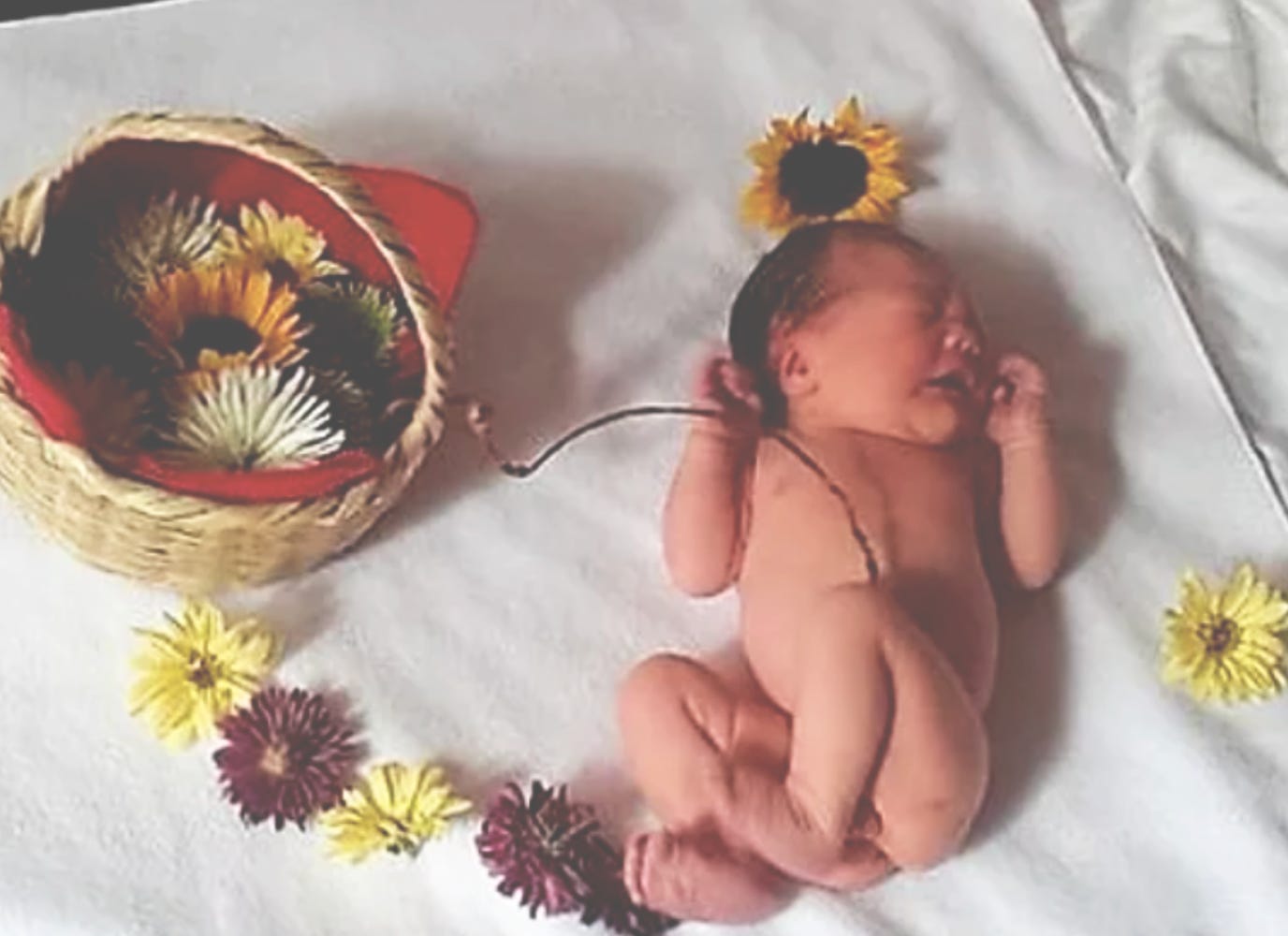
She had done her research. She had watched the YouTube videos, read the blog posts, joined the Facebook group. She wanted a “gentle transition” for her baby. She wanted to honor the placenta as “the baby’s first companion.” She wanted a lotus birth.
Three days later, her baby was in the NICU with E. coli bacteremia.
What is lotus birth?
Lotus birth, known in medical literature as umbilical cord nonseverance, is the practice of leaving the umbilical cord unclamped and uncut after delivery. The placenta remains attached to the newborn until the cord dries out and detaches on its own, typically 3 to 10 days after birth. During that time, the family carries the dead placenta alongside the baby, often wrapped in cloth, sprinkled with salt, lavender, or rosemary to manage the smell.
Yes, the smell. Because the placenta, once delivered, is dead tissue. It has no blood supply. It begins to decompose immediately. There is no polite way around this: families practicing lotus birth are keeping a rotting organ physically connected to their newborn’s open vascular system for days.
The practice was named after Clair Lotus Day, who in the 1970s observed that chimpanzees in the wild did not immediately sever the umbilical cord. It was popularized in the 1980s by yoga practitioner Jeannine Parvati Baker and later spread through the homebirth and “natural birth” communities. It has no historical roots in any established medical tradition.
The claims
Proponents of lotus birth make several assertions:
The placenta continues to transfer beneficial blood and nutrients to the baby after birth. The baby experiences a “gentle” and less traumatic separation. Leaving the cord intact prevents an “open wound” that could become infected. The practice promotes bonding. Some describe the placenta as “the baby’s twin” or “tree of life” and ascribe spiritual significance to leaving it attached.
Let’s examine each of these against what we actually know.
