
Let Me Help You Managing Birth Plans Without Losing Time or Trust
Teaching obstetric teams to use large language models to respond faster, safer, and with less friction

A Birth Plan Walks Into Labor and Delivery
Every labor and delivery unit has seen this moment.
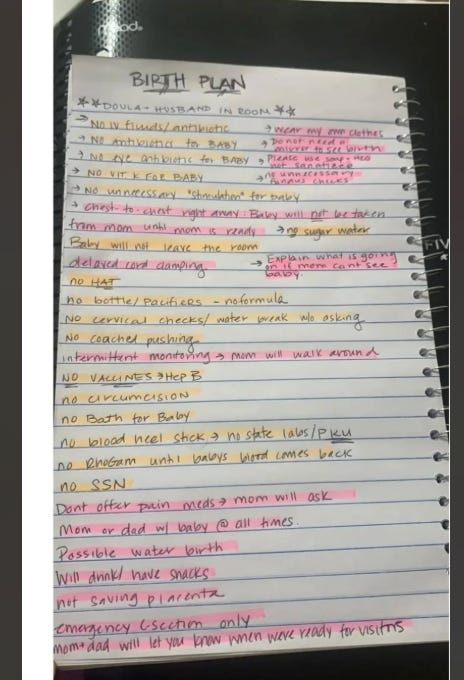
A patient arrives in labor and hands the nurse a handwritten birth plan. It is long. It is detailed. It is emotionally charged. Some requests are reasonable. Some are unrealistic. Some are unsafe. Some are legally constrained. And all of it lands at once, usually during a busy shift, often during a high-risk scenario like VBAC (Vaginal Birth After Cesarean).
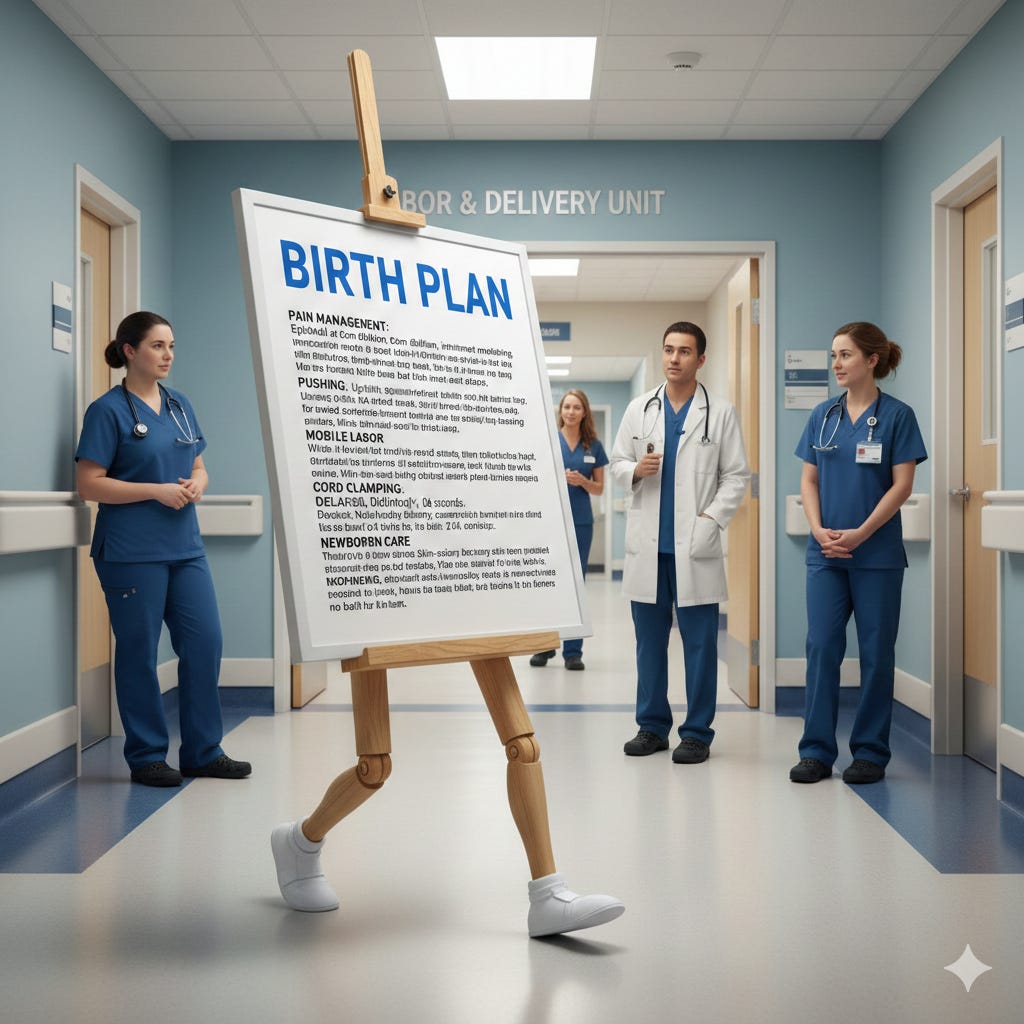
The staff reaction is predictable. Time pressure rises. Friction increases. Communication tightens. The patient feels unheard. The team feels cornered. Nobody feels satisfied, and everyone worries about safety, documentation, and liability.
Below is the actual handwritten birth plan I will use as our starting point. This is not a caricature. It is real-world. It is exactly the kind of document that tests even experienced clinicians.
What follows in this series is not about dismissing birth plans. It is about handling them intelligently, efficiently, and safely, without burning time or goodwill.
In the section behind the paywall, I will show you how to use a professional-grade large language model, such as ChatGPT, Claude, or Gemini, for example, as a clinical support tool to:
Rapidly translate a handwritten or chaotic birth plan into structured text
Identify safety-critical requests, contradictions, and legal constraints
Generate patient-facing responses that are calm, respectful, and clear
Create internal staff guidance and bedside checklists in minutes, not hours
Reduce cognitive load while improving patient satisfaction and documentation quality
This is not about outsourcing clinical judgment. It is about augmenting it, especially when time, clarity, and professionalism matter most.
If you have ever thought, “I don’t have time for this birth plan,” this walkthrough is for you.
Behind the paywall, we start step by step to teach you how to develop a prompt to address the birth plan.
