

Knowledge or Kindness? What Patients Really Want
The Human Factor - I trained in Germany, where precision ruled over emotion. Here, I found the opposite expectation: patients want to feel understood. Which matters more—clinical skill or compassion?

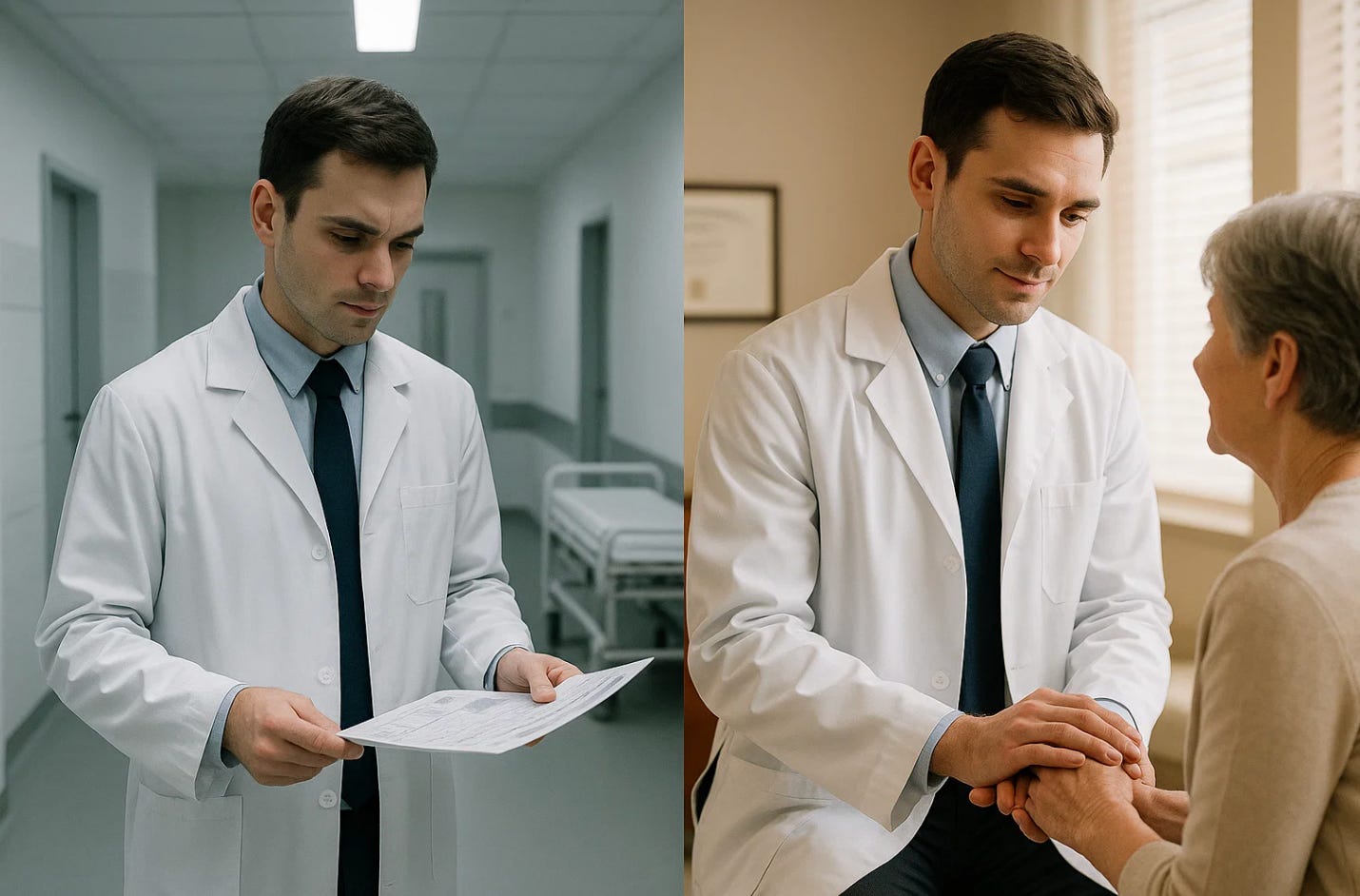
When I trained in Germany, empathy was not part of the curriculum. Germans are not much known for empathy or compassion. Not then. We were taught to be correct, not comforting. A good German doctor was one who made the right diagnosis, prescribed the right treatment, and didn’t waste time on small talk. Patients were called by their bed number. Never first name. Professional distance was considered respect. If you showed too much emotion, it was seen as weakness.
Then I came to the United States—and entered a different moral universe. Here, patients expected eye contact, reassurance, and warmth. They wanted to feel seen as people, not as cases. In my first weeks, I was startled when a patient said, “Thank you for listening.” I hadn’t done anything extraordinary. I had just paused. But that pause, I learned, mattered more than many of the technical things I was trained to do.
The culture of care
The contrast between those two systems taught me a lasting lesson: every healthcare culture defines “good medicine” differently. In Germany, technical competence is the highest virtue. In America, empathy and communication are part of the moral fabric of care. Yet both systems miss something essential when they lean too far in one direction. Precision without compassion feels cold. Compassion without competence can be dangerous.
What do patients really value?
Studies show that patients want both—but when forced to choose, they often value empathy more than perfect accuracy. Surveys of patients who have experienced medical error reveal a striking pattern: they forgive mistakes more readily when they feel their doctor cared. The reverse is also true. Even flawless technical care feels like betrayal when delivered without kindness.
Patients don’t remember your test interpretation or differential diagnosis. They remember whether you touched their hand, whether you explained without rushing, whether you treated their fears as real. Compassion doesn’t cure disease, but it changes the meaning of illness.
The illusion of choice
Still, medicine often forces doctors into a false choice: knowledge or empathy, efficiency or connection. The modern healthcare system is built on productivity metrics, billing codes, and time stamps—not on presence. When you have seven minutes per patient, every second of compassion feels stolen from documentation. The system punishes what patients value most.
Yet empathy and competence are not opposites. They reinforce each other. A doctor who listens carefully is more likely to make an accurate diagnosis. A patient who feels understood is more likely to share critical details, follow advice, and return when something seems wrong. Compassion is not a distraction from medicine. It is medicine.
When empathy saves lives
I once cared for a woman who came in late in pregnancy with vague discomfort. Her vital signs were fine. The tracing looked normal. But something in her face—the way she gripped the side of the bed—made me pause. “You don’t look right,” I told her. We repeated the scan. A concealed placental abruption. Within an hour, she was in the operating room. Her baby survived.
That decision didn’t come from data. It came from empathy—the willingness to see distress even when numbers looked fine. Clinical knowledge guided the response, but empathy triggered the action.
A quiet revolution in care
If empathy and compassion are emotional, then clinical skill is intellectual. Medicine requires both hemispheres of humanity. The left side diagnoses; the right side heals. Yet hospitals still reward only one of them. We give bonuses for volume and compliance, not for kindness or time spent sitting at a bedside.
What if we measured compassion the way we measure infection rates? What if empathy were treated as a skill that requires maintenance, not a soft trait we assume people either have or don’t? Training in compassion should not mean handing out pamphlets on “bedside manner.” It should mean teaching doctors to listen, to tolerate uncertainty, to recognize suffering, and to stay present even when outcomes are poor.
So which is more important?
If forced to choose, I would still choose competence. A kind but unskilled surgeon cannot save a life. But competence without compassion is incomplete. It heals the body and leaves the person behind. The best medicine requires both—the precision of the scientist and the presence of the human being.
Patients may come for knowledge, but they stay for kindness. They trust skill, but they remember compassion. A well-read textbook can treat disease. Only an empathetic doctor can make healing feel safe.
Reflection / Closing:
I learned to be precise in Germany and to be kind in America. The truth is, medicine needs both cultures. Empathy without expertise is sentimentality; expertise without empathy is cruelty. The goal is not to choose one—but to refuse to practice without the other.
It also helps if the doctor values the trustworthy experienced nurses who spend more time at the bedside and can alert you to the concerns they sense