
Hyperemesis Gravidarum: When Morning Sickness Becomes Dangerous
Hyperemesis Gravidarum (HG) is a serious medical disorder requiring medical treatment


Morning Sickness or Something More?
Nausea and vomiting in early pregnancy are so common that they’ve earned the nickname “morning sickness.” Despite the name, symptoms often last all day, not just in the morning. More accurate is the term nausea and vomiting of pregnancy (NVP), which affects nearly 80% of women.
For most, morning sickness is unpleasant but manageable—an annoyance more than a danger. Symptoms often ease by the second trimester.
But for about one to three percent of pregnant women, nausea and vomiting spiral far beyond inconvenience. They face relentless vomiting, dehydration, weight loss, and a steep decline in health. This is hyperemesis gravidarum (HG). Morning sickness may be inconvenient; HG can be catastrophic.
What Is Hyperemesis Gravidarum?
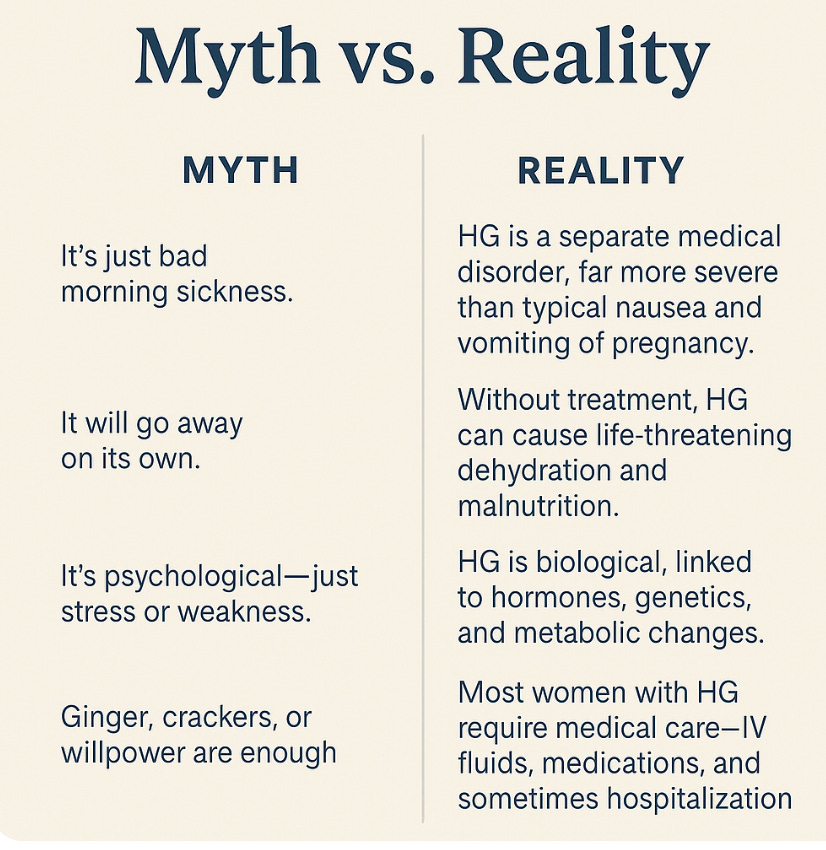
HG is a medical disorder defined by severe, persistent vomiting that leads to weight loss, dehydration, and electrolyte disturbances. In extreme cases, it can affect the liver, kidneys, and heart. Unlike morning sickness, it does not simply pass with time or ginger tea.
Women with HG may vomit twenty times a day and be unable to keep down even water. Their bodies begin to burn muscle for fuel. Without intervention, they risk organ damage, malnutrition, and dangerous complications.
Why Is HG So Often Dismissed?
Historically, HG was seen as psychological, even labeled hysteria. That stigma has faded, but its shadow lingers. Women are still told to “just relax” or “tough it out.” This dismissal is ethically troubling. Ignoring a patient’s suffering is not caution—it is negligence.
Pregnancy should not be treated as an endurance test. A woman vomiting herself into malnutrition deserves more than sympathy; she deserves swift, evidence-based treatment.
A Real-World Analogy
Think about the worst food poisoning you’ve ever had—the violent vomiting, dizziness, weakness. Now imagine that misery lasting not for hours, but for weeks or months. That’s HG.
Unlike ordinary morning sickness, HG erodes daily life. Women cannot work, cook, or care for family. Some cannot even brush their teeth without gagging. Partners often feel helpless, watching someone they love deteriorate.
What Causes HG?
The exact cause is still being studied. High levels of hormones like hCG and estrogen are strongly linked, and genetics play a role—women with mothers or sisters who had HG face much higher risk. Multiple pregnancies, such as twins or triplets, also increase the odds.
What we do know is that HG is real, biological, and not the fault of the woman experiencing it.
Modern Treatments—and the Ethical Challenge
HG can be treated, but treatment requires recognition and action. IV fluids reverse dehydration. Medications such as doxylamine, vitamin B6, ondansetron, or metoclopramide reduce vomiting. In severe cases, feeding tubes or IV nutrition restore nutrition. Thiamine supplements are critical to prevent brain injury from Wernicke’s encephalopathy.
Yet the barrier is not medical science—it is hesitation. Some physicians fear litigation or cling to outdated concerns about fetal safety, so they avoid prescribing effective drugs. But doing nothing is not safer. A malnourished, dehydrated mother is in far greater danger than one given well-studied medications.
Ethically, neutrality is not an option. To withhold treatment is to harm.
The Hidden Mental Health Toll
HG is not only a physical illness—it is also a mental one. The relentless vomiting, isolation, and weakness can lead to depression, anxiety, and even post-traumatic stress. Some women end pregnancies they otherwise wanted, simply because the suffering is unbearable.
Pregnancy is often idealized as a glowing time. For women with HG, it can feel more like survival. Acknowledging the psychological impact is as important as treating the physical symptoms.
Lessons for Patients, Families, and Clinicians
For patients: if you are losing weight and can’t keep fluids down, speak up early. Don’t settle for being told it’s “normal.”
For families: the most important role is validation. Believe her. Offer practical help. Go with her to appointments.
For clinicians: screen aggressively, treat promptly, and communicate clearly. HG is not weakness. It is a dangerous medical condition requiring care, compassion, and decisive action.
Reflection / Closing
Morning sickness and hyperemesis gravidarum share a symptom—nausea—but they are worlds apart in severity. One is common and manageable. The other can be devastating.
The ethical test is whether we will finally listen when a woman says, “I can’t go on like this.”
#Obstetrics #MaternalHealth #PregnancyCare #MedicalEthics #WomenInMedicine #HyperemesisGravidarum #ObstetricIntelligence