
How to Build the Strongest Pregnancy Partnership
When both the ObGyn and the pregnant woman bring their best, outcomes improve.

Pregnancy care succeeds when two experts work together. One expert is trained in physiology, diagnostics, and risk management. The other is the expert in her body, her symptoms, her daily lived experience. The healthiest pregnancies are not powered by luck. They are powered by partnership.
To understand what this partnership looks like at its best, start with the clinician.
What a Good ObGyn Looks Like
A good obstetrician is predictable in the best way. She or he communicates clearly, sets expectations early, and explains the why behind every recommendation. A good ObGyn is structured: blood pressure thresholds are discussed before they happen. Warning signs are explained before they appear. Plans are transparent rather than implied. The goal is to keep surprises to a minimum.
A good ObGyn also practices early escalation rather than defensive reassurance. Subtle patterns matter. Mild symptoms matter. A small change can signal a large shift in physiology. Good obstetricians act on patterns before they become crises. They do not wait for diagnostic perfection when clinical concern is already present.
A good ObGyn listens with precision. When a patient says something feels off, that becomes a data point, not an inconvenience. A good ObGyn understands that women notice early deviations long before vital signs do. They welcome questions, encourage informed participation, and never punish curiosity.
Most importantly, good obstetricians build trust through consistency. The patient should know that when trouble arises, her clinician will act quickly, explain clearly, and stay fully engaged. Trust is not bedside manner. Trust is reliability.
What a Good Pregnant Patient Looks Like
(Without paternalism, because this is about shared responsibility, not judgment.)
A good pregnant patient is not perfect. She is engaged. She recognizes that pregnancy is a dynamic physiological state and that early reporting of symptoms is protective, not burdensome. She does not minimize changes. She communicates them.
A good pregnant patient attends scheduled prenatal visits because she understands that obstetric safety depends on trends, not snapshots. She knows that consistent care allows clinicians to detect hypertension, diabetes, growth restriction, and other complications at a stage when interventions are most effective.
A good pregnant patient follows high-value preventive steps not to be compliant, but because she understands their logic. Prenatal vitamins reduce neural-tube defects. Low-dose aspirin reduces preeclampsia risk in eligible women. Side-sleeping after 28 weeks improves uteroplacental perfusion. Prevention is not obedience. It is self-protection.
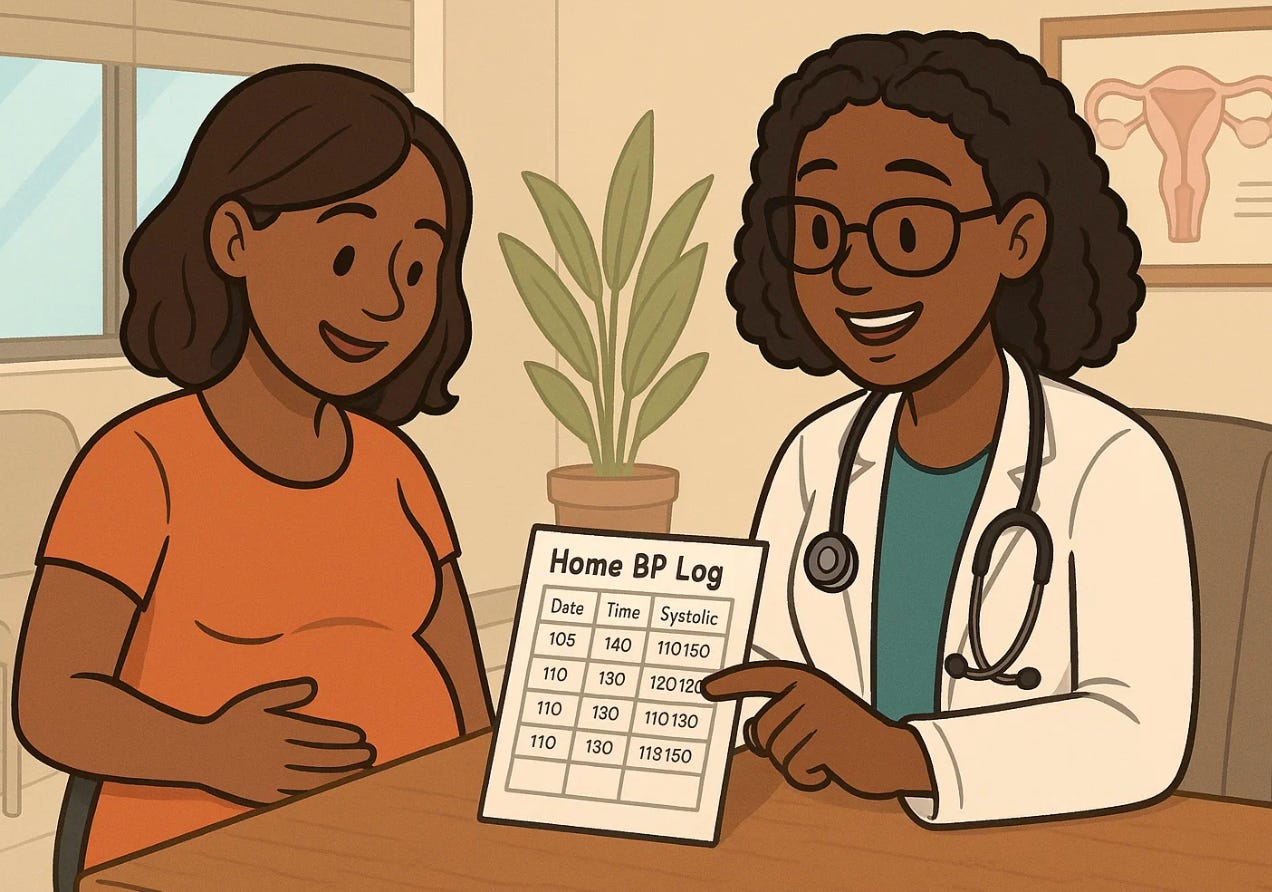
A good pregnant patient measures what matters. Home blood pressure checks catch early hypertensive disorders. Monitoring fetal movement builds awareness of what is normal and what is not. Tracking symptoms creates a timeline clinicians can act on. These are acts of partnership, not responsibility shifts.
A good pregnant patient uses questions strategically. Instead of “Is everything fine?” she asks:
“What should I watch for?”
“What would concern you?”
“If something changes, what is the fastest way to reach you?”
“What exactly did my tests show? What were the numbers? Can I have copies please?”
A collaborative prenatal care scene showing an ObGyn and pregnant woman seated together reviewing a home BP log. Modern clinic. Warm, clear communication. Emphasis on teamwork rather than hierarchy.
These questions align both parties in the same predictive mindset.
Most of all, a good pregnant patient sees herself as part of the clinical team. Not subordinate to it. Not at odds with it. Inside it. Safety improves when both clinician and patient share information early, respond rapidly, and remain aligned in expectations and goals.
The Mindset That Protects Pregnancies
When both sides bring their best, obstetrics works. The clinician monitors physiology. The pregnant woman monitors her lived experience. Data flows both directions. Problems are identified sooner. Interventions happen earlier. Outcomes improve.
This is not paternalism. It is collaboration. Obstetrics is not a hero narrative. It is a surveillance discipline built on shared vigilance.
A Short Guide: How Pregnant Women Can Use Generative AI Safely
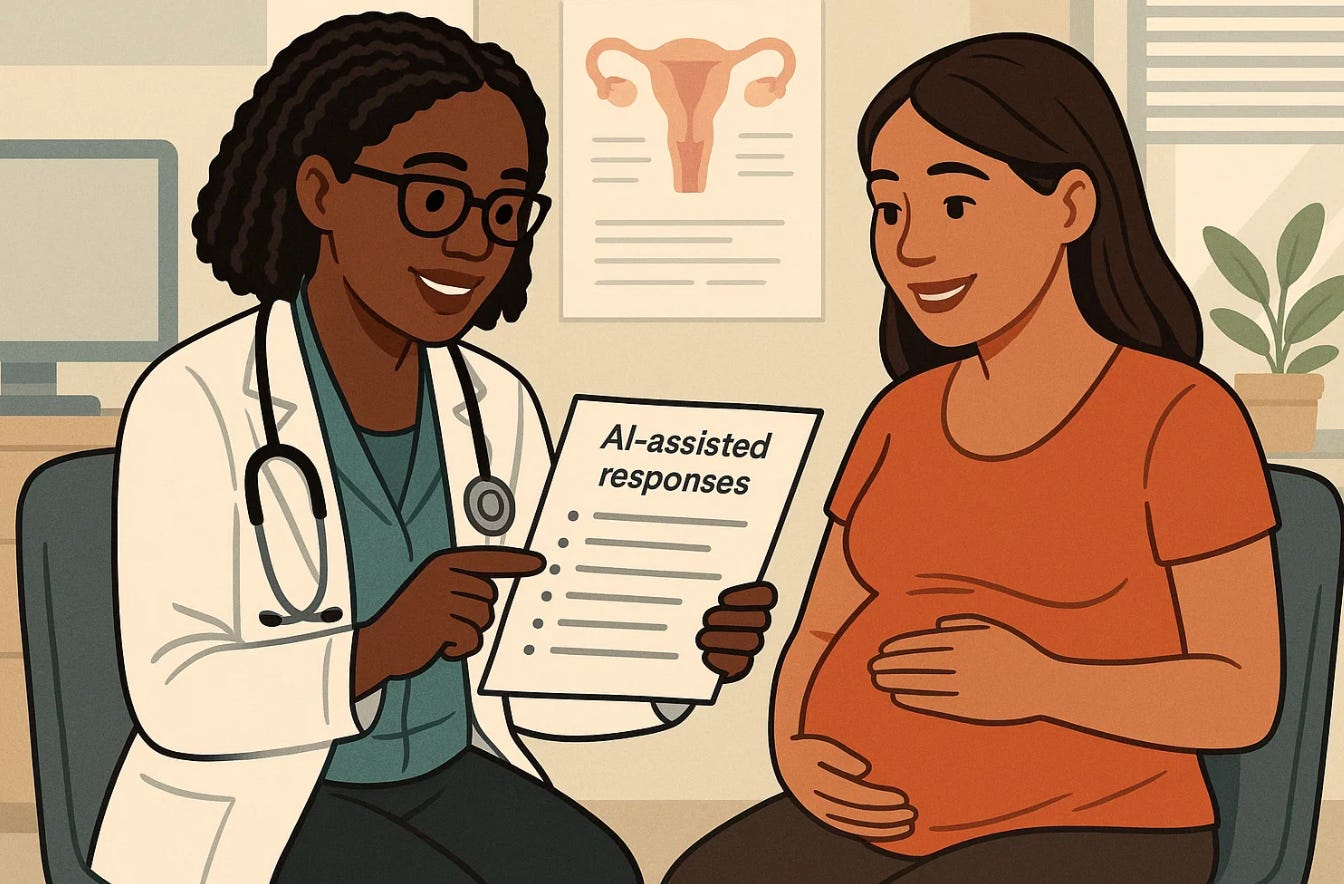
AI can strengthen this partnership when used correctly. It can also distort it when misused. The evidence shows that AI can support communication and organization but is variable in accuracy and should never replace human judgment.
Use AI for:
Organizing questions for prenatal visits
Summarizing educational materials
Setting reminders for medications or home BP checks
Clarifying general medical concepts
Download all your results copies and have AI help you interpret them.
Do not use AI for:
• Interpreting symptoms
• Making urgent decisions
• Overriding clinical advice
AI is a tool for preparation, not diagnosis. It strengthens communication rather than replacing it.
Closing Reflection
Pregnancy safety grows from a simple truth. Two experts, working together, can see more than either can alone. When the ObGyn brings clarity, vigilance, and early action, and the pregnant woman brings awareness, communication, and proactive engagement, the result is a partnership that prevents harm and builds confidence. This, not ideology, is how healthy mothers and healthy babies are made.