
How to Best Get Pregnant: A Sex Ed for Adults
Conception isn’t just biology—it’s timing, trust, and understanding your own body. The Obstetric Intellect — Where ideas, evidence, and ethics meet to challenge assumptions in obstetrics.

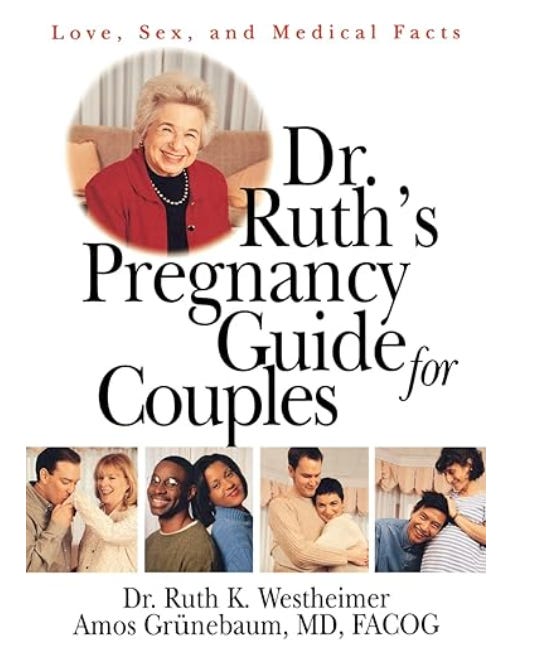
When I co-authored a book on “Pregnancy Guide For Couples” with famous sex therapist Dr. Ruth Westheimer years ago, we thought it would be mostly about love and laughter. What surprised us was how many couples, even highly educated ones, didn’t really understand how conception happens. Many thought they were “trying” for months, yet were missing the biologically fertile days by a mile. Others worried that their fertility had “failed,” when in reality, it was timing—or misunderstanding—that failed them.
The Basics We Forget
We teach teenagers how to avoid pregnancy but rarely teach adults how to achieve one. Ovulation isn’t random, and neither is fertility. Most women ovulate about 14 days before their next period—not 14 days after the last one. That distinction alone has caused countless tears, arguments, and unnecessary clinic visits.
Eggs live about 12 to 24 hours. Sperm can live up to five days inside the female reproductive tract. That means the fertile window isn’t one day—it’s about six days long, ending on ovulation day. To conceive, sperm must already be present when the egg arrives. Waiting until the day after ovulation, as many couples do, is like showing up to the airport after the plane has taken off.
Preconception Preparation: Setting the Stage for Success
Before trying to conceive, a visit to your healthcare provider for preconception care can make all the difference. Think of it as tuning up before a long journey. For women, this includes reviewing medical history, menstrual cycles, medications, and lifestyle habits. Your doctor will recommend a prenatal vitamin with at least 400 micrograms of folic acid to reduce neural tube defects, check immunity to rubella and varicella, update vaccinations, and order blood tests for anemia, thyroid function, and infectious diseases. Women with chronic conditions like diabetes, hypertension, or thyroid disorders should ensure these are well controlled before conception.
For men, preconception care matters too. A simple semen analysis can assess sperm count, motility, and morphology. Many couples skip this step for months, assuming the issue must lie with the woman, when in reality, male factors contribute to infertility in nearly half of all cases. Lifestyle factors—such as smoking, heavy alcohol use, obesity, and certain medications—can reduce sperm quality. Some over-the-counter supplements or gym performance enhancers contain steroids that suppress sperm production. If a semen analysis shows abnormalities, further evaluation by a urologist or reproductive specialist is recommended.
Couples should also discuss genetic carrier screening. A simple blood or saliva test can reveal if either partner carries genes for conditions like cystic fibrosis, sickle cell disease, or Tay-Sachs, allowing for informed reproductive choices.
Finally, both partners should aim for optimal health before conception: maintain a balanced diet, reach a healthy weight, manage stress, and avoid toxic exposures like lead or pesticides. Even sleep patterns and shift work can influence fertility hormones. Preparing your body before pregnancy isn’t about control—it’s about creating the best environment for conception and a healthy baby.
Timing Is Everything
Apps and ovulation kits help, but they’re not foolproof. Regular cycles allow for prediction, but stress, illness, or travel can shift ovulation. The most reliable signals are your body’s own: changes in cervical mucus (clear and stretchy like egg white) and a slight rise in basal body temperature after ovulation. Couples who track both see higher conception rates without medical assistance.
Think of it this way: if you only have sex once or twice a week, you might easily miss the fertile window half the time. Having intercourse every one to two days during the middle third of the cycle—roughly days 10 to 17 in a 28-day cycle—covers your bases.
Position, Pleasure, and Myths
One of the most common questions Dr. Ruth and I were asked was: Does position matter? Scientifically, no specific position has been shown to increase pregnancy rates. Sperm are efficient swimmers. Gravity and gymnastics play no role. What matters more is comfort, arousal, and mutual satisfaction. Good sex leads to relaxation and stronger pelvic contractions, both of which may help sperm transport naturally.
And no, you don’t need to lie with your legs up for twenty minutes afterward. The uterus doesn’t need help from gravity. But staying in bed for a few minutes, cuddling, and avoiding immediate washing makes practical sense and emotional sense.
The Role of Climax
For years, sex researchers—including Dr. Ruth—have explored whether female orgasm helps conception. It’s not essential for fertilization, but it may help. During climax, the uterus and vagina contract rhythmically, which could draw sperm upward. More importantly, orgasm enhances arousal and connection. It helps partners relax, strengthens bonding, and makes the process enjoyable instead of clinical.
Male climax, of course, is necessary for ejaculation, but not every act needs to be timed to “perfection.” What matters most is frequent, pleasurable intercourse around ovulation. In short: enjoy it, don’t script it. Conception thrives in comfort, not calculation.
His and Her Masturbation
Solo pleasure is often ignored in discussions about fertility, yet it can be healthy for both partners. For men, occasional masturbation doesn’t harm sperm count or quality. In fact, ejaculating every two to three days helps keep sperm fresh and mobile. Long abstinence can actually reduce sperm motility.
For women, masturbation helps improve awareness of arousal patterns, cervical changes, and lubrication—all useful cues when trying to conceive. It also releases stress, which can indirectly improve fertility by lowering cortisol levels. Couples who are open about self-pleasure often communicate better about their sexual needs, making partnered intimacy more relaxed and fulfilling.
There’s nothing “unproductive” about solo sex. It’s part of sexual health, body awareness, and emotional connection. As Dr. Ruth often said, “Knowing your own body is the first step toward sharing it well.”
Lifestyle: Small Changes, Big Impact
Fertility reflects overall health. Smoking, excessive alcohol, and obesity reduce chances of conception for both partners. For men, heat exposure—like frequent hot tubs—can lower sperm count. For women, very low or very high body weight can disrupt ovulation.
Caffeine in moderation is fine. So is exercise. But supplements promising to “boost fertility” usually offer little more than expensive hope. The real boost comes from balanced nutrition, sleep, and stress control.
When to Seek Help
Most healthy couples conceive within a year of regular, unprotected intercourse. If you’re under 35 and trying for more than a year—or over 35 and trying for more than six months—it’s time to see a fertility specialist. Early testing can reveal simple issues like thyroid imbalance, blocked tubes, or low sperm count that are treatable once identified.
And remember: conception is a shared process. Too often, women bear the emotional burden of “infertility,” even though male factors contribute in nearly half of cases. Fertility care should always involve both partners.
Emotional Honesty Matters
Trying to conceive can turn intimacy into obligation. Couples begin to feel like laboratory partners instead of lovers. I often tell patients: don’t let fertility replace affection. Schedule sex if you must—but also make room for spontaneity. Remember why you want a child together in the first place.
The best fertility advice is often the simplest: know your body, know your timing, and keep intimacy grounded in trust and pleasure. Science may map the biology, but it’s human connection that sustains the journey.
Reflection / Closing
Sex education shouldn’t end at adolescence. It should mature with us, helping adults understand their bodies, fertility, and choices with the same openness we once used to avoid pregnancy. The real question isn’t just how to get pregnant, but how to stay connected while trying. Maybe that’s what Dr. Ruth and I meant all along: that good sex is not just about conception—it’s about connection, communication, and care.