
How Obstetric Anesthesia Became One of Medicine’s Safest Success Stories
From deadly risks to near-zero maternal deaths—how obstetric anesthesia rewrote the safety playbook. The Safety Ledger — Notes on accountability, error, and what it really takes to keep patients safe

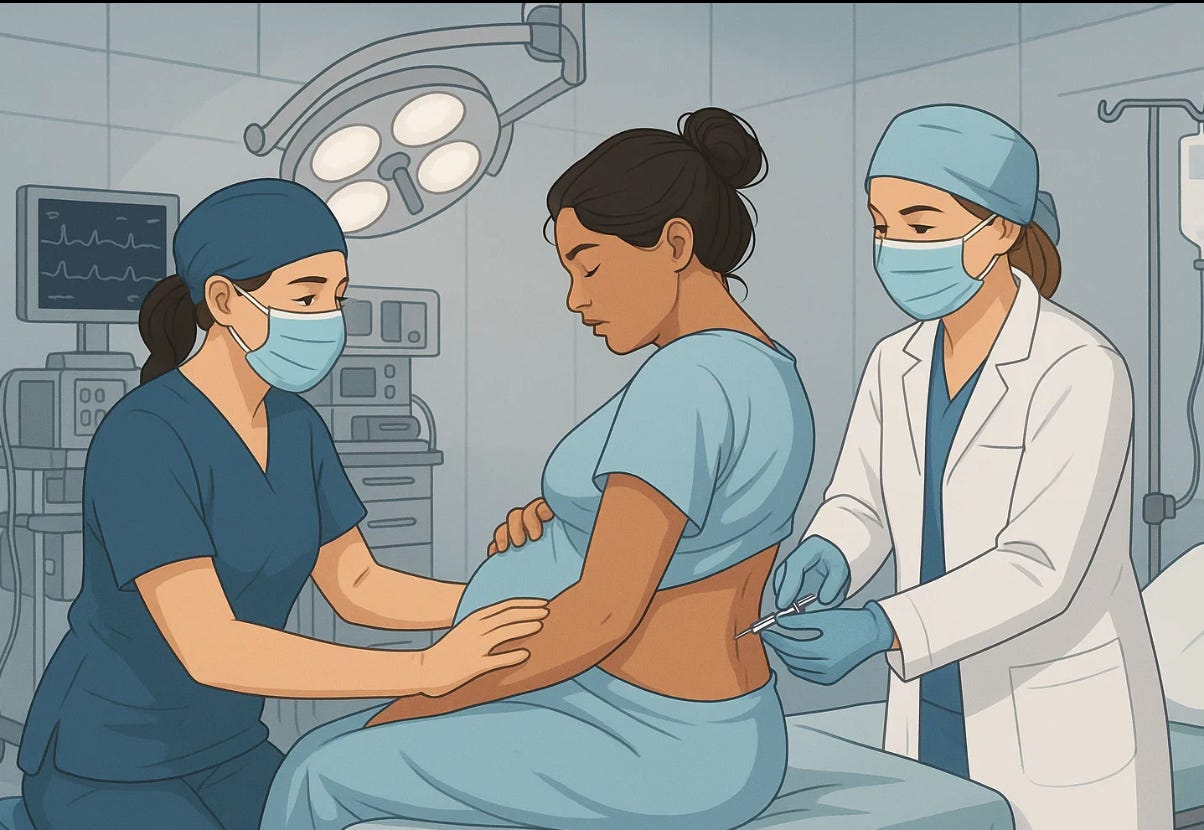
When I began my medical career, I was an anesthesiologist. It was the 1970s, and anesthesia was one of the most dangerous parts of obstetrics. Maternal deaths from anesthesia complications were tragically common. The monitors were primitive, airway management was often improvised, and “standardized guidelines” barely existed. A patient could come in for a cesarean and never wake up.
Today, obstetric anesthesia has become one of the safest specialties in all of medicine. Deaths directly caused by anesthesia are now exceedingly rare. What changed is not luck—it’s leadership, science, and humility.
From Guesswork to Guidelines
In the early days, anesthesia was more art than science. Every hospital, and sometimes every anesthesiologist, did things differently. There were no national standards for monitoring or medication safety. The American Society of Anesthesiologists (ASA) changed that by developing clear, evidence-based guidelines for everything from preoperative evaluation to intraoperative monitoring and recovery care.
Those guidelines, enforced through credentialing and peer review, created a culture of safety long before “patient safety” became a buzzword. The lesson is timeless: consistency saves lives.
The Pulse Oximeter Revolution
One invention did more for patient safety than perhaps any other device since the stethoscope: the pulse oximeter. Introduced widely in the 1980s, it gave anesthesiologists real-time feedback on oxygen levels, allowing instant detection of airway problems. Before that, oxygen deprivation was invisible until it was too late.
With the oximeter, silence in the operating room turned from a danger to a signal—when the tone dropped, everyone moved. It democratized vigilance, allowing nurses, residents, and surgeons to see what used to be known only by feel.
The Shift from General to Regional Anesthesia
When I began practicing, most cesarean sections were performed under general anesthesia. The patient was unconscious, intubated, and at risk for aspiration, airway obstruction, and medication reactions.
Over time, regional anesthesia—spinal and epidural—replaced general anesthesia for most deliveries. This change was transformative. Mothers stayed awake, avoided airway complications, and bonded with their newborns immediately after birth. For the anesthesiologist, it meant fewer emergencies and better control of maternal physiology.
Regional anesthesia became not just a technique but a philosophy: keep the mother safe, comfortable, and conscious.
Why Anesthesiologists Got It Right
Anesthesia’s transformation didn’t happen by chance. It came from relentless introspection and data. Every death or near miss was reported, studied, and learned from. The ASA’s Closed Claims Project began in the 1980s to review malpractice cases systematically. Instead of hiding mistakes, anesthesiologists turned them into education.
Few specialties have been as willing to say, “We failed—now let’s make sure it never happens again.” That honesty built trust and made the field safer for everyone.
The Ethical Core: Safety as a Shared Duty
Obstetric anesthesia reminds us that safety is not an individual virtue but a collective responsibility. It depends on systems, teamwork, and the courage to admit errors. The obstetrician, anesthesiologist, nurse, and neonatologist all share one mission: keep both mother and baby alive and well.
This collaboration is especially vital in high-risk pregnancies. When the mother has preeclampsia, cardiac disease, or severe bleeding, the anesthesiologist’s precision can make the difference between survival and tragedy. Modern monitoring, simulation training, and shared protocols ensure that everyone speaks the same safety language.
Lessons for the Rest of Medicine
Anesthesia’s journey holds lessons for every specialty. Safety improves when data replace denial, when rules replace habits, and when humility replaces ego. Obstetric anesthesia showed that it is possible to go from one of the deadliest to one of the safest fields in a single generation.
The same principles could prevent countless errors elsewhere in medicine: universal monitoring, rigorous checklists, standardization, and a culture where learning from mistakes is a mark of strength, not shame.
Lessons for Obstetrics
Obstetrics has yet to fully internalize those same lessons.
Many obstetricians still resist strict adherence to guidelines, preferring to call their approach an “art.”
While clinical judgment and adaptability are important, too often that phrase becomes a shield for inconsistency. Across hospitals, even within the same city, labor and delivery practices can vary widely. Induction protocols, fetal heart rate interpretation, and cesarean decision thresholds often depend more on the individual provider than the evidence. Nurses, who are trained in standardization and checklists, are usually the ones most faithful to protocols. They quietly uphold safety systems that some physicians still view as optional. Implementing clear, enforceable labor and delivery guidelines remains one of the greatest challenges in obstetrics. The anesthesia community proved decades ago that standardization does not destroy clinical judgment—it protects it. Obstetrics must make that same cultural shift if it wants to match anesthesia’s safety record.
Reflection / Closing
When I switched from anesthesia to obstetrics and later to maternal-fetal medicine, I carried that lesson with me: safety is not a slogan—it’s a discipline. Obstetric anesthesia taught the medical world how to measure risk, anticipate error, and never stop improving.
The question is, how many other fields are ready to follow its example?