
Heat, Pregnancy, and Timing: What Climate Change Is Teaching Us
The Prognosis — Forecasting where medicine, and morality, are heading next.


Heat risk in pregnancy is real, time-sensitive, and preventable. Early trimester and late-pregnancy windows are especially vulnerable, so let us turn forecasts into care plans.
A July afternoon hits 100 degrees. Your heart pounds, your clothes feel heavy, and the air barely moves. Now imagine that same day while pregnant. Your body is already working harder. Add extreme heat, and the strain can tip from uncomfortable to unsafe.
Heat is Physiologic Stress
Let us start with the simple truth. Heat is not only uncomfortable, it is a physiologic stress. Pregnancy raises your resting metabolism, expands your blood volume, and shifts blood toward the skin to cool you. That makes staying in a safe temperature zone harder. Climate change is pushing more days above that zone. Research now links hotter days to more preterm birth, stillbirth, and serious maternal complications. These are not fringe data points. Multiple reviews and public health agencies warn that rising heat is a real risk for pregnant patients.
Timing matters.
Different windows of pregnancy appear to be more sensitive to heat. Early pregnancy, when the placenta forms, seems vulnerable. Studies associate first-trimester heat with higher risks of hypertensive disorders, low birth weight, and some congenital anomalies. Later pregnancy shows a consistent pattern too. Heat waves in the final weeks raise the odds of preterm birth and have been linked to increased stillbirth risk, especially with multi-day events and hot nights that never cool. Even a single very hot day can raise the risk for blood pressure problems of pregnancy.
Think of pregnancy like building and then stress-testing a bridge. In the first trimester, crews lay foundations and pour concrete. Excess heat at this stage can distort the “pour,” because placental vessels are still forming and oxygen delivery is delicate. In the third trimester, the bridge carries the heaviest load. Heat now acts like extra traffic during rush hour. Add exertion, dehydration, or poor nighttime cooling, and the system can fail. That is one reason why late-pregnancy heat waves track with preterm labor and stillbirth in population studies.
What is new or overlooked?
First, dose and duration. It is not only triple-digit scorchers. A modest rise of a degree or two, several days in a row, can move risk in big populations. In a meta-analysis, each 1°C increase was tied to higher odds of preterm birth, and heat waves raised risk further. Second, the “pre-pregnancy” window matters. Heat exposure in the months before conception may also influence outcomes, likely through stress pathways and hydration status. Third, inequity amplifies risk. Outdoor workers, people without air conditioning, and those facing language, transport, or immigration barriers encounter more heat with fewer protections.
How might heat do this? Several plausible mechanisms add up. Dehydration concentrates the blood and can reduce uteroplacental flow. Heat stress increases cardiac workload and can trigger inflammatory and hormonal shifts that prime labor. Night-time heat limits recovery, keeping heart rate and stress hormones elevated. None of these alone “proves” causation, but together with consistent epidemiology, the picture is strong enough for clinical action today.
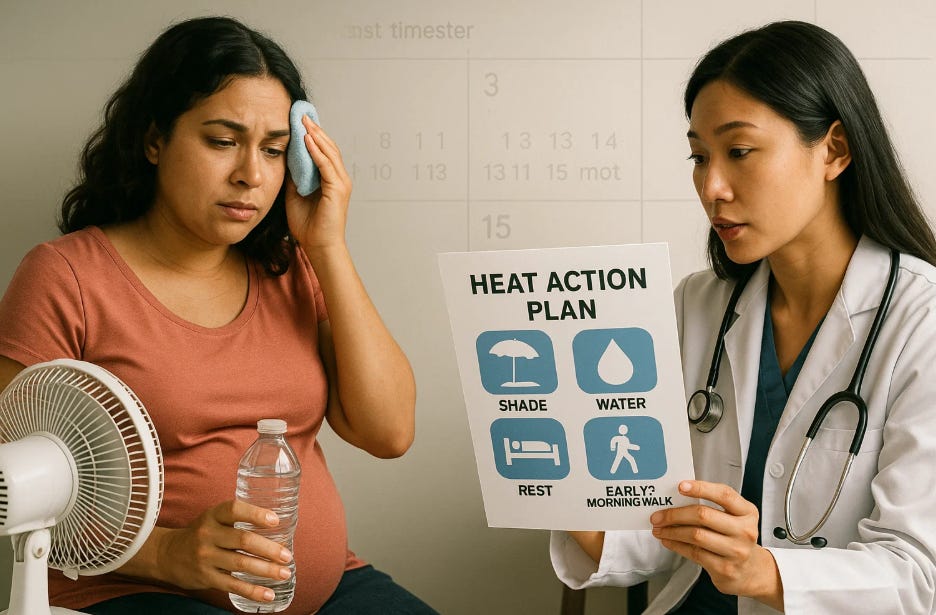
Practical lessons for patients and families:
• Plan your day around heat. On hot days, shift errands and walks to early morning or evening. Rest at midday. Use fans and cool showers. Hydrate before you feel thirsty. Add electrolytes if you are sweating a lot. If you stop sweating, feel dizzy, have a pounding headache, chest pain, contractions, or decreased fetal movement, seek care.
• Track the forecast and “stack” protections. A single hot day matters. Three or four hot days in a row matter more. Make a cooling plan with shade, water, and a back-up place to stay cool if your home does not cool at night.
• Talk about work accommodations early. If your job involves outdoor labor, hot kitchens, warehouses, or heavy lifting, ask your clinician to write specific heat accommodations: more frequent cool-down breaks, access to water and shade, and shifts away from peak heat. Many employers must provide reasonable accommodations in pregnancy.
• Remember mental health. Heat worsens sleep and mood and can heighten anxiety and depression. Combine temperature control with simple routines: earlier bedtimes on hot nights, light meals, and social support.
Practical lessons for clinicians and health systems:
• Ask about heat at every visit in warm months. Document access to air conditioning or cool spaces, outdoor work, and nighttime temperatures at home. Give simple heat-action plans just like asthma action plans. Hand patients a number to call if symptoms worsen during a heat wave.
• Watch the calendar. Emphasize extra precautions during the first trimester and the last month when risks appear higher. If a heat wave is forecast, proactively reach out to high-risk patients, including those with hypertension, diabetes, growth restriction, or limited housing resources.
• Coordinate with employers. Write clear, specific notes for heat accommodations. Partner with community groups to identify cooling centers and transportation for prenatal care during heat events.
• Build a heat dashboard. Many hospitals track influenza and RSV season. Do the same for heat. When heat-risk days spike, expand triage staffing, increase phone triage capacity, and send text reminders on warning signs, hydration, and fetal movement checks.
Ethically, heat and pregnancy are a justice issue. People who are most exposed often have the least power to avoid exposure. That is why national and global bodies now call for targeted protections for pregnant people and infants in climate planning. In obstetrics, prevention is part of our professional duty. Turning heat science into everyday practice honors that duty.
Reflection / Closing:
We cannot lower the summer sun, but we can lower risk. The ethical question is simple. If we know heat harms some pregnancies at predictable times, what is our obligation to plan ahead? Share your best ideas for “heat-safe” prenatal care that any clinic could adopt next week.