
The Evidence Room: Ultrasound Is Potentially Dangerous in Pregnancy and Increases Autism? There Is No Evidence for This

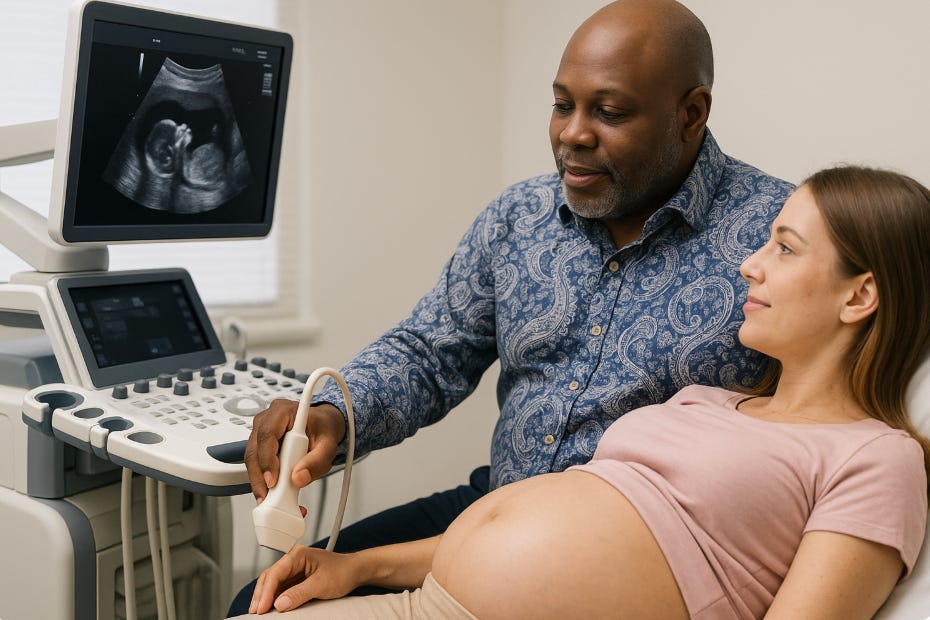
The Non-Evidence Based Debate
In April 2025, U.S. Secretary of Health and Human Services Robert F. Kennedy, Jr. announced that his department would launch new investigations into possible environmental contributors to autism. Among the six factors he highlighted was prenatal ultrasound, alongside air pollution, endocrine-disrupting chemicals, heavy metals, pesticides, and wireless radiation.
The full list included:
Air pollution
Endocrine-disrupting chemicals
Heavy metals
Pesticides
Wireless radiation
Prenatal ultrasound
By naming ultrasound in the same breath as toxins and pollutants, the implication was clear: perhaps the very technology we use to monitor and protect babies might paradoxically endanger them. For families, this suggestion is unsettling. For clinicians, it risks undermining trust in one of the safest and most valuable tools in modern obstetrics.
But here is what the evidence shows: there is no scientifically proven link between ultrasound and autism.
What Is Autism?
Autism spectrum disorder (ASD) is a neurodevelopmental condition that affects how people communicate, interact, and process the world around them. It is called a “spectrum” because it presents differently in each person — some may have subtle challenges, others more significant needs. Common features include differences in social communication, restricted or repetitive behaviors, and unique sensory responses.
ASD is not caused by a single factor. Genetics play a major role, and research shows that dozens, perhaps hundreds, of genes contribute. Environmental influences may interact with genetic risk, but despite decades of study, no credible evidence links ultrasound exposure to autism.
How Ultrasound Works
Ultrasound is not radiation. It does not operate like an X-ray or CT scan. Instead, it uses high-frequency sound waves that bounce off tissues to create moving images. The technology has been in everyday use since the 1970s. By now, billions of ultrasounds have been performed worldwide.
If ultrasound carried a hidden danger like autism, we would expect to see clear patterns across populations: spikes in autism rates when ultrasound use became routine, or differences between countries that use more or fewer scans. We don’t.
Where the Fear Came From
The myth linking ultrasound to autism has multiple roots:
Timing overlap. Autism diagnoses began rising during the same decades that ultrasound became routine. This correlation has fueled suspicion. But increased autism prevalence is largely explained by improved diagnostic definitions, broader awareness, and more services — not ultrasound.
Animal studies. Some early experiments on mice suggested that prolonged, high-intensity ultrasound could alter brain development. But those exposures were vastly higher than anything used in humans. Comparing them is like comparing a bonfire to a candle.
Personal stories. Parents with a child on the autism spectrum sometimes notice they had many ultrasounds and wonder if there’s a connection. Anecdotes are powerful, but anecdotes are not data.
What the Data Show
Extensive research has put this question to the test. The results are consistent:
A 2023 CDC-led study using the SEED (Study to Explore Early Development) cohort concluded: “We found no evidence that prenatal ultrasound use increases ASD risk.”
The same study noted: “Studies evaluating the association between prenatal ultrasounds and autism spectrum disorder (ASD) have largely produced negative results.”
Research from Boston University in 2018 confirmed: “The number or duration of abdominal fetal ultrasounds are not associated with future development of autism spectrum disorder.”
International bodies, including the ISUOG Safety Committee, have stated: “There is no scientifically proven association between ultrasound exposure in the first or second trimesters and ASD, or its severity.”
In short: the data consistently show no link.
Real Benefits of Ultrasound
While myths exaggerate dangers, the benefits are real and measurable:
Dating pregnancies accurately helps prevent complications from post-term birth.
Detecting multiples early allows appropriate care.
Identifying malformations gives families information and hospitals time to prepare.
Monitoring growth and amniotic fluid detects placental problems that can lead to stillbirth if missed.
Guiding procedures like amniocentesis makes them safer.
If we stripped ultrasound from obstetrics, maternal and newborn deaths would rise.
Addressing the “Heating” Argument
Critics often claim ultrasound “heats” the fetus. Here’s the reality:
Diagnostic ultrasound machines are regulated to use the lowest possible energy.
Any heat generated is minimal — typically less than 1°C.
Doppler scans use slightly more energy, which is why prolonged, unnecessary Doppler studies in early pregnancy are discouraged.
That’s why guidelines emphasize medical, not recreational, use. The only legitimate concern is with “keepsake” or entertainment ultrasounds offered in non-medical settings, which can last longer than needed.
The Word “Natural” Perverted Again
As in the natural childbirth debate, critics often frame ultrasound as “unnatural,” and therefore unsafe. But this is a misuse of language. Nature hides complications — placenta previa, restricted growth, congenital anomalies — that only ultrasound can reveal.
The word “natural” has been twisted into a moral judgment: natural equals good, medical equals bad. In this framing, women who accept ultrasounds are “interfering,” while those who refuse are “pure.” This is neither fair nor evidence-based. Words should not be weaponized against women making medical decisions.
Ethical Considerations
Two ethical principles are key here:
Do no harm. Ultrasound should not be overused, especially in commercial settings. Entertainment scans add no medical value.
Do good. When medically indicated, ultrasound is profoundly beneficial. Denying access in the name of pseudoscience risks real harm to mothers and babies.
Balancing these principles points to a clear conclusion: ultrasound should be used judiciously, but fears of autism are unfounded.
Quotes on Both Sides
“We found no evidence that prenatal ultrasound use increases ASD risk.” — CDC-led SEED study, 2023
“The number or duration of abdominal fetal ultrasounds are not associated with future development of autism spectrum disorder.” — Boston University, 2018
“There is no scientifically proven association between ultrasound exposure and ASD.” — ISUOG Safety Committee, 2016
Versus:
“As ultrasounds increased, so has autism. Maybe it’s the scanning.” — typical claim from online parenting forums
“Ultrasound exposure is among six environmental factors we will examine for potential links to autism.” — Robert F. Kennedy, Jr., Secretary of HHS, April 2025
Putting them side by side highlights the contrast between speculation and science.
A Useful Analogy
Ultrasound is like a flashlight in a dark cave. It doesn’t change the cave; it reveals what is already there. Without it, you are stumbling in the dark, hoping the path is safe. With it, you can see dangers and act before they cause harm. The flashlight isn’t the threat — the dark is.
Lessons for Families and Clinicians
For families: Ultrasound is safe when used for medical reasons. If you hear someone claim it causes autism, ask for data. None exists.
For clinicians: Take fears seriously. Explain, don’t dismiss. Trust is built through clarity.
For policy makers: Regulate entertainment scans, but continue supporting ultrasound as a vital tool in maternal-fetal health.
Closing Reflection
Ultrasound has transformed pregnancy from mystery to visibility. It does not cause autism. Suggesting otherwise frightens families and undermines trust in evidence-based care. The real ethical danger is not the technology, but the spread of unfounded claims.
Autism deserves serious research into real causes. Ultrasound does not belong on that list.