
Evidence-Based Medicine: ObGyn Demystified — Natural Childbirth Is Always Safer? The Hidden Dangers of Romanticizing Nature
Natural’ does not always mean ‘safe.’ In childbirth, romanticizing nature can blind us to real risks. Evidence tells a different story.

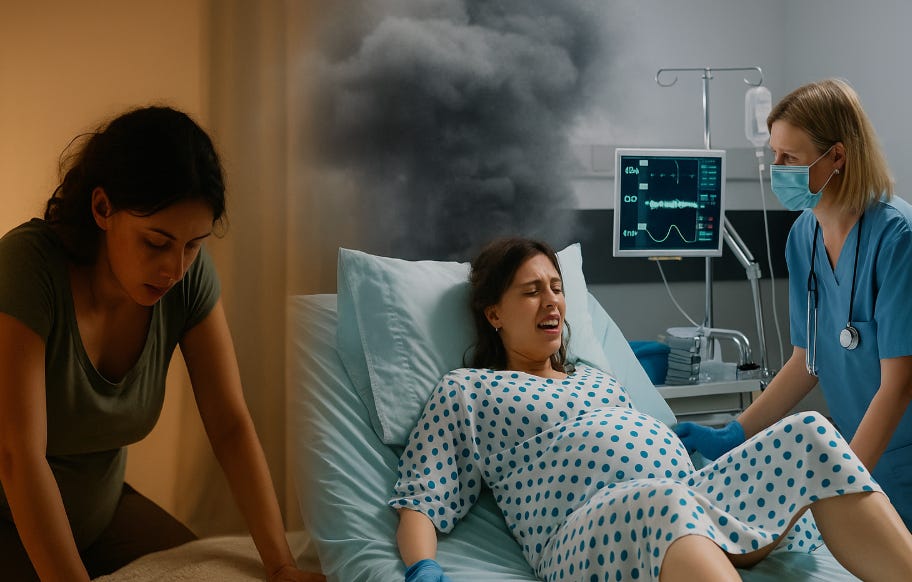
The Allure of “Natural”
The word “natural” has an almost magical pull. We see it on food labels, in wellness ads, and in parenting blogs. In pregnancy and childbirth, “natural” has become shorthand for “better, safer, and healthier.” Some even believe that if birth unfolds without interventions, it must be the safest path for mother and baby.
But here is the uncomfortable truth: nature is not always safe. Childbirth has been a leading cause of death for women throughout history. Only with the rise of modern obstetrics, antibiotics, safe surgery, and blood banks have maternal and newborn deaths dropped to the low levels we see today. To equate “natural” with “safe” is to forget what life was really like before medicine intervened.
Worse still, the word “natural” has been perverted into a marketing tool. It is used not only to describe a personal preference but to imply a moral hierarchy — as if choosing “natural” makes one a better, stronger, or more enlightened mother. In this distortion, “natural” becomes a badge of virtue, while interventions are framed as failures or weaknesses. That is both unfair and dangerous. Words shape expectations, and expectations shape decisions. When “natural” is sold as synonymous with safety and superiority, women can be pressured into refusing lifesaving care or left feeling guilty if they need medical help. The power of the word no longer lies in its meaning but in how it has been weaponized.
Looking Back: What “Natural” Once Meant
A hundred years ago, in the 1800s maternal mortality in the United States was over 600 deaths per 100,000 births. Today it is around 20–30 per 100,000, still far too high compared with other developed countries, but a fraction of what it used to be. What changed? Not nature. What changed was access to trained clinicians, sterile technique, cesarean delivery, anesthesia, and blood transfusion.
To romanticize “natural childbirth” without acknowledging this history is like romanticizing the “good old days” without indoor plumbing or vaccines. Nature can be beautiful, but it can also be brutal.
The Modern “Natural Childbirth” Movement
The modern natural childbirth movement began as a pushback against overly medicalized, paternalistic maternity care in the mid-20th century. Women were often sedated, restrained, and denied a voice in their own births. Demanding dignity, choice, and less intervention was an important correction.
But some parts of this movement went further — suggesting that avoiding interventions was not just preferable, but inherently safer. That leap is not supported by science.
What the Data Show
Large studies tell us that interventions, when used appropriately, save lives. For example:
Epidurals do not increase cesarean rates, contrary to common belief. They provide pain relief without worsening outcomes for mother or baby.
Induction of labor at 39 weeks has been shown to lower cesarean rates in some women, not raise them.
Cesarean deliveries, while not without risks, prevent deaths in cases of obstructed labor, placenta previa, or fetal distress.
Instituting safety protocols decrease cesarean delivery rates contrary to common perceptions
Use of oxytocin for labor augmentation if done carefully reduces prolonged labor and its complications when carefully monitored, rather than causing excess interventions.
Active management of the third stage of labor (including uterotonics) dramatically lowers maternal deaths from hemorrhage — one of nature’s deadliest childbirth complications.
Group B strep screening and antibiotics in labor have cut rates of newborn sepsis by more than 80 percent compared with the “natural” course of infection.
On the other hand, refusing interventions in the name of “natural” can increase risk. Post-term pregnancies, unmanaged hypertension, or prolonged labor can lead to stillbirths or severe complications if left to “nature.”
The Hidden Dangers of Romanticizing Nature
Why is this myth so persistent? Because “natural” feels pure, empowering, and in harmony with the body. And those values matter. But when “natural” is equated with “safer,” women may feel pressured into refusing interventions they actually need.
I have seen patients decline induction for severe preeclampsia because they believed nature would guide them. Others delayed transfer from home to hospital until a crisis was irreversible. These are not failures of women — they are failures of a narrative that oversimplifies risk and paints medicine as the enemy of nature.
The danger lies not in seeking a natural experience, but in treating “natural” as a guarantee of safety.
A Useful Analogy
Imagine hiking in the wilderness. The scenery is breathtaking, the air is fresh, and the experience is restorative. But the wilderness also has cliffs, predators, and sudden storms. That is why hikers carry maps, gear, and emergency supplies.
Childbirth is much the same. Nature provides the beauty, but medicine provides the safety net. Rejecting that safety net does not make the experience purer — it makes it riskier.
Lessons for Families and Clinicians
For families: “Natural” is not the same as “safe.” It is wise to value a low-intervention birth, but wiser still to welcome interventions if complications arise.
For clinicians: Respect for birth plans matters, but so does honest counseling. Dismissing natural birth desires as naïve alienates patients. Instead, we should frame safety and nature as complementary, not opposing forces.
For the system: Women deserve maternity care that is humane, evidence-based, and safe. The answer is not uncritical naturalism or rigid medicalization, but a thoughtful balance.
An Ethical Tension
The ethical challenge is this: How do we honor women’s autonomy and desire for natural birth while also being truthful about risks? Does supporting choice include supporting choices we know carry higher dangers?
For physicians, this means practicing directive but respectful counseling. For women, it means demanding dignity without mistaking absence of medicine for absence of risk. The romanticization of nature in childbirth may feel empowering, but empowerment without clarity is fragile.
Closing Reflection
Childbirth is both natural and unpredictable. To believe that nature always knows best is to forget the countless mothers and babies lost before modern medicine. The safest path is not to reject interventions in the name of purity, but to blend the best of both worlds: the dignity of natural birth with the lifesaving backup of evidence-based care.
The myth that “natural is safer” is comforting. But the truth — that safety comes from preparation, vigilance, and modern medicine — is far more powerful.
Fantastic breakdown of the safety vs. purity false dichotomy. The point about how "natural" got weaponized as a marketing tool is especiaily sharp. I've noticed the same pattern in nutrition discourse, where "natural" gets used to shame people rather than inform them. Also the hiking analogy lands perfectly cause it skips the usual over-explaining that trips up most medical writing.