
Creativity Keeps the Brain Young — And May Shape a Healthier Pregnancy
The Evidence Room - Creativity isn’t a hobby—it’s prenatal medicine. Engaging in art, music, or movement during pregnancy can strengthen the maternal brain and nurture the baby’s development.

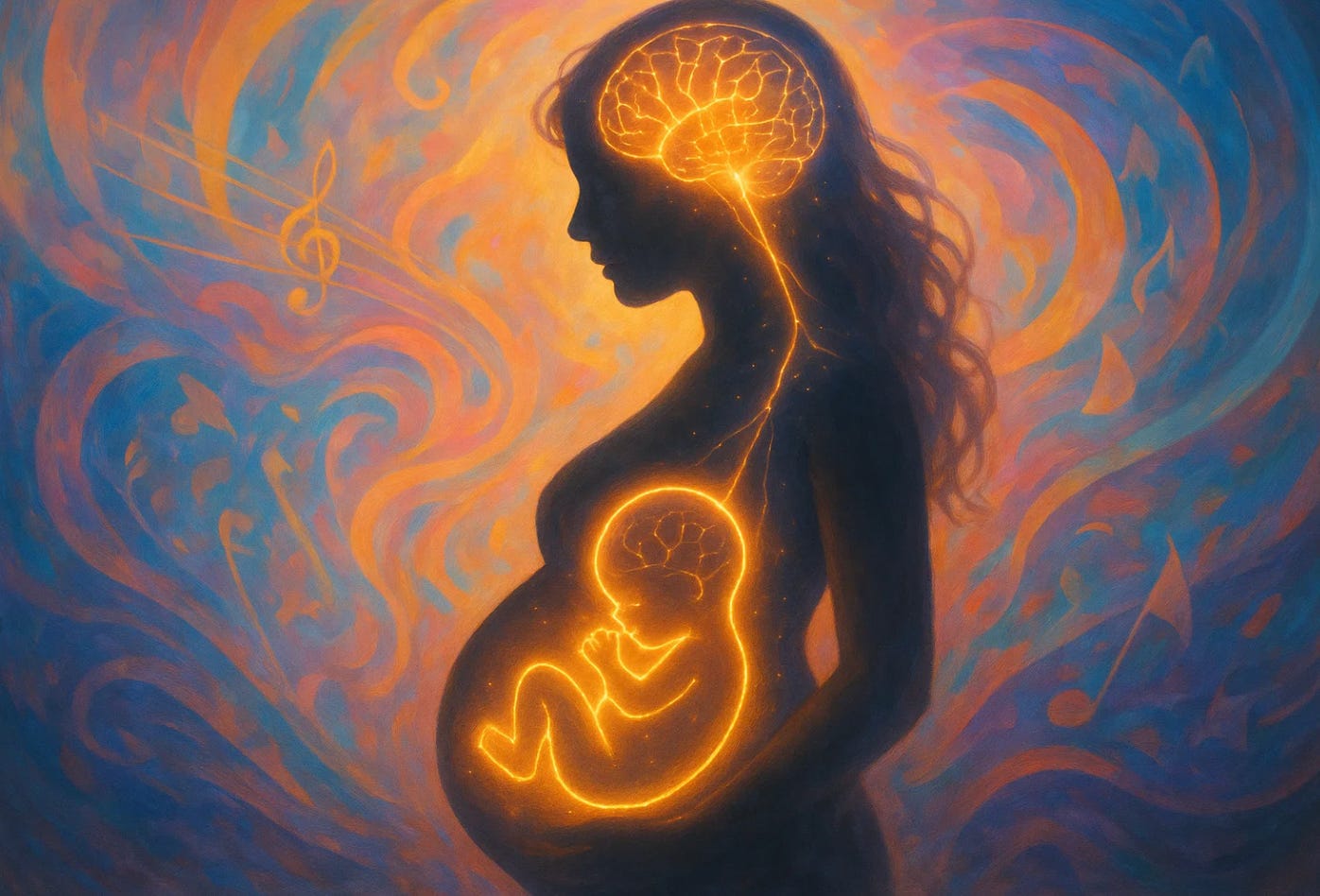
Creativity is not only a form of expression. It may be one of the most powerful and accessible ways to protect the brain—and possibly even influence a baby’s development during pregnancy. A 2025 Nature Communications study of 1,472 people from 13 countries showed that people who engage in creative experiences—such as dance, music, painting, or even strategy-based video games—had brains that appeared several years younger than their chronological age.
Pregnancy is one of the most profound examples of neuroplasticity—the brain’s ability to change and adapt. A pregnant woman’s brain reorganizes itself to enhance empathy, attention, and emotional regulation, preparing her for caregiving. Creative engagement may strengthen these same networks. Dancing, playing music, drawing, or writing during pregnancy can activate brain regions responsible for coordination, memory, and emotion regulation. These are also the areas shown to benefit most from creative practice in the study. In other words, creativity may not only help mothers stay mentally agile, it may support the very cognitive systems that nurture bonding and resilience.
Creativity as Brain Medicine in Pregnancy
Pregnancy is often discussed in physical terms—nutrition, exercise, vitamins—but the mind’s well-being is equally crucial. Creative expression calms stress circuits, increases dopamine, and promotes relaxation, which in turn benefits the baby. Chronic stress in pregnancy has been linked to preterm birth, growth restriction, and long-term neurodevelopmental challenges. Creative engagement may counteract this by lowering cortisol, improving mood, and fostering emotional connection. Music, art, and writing are safe, non-invasive ways to help both mother and baby thrive.
Studies in Pregnancy: What Science Shows
Emerging research confirms that pregnancy triggers dramatic changes in the brain. MRI scans show that many women experience reductions in gray-matter volume (the brain’s cell-body regions) and increased white-matter integrity (the brain’s communication pathways) during gestation.
One longitudinal study found that these structural changes tracked closely with hormone levels and maternal attachment postpartum. Another study of creative arts interventions in high-risk pregnancies showed improved calmness, connection, emotional well-being, and optimism among participants. While direct studies linking creativity during pregnancy with neural aging are still limited, the convergence of findings about brain plasticity in pregnancy and the known benefits of creative engagement provides a strong theoretical basis: a more plastic maternal brain is a responsive, resilient brain—and creativity appears to help build that.
What You Can Do Today
You don’t need to be a professional artist or musician to benefit. The key is to engage your senses and imagination:
Listen and move: Gentle dancing or even swaying to music improves mood and coordination while stimulating endorphins that calm both mother and baby.
Create something visual: Painting, drawing, or crafts provide mindfulness and fine-motor stimulation.
Write or journal (!!): Expressive writing reduces anxiety and helps process emotional changes during pregnancy.
Play or learn: Strategy games, puzzles, or learning a new hobby can keep the mind active and confident.
Sing or hum to your baby: Music strengthens emotional connection, and babies recognize rhythms and voices before birth.
Meditate: Even five minutes of daily quiet breathing can reduce stress hormones, improve sleep, and increase self-awareness.
Practice yoga: Prenatal yoga combines gentle movement, stretching, and focused breathing to enhance circulation, posture, and calmness.
Try mindfulness: Pay close attention to everyday sensations—taste, touch, sound—and anchor yourself in the present moment. Mindful awareness builds emotional balance and supports both maternal and fetal well-being.
Cook creatively: Preparing colorful, healthy meals engages sight, smell, and taste while offering a sense of creation and care. Cooking can be both nourishing and meditative, turning routine into a creative ritual that benefits mother and baby alike.
Even ten minutes of creative focus per day can provide measurable benefits. The brain responds quickly to novelty and pleasure, and pregnancy is a perfect time to cultivate both.
Ethical and Social Implications
If creativity protects brain health, reduces stress, and strengthens human connection, it should be integrated into prenatal care—not as a luxury, but as a form of preventive medicine. Obstetric care teams could partner with art therapists, music educators, and community organizations to bring creativity into prenatal programs. Supporting creative expression during pregnancy is not only humane; it is ethical. It aligns with beneficence—promoting well-being for both mother and child.
The Takeaway
Creativity does not just make life more beautiful—it keeps the maternal brain healthier, calmer, and more connected.
When a pregnant woman sings, paints, writes, or dances, her brain becomes more flexible and efficient, and her body releases signals of safety and joy that reach her baby. A creative pregnancy may be one of the simplest, most natural ways to invest in lifelong brain health—for both mother and child.