
COVID-19 Vaccination in Pregnancy in JAMA. What the Evidence Finally Settles
A large JAMA analysis confirms that maternal vaccination protects both mother and baby, without trade-offs

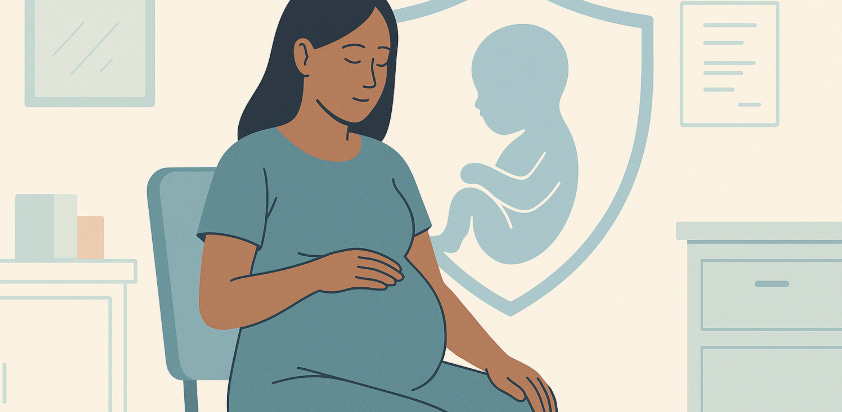
We recently wrote in JAMA an article entitled: “Professional Responsibility for COVID-19 Vaccination in Pregnancy” that clinicians should not just offer but strongly recommend Covid-19 vaccination in pregnancy.
COVID-19 vaccination during pregnancy has been debated since the pandemic began. The core question has never been ideological. It has been clinical and ethical. Does vaccination during pregnancy reduce maternal and perinatal harm, and does it do so without introducing new risks? A large new analysis in JAMA addresses this directly.
The study, briefly
McClymont and colleagues reported in JAMA that they examined maternal and perinatal outcomes associated with COVID-19 infection in pregnancy, stratified by vaccination status. Using population-level data, the authors compared outcomes among vaccinated and unvaccinated pregnant women who developed COVID-19. The outcomes were not surrogate markers or immunologic proxies. They were hard clinical endpoints: severe maternal disease, ICU admission, stillbirth, and preterm birth..
What the data show
The results are unambiguous.
Vaccination during pregnancy was associated with substantially lower risks of severe maternal COVID-19, ICU admission, and adverse perinatal outcomes. The protective effect extended beyond the mother. Rates of stillbirth and preterm birth were lower among vaccinated women who became infected compared with their unvaccinated counterparts. Importantly, there was no signal of increased obstetric harm attributable to vaccination itself.
This matters because pregnancy is a physiologic stress test. Cardiopulmonary reserve is reduced. Thrombotic risk is higher. Immune modulation is real. Severe viral illness exploits all of these vulnerabilities. The study confirms what many clinicians observed at the bedside during successive COVID waves. Vaccinated pregnant women were less likely to deteriorate, less likely to require critical care, and less likely to deliver too early because of maternal compromise.
What this study adds that earlier work did not
Earlier reports showed safety. Others showed reduced infection severity. What this analysis does differently is connect vaccination status directly to meaningful perinatal outcomes at scale. Stillbirth and preterm birth are not abstract risks. They are outcomes that define lifelong trajectories. Demonstrating a reduction in these outcomes reframes vaccination as fetal protection, not merely maternal self-protection.
A simple analogy
This is not different from antenatal corticosteroids or magnesium sulfate. We give those interventions not because they are philosophically appealing, but because they shift outcome curves in the right direction. COVID-19 vaccination now belongs in that same category. It is a preventive intervention with demonstrable downstream benefit.
Ethical clarity
From an ethics standpoint, this paper matters because it resolves a long-standing tension between precaution and omission. Early in the pandemic, uncertainty justified restraint. That justification no longer holds. When robust evidence shows that an intervention reduces serious harm, failing to recommend it clearly becomes ethically problematic. Respect for autonomy requires informed consent. It does not require professional silence in the face of evidence.
What clinicians should take away
First, COVID-19 vaccination during pregnancy is not neutral. It is protective. Second, counseling should explicitly include fetal and perinatal benefits, not just maternal risk reduction. Third, framing vaccination as optional without context misrepresents the evidence. This is no longer a case of equipoise.
What patients should hear
Pregnant women deserve plain language. Vaccination lowers the chance that COVID will make you critically ill. It lowers the chance of losing a baby. It lowers the chance of delivering too early because your body cannot tolerate the infection. Those statements are now evidence-based.
Closing reflection
Medicine advances when we stop arguing from fear and start acting from data. This study does not demand coercion. It demands honesty. When the evidence is this clear, ethical obstetrics requires more than neutrality. It requires recommendation.