
Beyond the Baby Blues: The Power of the Edinburgh Postnatal Depression Scale
How a ten-question tool became one of obstetrics’ most effective instruments for saving mothers’ lives.

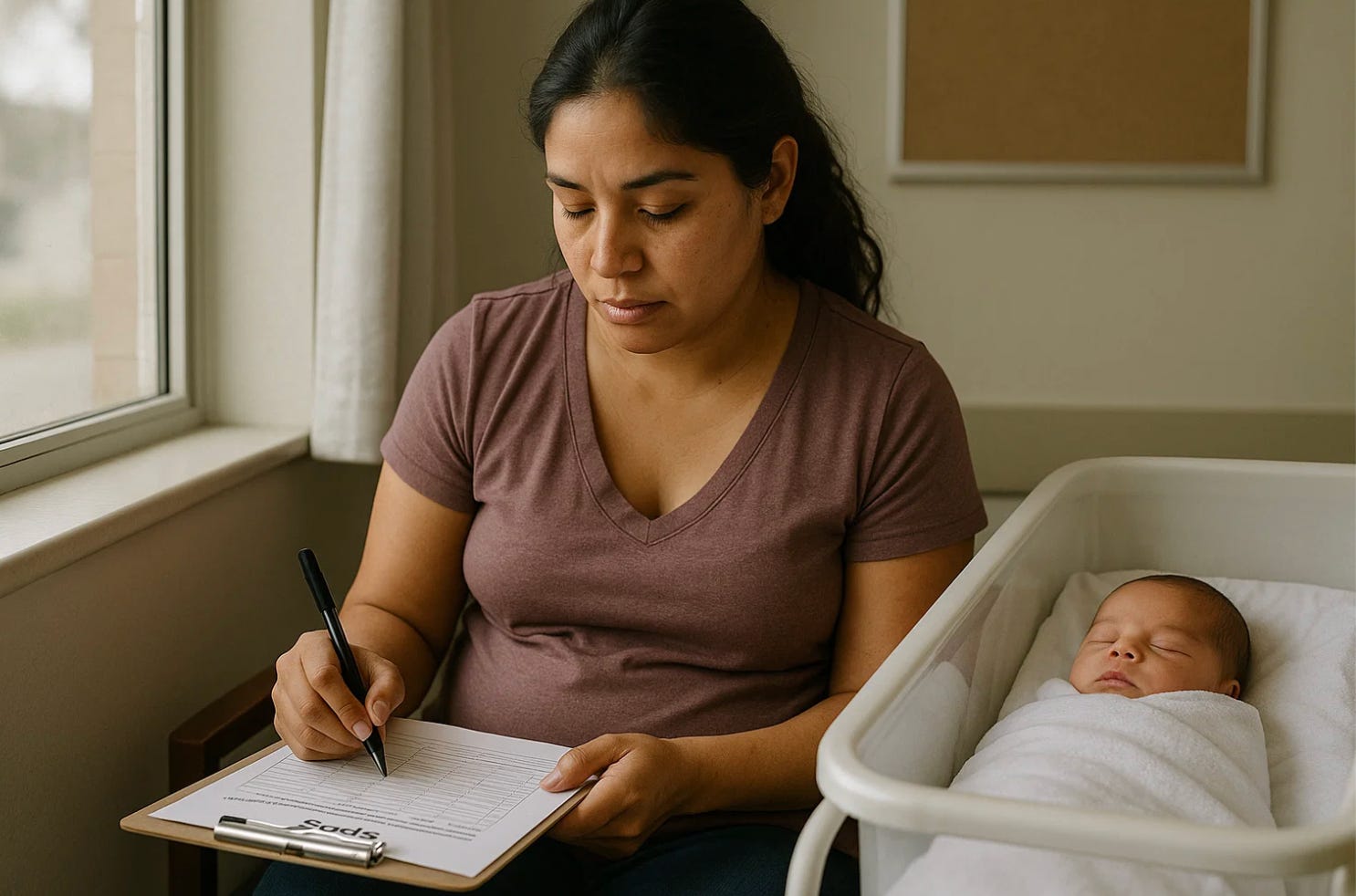
Depression after childbirth is not rare, and it is not benign. It affects up to one in seven women, yet many are never formally screened. The symptoms can be subtle at first: tearfulness dismissed as fatigue, hopelessness mistaken for hormones, or guilt minimized as new-parent worry. Too often, postpartum depression is recognized only when it becomes a crisis.
The Edinburgh Postnatal Depression Scale (EPDS) was created to prevent that. Developed by Cox, Holden, and Sagovsky in Edinburgh in 1987, the EPDS is now the most widely validated and practical screening tool for detecting postnatal depression worldwide.
It transformed maternal mental health from something subjective and invisible into something measurable, actionable, and treatable.
The EPDS contains ten simple statements, each rated on how the woman has felt in the past seven days, not since delivery.
This short recall period distinguishes transient mood fluctuations from sustained depressive states. Each item is scored 0 to 3, depending on symptom severity, producing a total score between 0 and 30. The questions are:
I have been able to laugh and see the funny side of things.
I have looked forward with enjoyment to things.
I have blamed myself unnecessarily when things went wrong.
I have been anxious or worried for no good reason.
I have felt scared or panicky for no good reason.
Things have been getting on top of me.
I have been so unhappy that I have had difficulty sleeping.
I have felt sad or miserable.
I have been so unhappy that I have been crying.
The thought of harming myself has occurred to me.
Each response is weighted from “as much as I always have” to “not at all,” or in the reverse direction depending on the question. Items 1 and 2 are reverse-scored. Scores of 10 or higher suggest possible depression; 13 or higher indicates probable clinical depression. Any score above 0 on question 10—self-harm thoughts—requires immediate evaluation.
The EPDS does not diagnose depression. It identifies risk, quantifies severity, and prompts timely referral. In obstetric care, it should be administered universally at two key points: once during pregnancy (ideally in the third trimester) and again at 2–6 weeks postpartum, with additional checks at 3 and 6 months for high-risk women. Because it can be completed in under five minutes and interpreted by any clinician, it lends itself to nurse visits, virtual check-ins, or even automated EMR prompts. The EPDS is validated across cultures and languages and has shown consistent reliability in obstetric, pediatric, and primary care settings.
In clinical use, interpretation must go beyond the number. A score of 8 from a woman minimizing distress may be as concerning as a 15 in someone openly seeking help. The tool is not a replacement for empathy but an entry point for conversation: “You’re not alone. Many women feel this way, and we can help.”
Postpartum depression is as physiologic as it is psychological—a disorder of biology, environment, and identity. When obstetric teams use structured screening, they make emotional safety part of obstetric safety. The EPDS reminds us that the health of the mother cannot be defined solely by uterine tone or incision healing. It is defined by whether she feels she can survive her own thoughts.
Reflection
No obstetric checklist is complete without the EPDS. Its ten questions capture what so many women hesitate to say out loud. Universal screening should be as expected as a blood pressure check or a glucose test. Because behind every unasked question is a woman silently asking for help.