
AI Scribes in the Delivery Room: Are We Solving the Wrong Problem?
At Stanford Medical School, researchers found that about 90% of AI-generated notes needed manual editing for mistakes

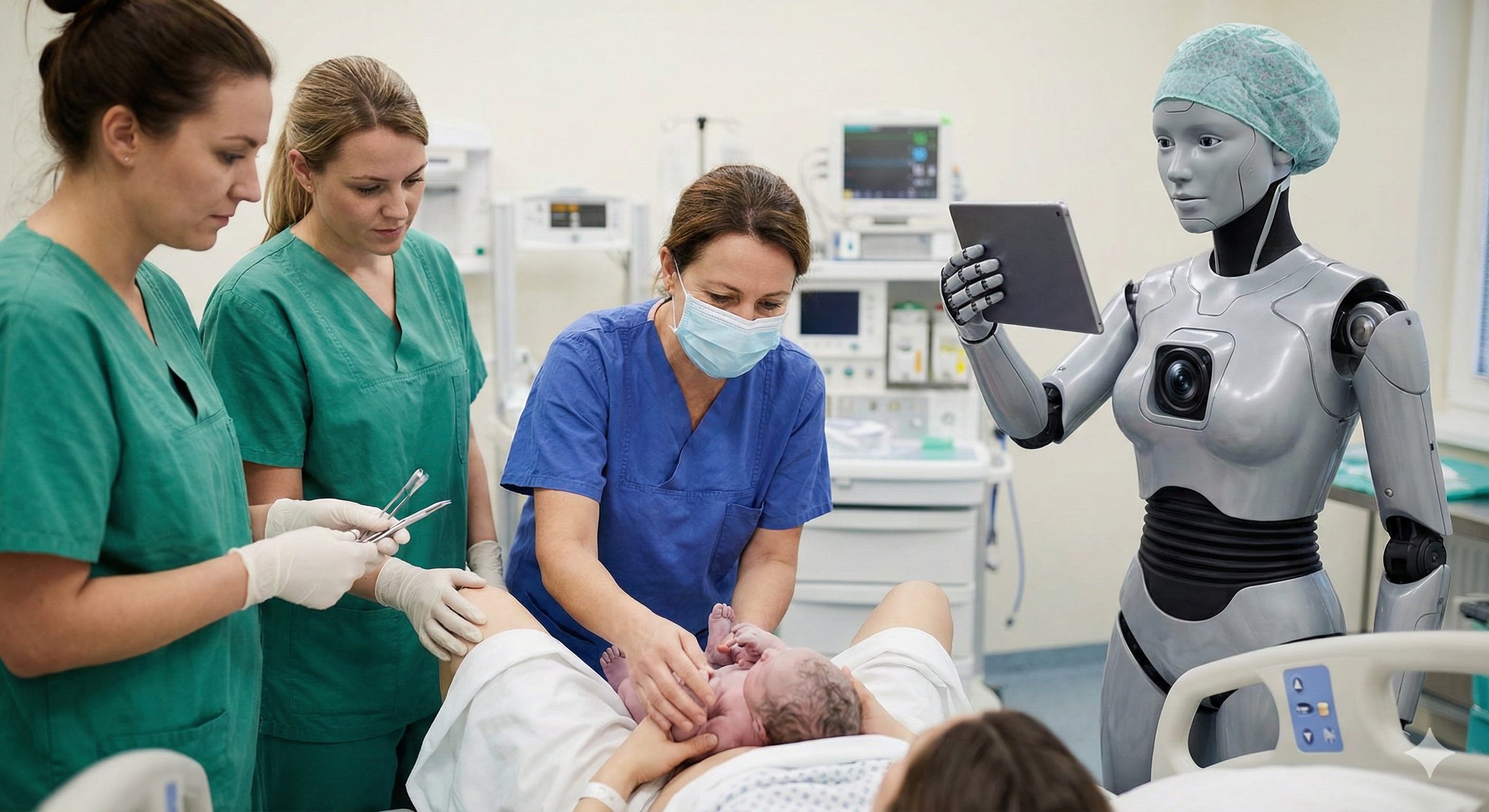
If you’ve visited a doctor lately, you may have noticed something new in the room—an AI scribe. These are software programs that listen to your conversation with your doctor and automatically write up the visit notes. The promise is simple: less paperwork for doctors, more time for patients.
Sounds great, right? Healthcare systems across the country are rushing to adopt these tools. Over $1 billion was invested in AI scribe technology in 2025 alone. Studies show doctors can save 2-3 minutes per patient—time that adds up over a busy day.
But here’s what they’re not telling you.
The Error Problem
At Stanford Medical School, researchers found that about 90% of AI-generated notes needed manual editing for mistakes. Some AI transcriptions even included “hallucinations”—medical information the AI simply made up. In medicine, made-up information isn’t just annoying. It’s dangerous.
So now, instead of writing their own notes, doctors must carefully review AI-generated drafts, hunting for errors they didn’t create. Is that really saving time? Or just shifting the burden from creating documentation to policing a machine?
A Simpler Solution Already Exists
In obstetrics, we’ve actually had a better answer for decades: video recording.
Labor and delivery units have used video documentation for years, particularly for high-risk situations. A video captures everything—every conversation, every decision, every action—completely and accurately. There’s nothing to transcribe. Nothing to hallucinate. Nothing to edit.
Think about what happens during a complicated delivery. Decisions are made in seconds. Multiple team members are talking. The situation changes rapidly. An AI scribe trying to capture this in real-time will miss context, confuse speakers, and potentially document critical events incorrectly.
A video misses nothing. Visual and Audio!
Why Aren’t We Using Video Everywhere?
The honest answer isn’t about technology—it’s about money and systems. Our healthcare infrastructure is built around typed notes that can be coded for billing, searched in databases, and fed into insurance claims. Video doesn’t fit neatly into that machinery.
But consider what we’re actually prioritizing: extractable data over accurate records. Administrative convenience over patient safety.
The Bottom Line
AI scribes may have a role in routine office visits. But in obstetrics—especially in labor and delivery where stakes are highest and events move fastest—we should think carefully before trusting algorithms that get it wrong 90% of the time.
We already have a technology that captures medical encounters with perfect accuracy. It’s called a camera.
Maybe instead of teaching AI to write notes about what happened, we should simply record what happened. The technology exists. The question is whether our healthcare system is willing to adapt.