
A Night in Labor & Delivery: What the Public Never Sees
A night in Labor & Delivery through the eyes of an obstetrician

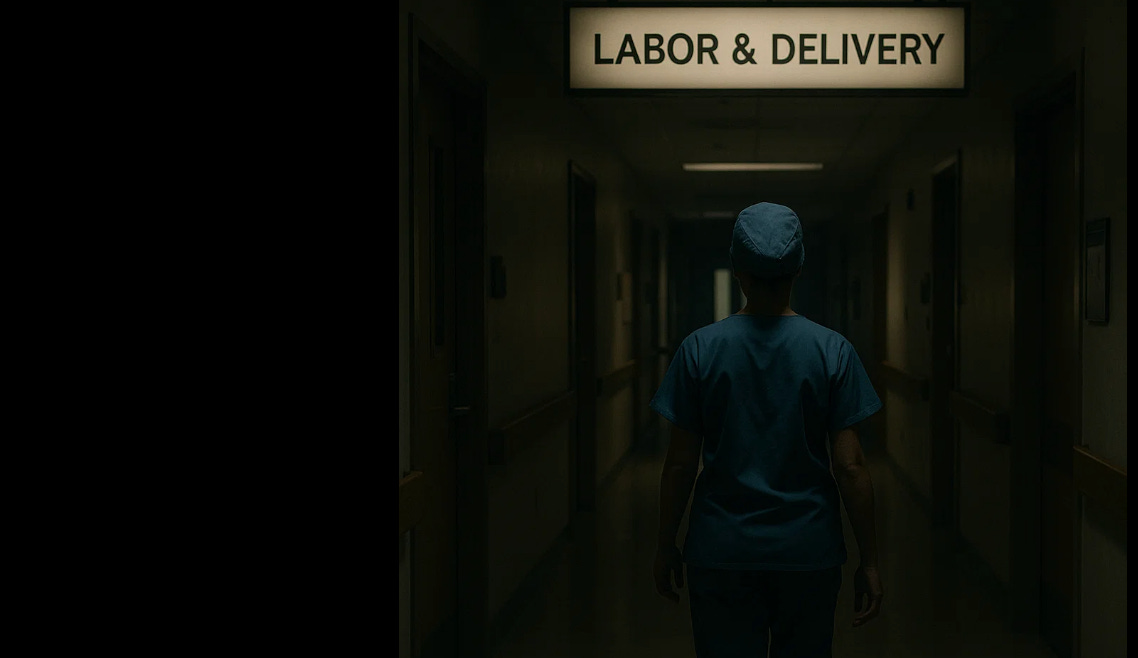
A Quiet Beginning
Most people imagine hospitals at night as quiet places, lights dimmed, corridors hushed. Labor and Delivery is rarely like that. Even when the unit seems calm, it’s an uneasy calm—because we know it can change in an instant. As a professor of Obstetrics and Gynecology, and as a specialist in Maternal–Fetal Medicine, I’ve spent countless nights in delivery wards. What the public never sees is how quickly the ordinary can turn into the extraordinary, how the work of many hands and minds can mean the difference between life and death.
Behind the Scenes: More Than Babies Being Born
From the outside, Labor and Delivery (L&D) seems straightforward. A woman arrives in labor, has her baby, and leaves with joy. But the reality is far more complex. On any given night, L&D is a crossroads of medicine, surgery, anesthesia, neonatology, and nursing. It’s also a place of raw human emotion—fear, excitement, exhaustion, and relief all under one roof.
While families see only their own room, we see the entire picture. In one room, a woman may be pushing with a supportive partner at her side. Down the hall, another may be facing an emergency cesarean for a baby in distress. Across the corridor, a mother with severe preeclampsia may be struggling to keep her blood pressure under control, while the neonatal team prepares for a very premature baby.
The public never sees how much of our job is triage—deciding what needs immediate attention, what can safely wait, and what requires resources from other specialists.
The Rhythm of the Night
On one recent night, the shift started with three women admitted in early labor. Nothing seemed unusual. Nurses monitored heart rates, contractions, and vital signs. Residents reviewed charts and discussed care plans. Families sent texts to relatives, sharing the excitement.
But within two hours, the calm dissolved. One baby’s heart rate dropped suddenly, signaling distress. Another patient, scheduled for induction, developed dangerously high blood pressure. A third, with a history of cesarean, showed signs that her scar might be opening—a rare but life-threatening complication.
This is the rhythm of L&D: steady moments punctuated by emergencies. The unit shifts gears quickly. Anesthesiologists are called. Operating rooms are prepped. Nurses move seamlessly, each knowing their role. The residents and I discuss options, risks, and next steps. It feels like controlled chaos—but it’s really practiced coordination.
Training Then and Now
When I began my residency decades ago, the culture of training was very different. We routinely worked 48 hours straight, sometimes even 72, with little rest or sleep. Looking back, it was unsafe for patients and unsafe for us. Exhaustion dulled our judgment, slowed our reflexes, and made learning less effective. Thankfully, residency regulations have changed over time, though long hours are still common. The public never sees how much sleep deprivation used to be woven into medical training, and how much effort it has taken to reform those practices for the safety of mothers and babies. And still today there are doctors who continue to work with not enough sleep. While pilots in Europe for example cannot fly a plane more than 13-14 hours and 60 hours in 7 consecutive days, doctors do not have these restrictions. But I feel they should.
The Human Side of Emergencies
What the public rarely sees is not just the medical response, but the human weight of decisions. When I tell a woman she needs an emergency cesarean because her baby’s heart is in trouble, I know those words will shape her birth story forever. When I explain to a partner why their loved one needs magnesium to prevent seizures from preeclampsia, I see the fear in their eyes.
We train for years to act quickly, but we are also witnesses to the most vulnerable moments in people’s lives. It is humbling. It reminds us that medicine is never only science—it is also trust.
The Team Behind Every Birth
A successful outcome in L&D is rarely the work of one person. The public often thinks of the doctor as the central figure, but in reality, safe birth depends on a team. Nurses are the front line, watching patterns on monitors long before I’m called. Residents and fellows ask sharp questions and carry out careful exams. Anesthesiologists stand ready at all hours. Neonatologists arrive in minutes when a baby needs urgent care.
We also depend on people the public never meets: scrub techs who prepare sterile instruments, laboratory staff who crossmatch blood in emergencies, even transport staff who rush samples between units. And we couldn't function without the clerical staff who are the first point of contact, pre-triaging patients and managing complex paperwork, calling other staff, or the housekeeping staff who are essential for quickly turning over rooms and operating suites to ensure we're ready for the next patient. It’s an invisible web of collaboration that ensures safety and efficiency.
The Emotional Aftermath
When the adrenaline fades, emotions surface. After an emergency, I often walk back into a room where a baby lies safely in a mother’s arms, and the fear has given way to relief. But sometimes the outcomes are not what we hoped. Not every story has a happy ending, and those moments weigh heavily. We support each other, but we carry those memories.
The public never sees that either—the quiet reflection at 3 a.m., the whispered conversations among colleagues, the moments when we remind ourselves why we chose this work despite the toll it takes.
Why It Matters to Share This
You rarely see what goes on behind the closed doors of Labor and Delivery because we are focused on protecting patients’ privacy and safety. But I believe it matters for the public to understand the reality: childbirth is joyful, but it is also unpredictable, and it is sustained by a team whose work is often invisible.
When debates arise—about cesarean delivery, midwifery, home birth, or hospital protocols—people bring personal experiences, which are valuable but partial. The behind-the-scenes reality is that every policy, every guideline, every recommendation comes from nights like the ones I’ve described, where seconds count and collaboration saves lives.
A Night’s End
As dawn approaches, the unit begins to quiet again. Babies sleep in their bassinets. Families rest after the whirlwind. The staff gathers notes for morning rounds, tying together the events of the night. To the outside world, it may look like nothing extraordinary happened—just more babies born. But to us, it was another night of managing crises, balancing risks, supporting families, and ensuring safe arrivals.
Take-home message: What the public never sees in Labor and Delivery is the constant vigilance, teamwork, and decision-making that protect mothers and babies every single day. Behind every joyful birth story lies the unseen labor of a dedicated team working together through the night.