
A Dangerous Oversimplification: Why ACOG’s Folic Acid Message Misses the Mark
ACOG says folic acid matters “early in pregnancy.” The truth is, by then it may already be too late. Public health messages must tell the whole story—or risk preventable harm.

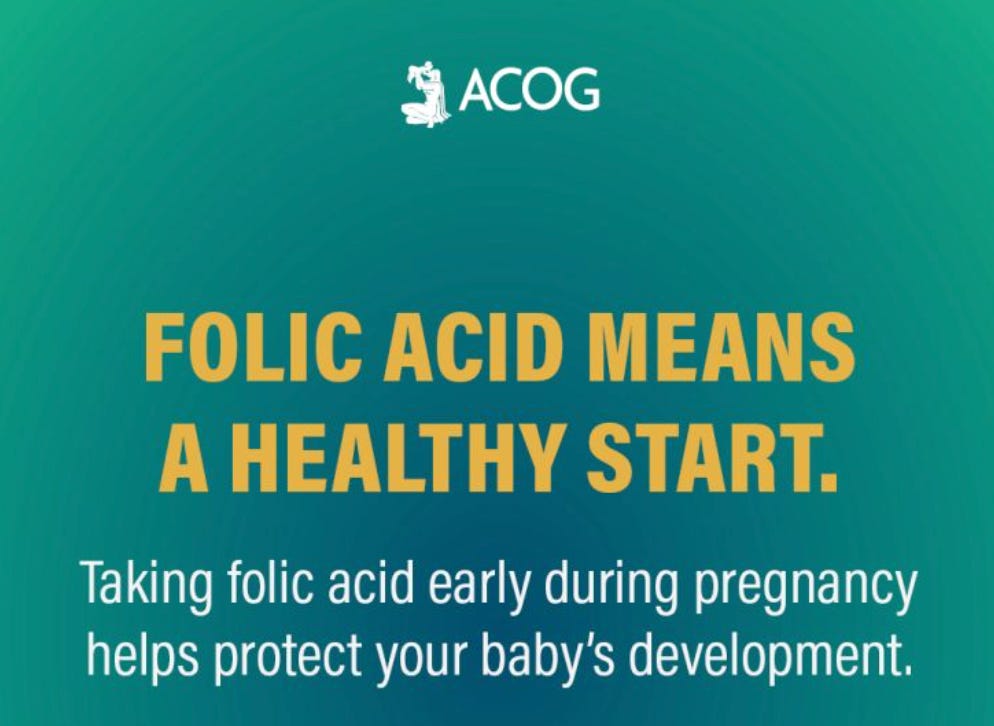
WARNING: This message is misleading
When a national organization like ACOG tells the public, “Take folic acid early in pregnancy,” it sounds reassuring. But here’s the problem: by the time most people even realize they are pregnant, the window for folic acid to prevent devastating birth defects may already have closed. A well-intentioned message becomes, in practice, dangerously misleading.
Why Timing Matters
The science is clear and not in dispute. Neural tube defects—serious malformations like spina bifida and anencephaly—develop in the earliest weeks of pregnancy. The neural tube closes by day 28 after conception, often before a missed period alerts someone that they might be pregnant.
That means folic acid needs to be present in the body before conception and in the very first days of embryonic development. Waiting until pregnancy is confirmed is simply too late.
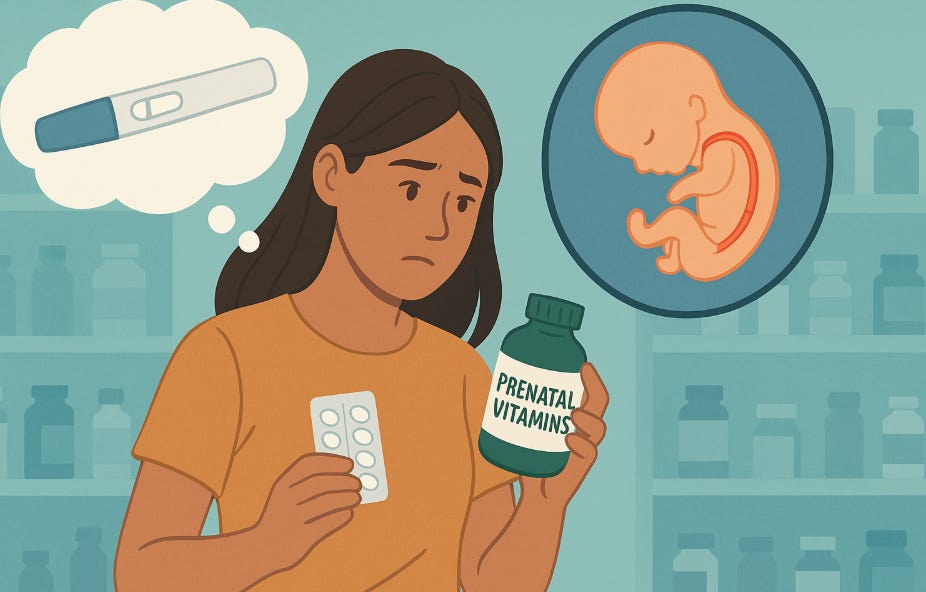
Both the Centers for Disease Control and Prevention (CDC) and ACOG’s own guidelines state this unequivocally: all women of childbearing age should take 400 micrograms of folic acid daily. The recommendation is not “once you are pregnant,” but rather every day if there is any chance of becoming pregnant.
The Cost of Misleading Simplicity
Why does this matter? Because public health messaging saves lives only when it is precise. If we tell the public that folic acid matters “early in pregnancy,” we invite misunderstanding. Many people will think: I’ll start as soon as I get a positive test. But at that point, the prevention window for neural tube defects has already passed.
This is not an abstract risk. In the United States, about 3,000 pregnancies each year are affected by neural tube defects. Many of these could be prevented with proper folic acid supplementation. Even a small slip in public messaging can translate into children born with lifelong disabilities—or pregnancies lost to lethal anomalies.
An Analogy: Locking the Door After the Break-In
Think of folic acid like locking your front door. If you only lock it after the burglar has already come and gone, the damage is done. Neural tube development is the same: the critical event happens early, whether we are prepared or not. Telling women to “start during pregnancy” is like advising them to lock the door once the break-in has already occurred.
Why Did ACOG Do This?
The likely reason is an effort at simplicity. “Early in pregnancy” feels easier to communicate than “every woman of childbearing potential should take folic acid every day.” But in medicine, precision matters more than simplicity. Cutting corners in messaging does not just water down the truth—it risks harm.
This is part of a broader issue in women’s health communication: oversimplification in the name of accessibility. Instead of trusting women with accurate, nuanced information, organizations often pare down messages until they are misleading. The result is confusion, mistrust, and preventable harm.
What Families Deserve
Families deserve truthful, accurate professional guidance:
Folic acid supplementation must begin before conception to be effective.
Because half of all pregnancies in the U.S. are unplanned, this means all women of reproductive age should take folic acid daily.
Waiting until pregnancy is detected is too late to prevent neural tube defects.
This is not an issue of individual failure but of public health responsibility. If campaigns do not emphasize the preconception requirement, they will inevitably miss the very window in which folic acid makes the difference.
What Needs to Change
ACOG, the CDC, and all major public health organizations must align their messaging and remove ambiguity. “Early in pregnancy” is not enough. The correct message is:
If you can become pregnant, you should take folic acid every day.
This does not mean scaring women or overcomplicating the message. It means respecting them enough to give the full truth, even if it requires a sentence or two more.
Closing Reflection
In medicine, words matter. A single phrase can alter behavior—and in this case, can decide whether a child is born healthy or with a preventable malformation.
ACOG’s poster is well-intentioned, but families deserve better than well-intentioned. They deserve accurate, actionable information. The ethical responsibility of professional organizations is not to simplify at the cost of truth, but to communicate clearly enough that lives are not lost in translation.
So here is the real question: when it comes to public health, do we value convenience in messaging more than accuracy in outcomes? If we get this wrong, the price is paid not in theory but in children’s lives.