
10 Red Flags in Pregnancy That Should Never Be Ignored
When “Normal Pregnancy Discomfort” Isn’t Normal: The Questions That Could Save Your Life

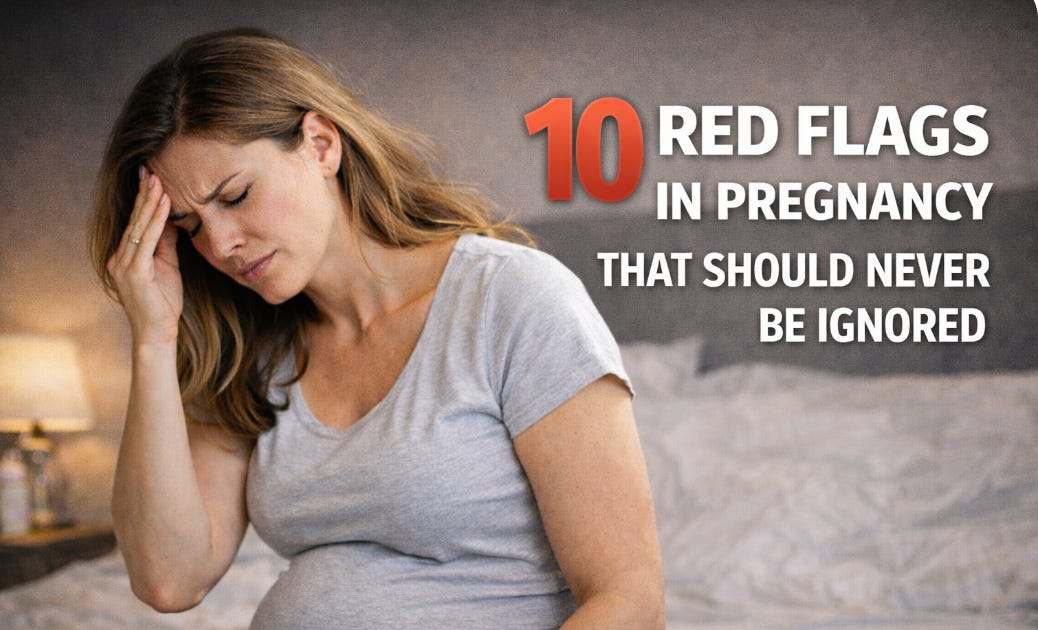
Maria was 34 weeks pregnant with her second baby when the headache started. Not a dull ache. A pounding, relentless pressure behind her eyes that Tylenol couldn’t touch. She almost didn’t call her doctor. After all, headaches are common in pregnancy, right? Her mother told her to drink more water. A pregnancy app said it was probably hormonal.
It wasn’t hormonal. Maria’s blood pressure was 178/110. She had severe preeclampsia. Within hours, she was on a magnesium drip and her baby was delivered by emergency cesarean.
Maria was lucky. She called. Many women don’t.
The Problem: Pregnancy Normalizes Everything
Here is a hard truth about pregnancy in the United States: Manyb pregnancy-related deaths are preventable and education isd essential. Not rare genetic conditions. Not unforeseeable tragedies. Preventable deaths. Deaths that could have been avoided if the right questions had been asked at the right time.
In 2023, 669 women died of maternal causes in the United States (2). The severe maternal morbidity rate has been climbing steadily, rising from 1.4% in 2016 to 2.0% in 2023 in one large state-level study (3). For every woman who dies, 70 to 80 more survive a near-death event related to pregnancy or childbirth (4).
The most dangerous phrase in obstetrics may be: “That’s just a normal part of pregnancy.”
Yes, pregnancy comes with discomfort. Backaches, fatigue, swelling ankles, the occasional headache. But certain symptoms cross a line from inconvenience to emergency. The difference between the two is not always obvious, especially when you are exhausted, overwhelmed, and told repeatedly that what you are feeling is “normal.”
Preeclampsia alone affects 3 to 8% of all pregnancies worldwide (5). Visual symptoms occur in up to 25% of women with severe preeclampsia and 50% of those with eclampsia (6). Decreased fetal movement precedes stillbirth in a significant number of cases, with one study showing a 14-fold increased risk of stillbirth when movement was reduced in the prior two weeks (7). Stillbirth affects 1 in 175 pregnancies in the United States, with stark racial disparities (8). UTIs during pregnancy nearly double the risk of preterm birth (9). And vaginal bleeding that persists across trimesters increases the risk of spontaneous preterm labor more than sixfold (10).
These numbers represent real women, real families, and real opportunities for earlier intervention.
The questions below are designed to help you recognize when a symptom demands action, and to give you the language to advocate for yourself at the hospital, in the office, or on the phone.
Subscribe to read the 10 questions every pregnant woman should know how to ask.
